

 admin
admin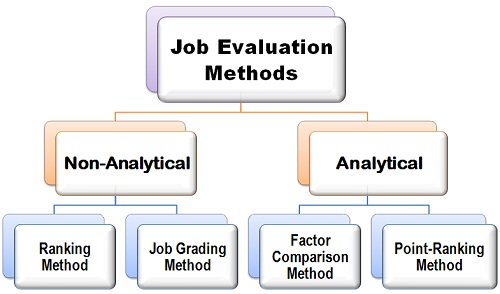
Carl Tapi
All jobs in an organisation need to be evaluated to ascertain their relative worth so that an equitable salary structure is designed in the organisation. This is necessary for sustaining cordial relations within and between employees and employers. Hence, there is a need for appreciation of intricacies of the job evaluation in organisations.
Once a candidate is placed in a job, the person needs to be duly compensated for the job he/she performs. In the pursuit of equal pay, there should be a consistent and systematic relationship among base compensation rates for all the jobs within the organisation. To achieve this equity there is a need for Job Evaluation.
What is Job Evaluation?
It is a systematic process of determining the worth of a job to other jobs. The objective of this process is to determine the correct rate of pay. It is therefore not the same as job analysis. Rather it follows the job analysis process, which provides the basic data to be evaluated. In simple words, job evaluation is the rating of jobs in an organisation. This is the process of establishing the value or worth of jobs in a job hierarchy and compares the relative intrinsic value or worth of jobs within an organisation.
The main objective of job evaluation is to ensure equitable remuneration for the relative worth of a job. As per the ILO Report 2017, the aim of the majority of systems of job evaluation is to establish, on an agreed logical basis, the relative values of different jobs in a given plant or machinery, i.e., it aims at determining the relative worth of a job. The principle upon which all job evaluation schemes are based is that of describing and assessing the value of all jobs in the firms in terms of several factors, the relative importance of which varies from job to job”. The objectives of job evaluation are to:
- Establish a standard procedure for determining the relative worth of each job in an organisation;
- Ensure equitable wage for a job and reasonable wage differentials between different jobs in a hierarchical organisation;
- Determine the rate of pay for each job which is fair and equitable with relation to other jobs in the plant, community or industry;
- Eliminate wage inequalities;
- Use as a basis for fixing incentives and different bonus plans;
- Promote a fair and accurate consideration of all employees for advancement and transfer;
- Provide a benchmark for making career planning for the employees in the organisation.
The Job Evaluation process
Job Evaluation is a technique to rank jobs in an organisation based on the duties and responsibilities assigned to the job. The job evaluation process results in a job being assigned to a pay grade. The pay grade is associated with a pay range that is defined by a minimum and a maximum pay rate. A model of the job evaluation process with the following steps is presented below.
Step One – Job Analysis
Job Analysis is the process of studying and collecting information relating to the operations and responsibilities of a specific job. The immediate products of this analysis are job descriptions and job specifications. The job incumbent writes the job description. If there is an immediate supervisor, s/he reviews it, and they both sign it. Instructions and additional assistance are available from Human Resources if needed. The job description is a snapshot of the job as it presently exists, reflecting the current duties and responsibilities of the job and/or the incumbent.
Step Two – Approval
The Head of Department reviews job descriptions and, if s/he concurs, approves the responsibilities, requirements, and departmental organisation contained within a job description presented for a new evaluation, and signs it. If the vice president does not concur with the contents of the description, it is returned to the supervisor for changes.
Step Three – Review
Human Resources reviews the job description as submitted with the supervisor before evaluation by the Job Evaluation Committee (Step 4). Human Resources help ensure that there is consistency in the job descriptions and titles by editing them for clarity and format. If the Human Resources Office makes changes, the job description is returned to the supervisor and incumbent for signature before being presented to the Job Evaluation Committee (Step 4).
Step Four – Evaluation
The Job Evaluation Committee (JEC) is a multimember committee that is representative of all departments and levels in an organisation. JEC ensures equity among jobs through the use of established, consistent criteria for evaluation and prevents escalation of the job evaluation grades by validating changes in job content presented for review. Members of JEC receive in-depth training on job evaluation and utilise a consistently applied point system for the evaluations.
Job Grading
There are many job evaluation systems on the market; some are free and some are franchised. The job evaluation systems used in the Southern African are the Peromnes, Decision Tree, Paterson, Hay, and the Castellion systems, amongst others. There are many other systems, some in-house designed and some open market.
As the job evaluation is mostly a judgmental process that would probably use one of the job evaluation methods, which are commonly grouped into two major categories: quantitative and non-quantitative.
Non-Quantitative Methods
Non-quantitative methods call for the evaluation of a whole job relative to other jobs or general descriptions of jobs within an organization. The main role of the evaluator is to determine which of the jobs is more important or worth more to the organization. The major types of non-quantitative job evaluation procedures are ranking and job classification.
Ranking Method of job evaluation
This is the simplest form of job evaluation. The method involves ranking each job relative to all other jobs, usually based on an overall factor like “job difficulty?. Each job as a whole is compared with other and this comparison of jobs goes on until all the jobs have been evaluated and ranked.
All jobs are ranked in the order of their importance from the simplest to the hardest or from the highest the lowest. The importance of the order of a job is judged in terms of duties, responsibilities, and demands on the job holder.
Job Classification or Grading Method
There are several ways to categorise jobs. One is to draw up a class description and place jobs into classes based on their correspondence to these descriptions. Another is to draw up a set of classifying rules for each class and then categorize the jobs according to these rules.
The usual procedure is to choose compensable factors and then develop class or grade descriptions that describe each class in terms of amount or level of compensable factor(s) in jobs.
Quantitative Methods
Quantitative methods divide jobs into components and require absolute or relative value judgments about how much of a component a particular job requires. The two most popular types of quantitative systems are the point rating and factor comparison methods.
(To be Continued)
Carl Tapi is a Consultant at Industrial Psychology Consultants (Pvt) Ltd, a management and human resources consulting firm. https://www.linkedin.com/in/carl-tapi-45776482/ Phone +263 (242) 481946-48/481950 or cell number +263 772 469 680 or email: [email protected]



 Online Reporter