Chronicle Editor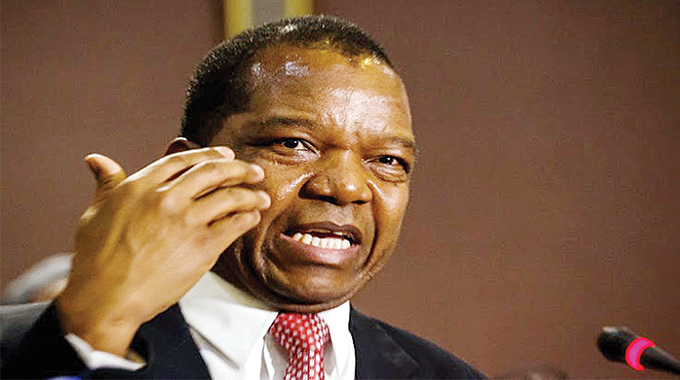
Andile Tshuma
Exchanging forex for bond notes at a premium is common practice in the streets of Bulawayo and across Zimbabwe. It seems as though somehow, people have made it so normal that many forget that it is illegal. Illegal forex exchange dealers popularly known as osiphatheleni are dotted around the city but mostly found near Tredgold magistrates’ courts, at a spot popularly known as the World bank, as any currency can be traded there.
The illegal forex dealers are always in running battles with police, with about 60 money changers having been arrested last week during a police operating targeting illegal forex dealers, most of them paid fines and are back in the street, and it is business as usual. They are not the ones, it is believed that they work for special cartels that then externalize the hard currency and flood the market with bond notes. The system continues, it is an infinite cycle.
While the government and law enforcement agents have made concerted efforts to protect the country’s resources, somehow money, minerals, ivory and other high value resources find their way out of the country via illegitimate means.
Goods are smuggled in, sold and the money made is smuggled out, fueling the year on year inflation rate, which continues to skyrocket.
One forex dealer who only identified herself as Matildah, spoke to the news crew in the CBD claimed to be working for a powerful government official whom she refused to disclose. She said she was employed to supervise eight other forex dealers and each day they had a target of forex to make.
“We are a big group, police can arrest us but this trade will not end. Even business people come and buy forex from us because it is not there in the bank. There are no formal jobs so this is what feeds our families. It is either this or we go ad venture into prostitution, this is better and more dignified,” said Matidah who refused to reveal more of the trade secrets.
The Zimbabwe Coalition on Debt and Development (ZIMCODD), in a report issued recently called for a holistic approach to combat illicit financial flows fueled by cash barons and illegal trade of forex in the country’s streets.
To the public, the concept of Illicit Financial Flows is something that is generally elusive and a bit tricky to understand. This is despite the fact that illicit financial flows affect the poor proportionally more than they do to the rich. The Global Financial Integrity (GFI) defines illicit financial flows as illegal movements of money or capital from one country to another.
The chain is long, as it starts from a person deciding to sell their few hundred dollars from their family in the diaspora to a forex dealers employed by another person who then ensures that the money finds itself out of the country. The money does not circulate.
Speaking in a telephone interview recently, Reserve Bank Governor Dr John Mangudya spoke at length on illicit money deals that are happening in broad daylight in the country and attributed most of Zimbabwe’s economic misfortunes to them.
“Illegal forex dealers and other illicit money deals result in immediate loss of government revenue. The immediate impact of illicit financial flows is on the National budget. Due to increased illicit financial flows, government is prejudiced of the much-needed revenue, resulting in limited fiscal space. As the Central Bank, we are prejudiced as most of the forex that we release into the market does not circulate. People want to hoard cash. We are aware that many people are externalizing cash and government is taking action, but as long as there is more money being externalized and less coming back to the bank, then things will not get better People want to have an infinite supply of foreign currency in the bank but nobody wants to deposit forex into their bank account,” said Dr Mangudya.
The Governor said the economy will only improve if the public stopped fuelling the black market.
“Consider for instance, diaspora remittances. Very few people will use diaspora remittances at the official bank rate of 1:1 but most people will go to the parallel market and exchange that money for local bond notes at a premium,. The same people will complain that the economy is in shambles. It takes both a government and its people to fix the economy and as long as this rot is not fixed, the economy will not improve,” said Dr Mangudya.
The GFI states that funds are illicit as long as they are illegally earned, transferred or utilized. The high-level panel report on Illicit Financial Flows from Africa estimates show the African continent is losing more than US$50 billion annually through illicit financial flows.
The Africa Progress Panel reports that the sub Saharan African bears a heavy burden of IFFs. Studies between 2002 and 2015 show that IFFs affected the Sub Saharan African region more than any other region in Africa. This may be a result of poor governance, incompetent systems and lack of motivation in the judiciary, letting a lot of rot go by unchallenged.
Zimbabwe is also not immune to the scourge of illicit financial flows. According to GFI estimates, Zimbabwe could have lost close to US$ 2.8 Billion, representing an annual average loss of US$276 million, during the period ranging from 2004 to 2014.
The topic of illicit financial flows feature is often dismissed by the ordinary man in the street, as it is viewed to be a subject of debate for people with significant finances. It therefore attracts less interest yet the ordinary ma in the street is often the first to experiences the impact of the illicit finances on the economy as he in most cases will not have any safety nets to cushion him.
Illicit financial flows have serious social, economic and political ramifications hence this subject cannot be divorced from the populace, however with an economy on nose dive, it is difficult to convince the ordinary man and woman to spend their forex legally and not fed the black market as all their moves are driven by bread and butter issues.
It is imperative for Government to make efforts to curb illicit financial flows in order close this fiscal gap. IFFs also cripple Government’s ability to mobilise adequate domestic capital for investment to sustain a long-term economic growth prospects.
While Zimbabweans are awaiting the announcement of an anticipated new monetary policy, many are pondering on whether new monetary policy measures will arrest illicit cash flows and address the issue of the rate of the United States Dollar and the local bond notes, which are not being treated as equal in the parallel market.
@andile_tshuma



 derick.khumalo