admin
admin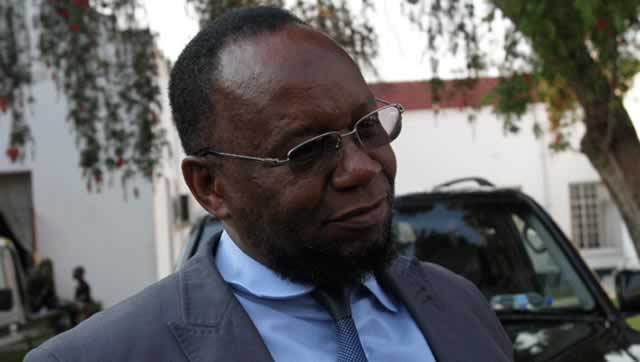
Tichaona Zindoga THE INTERVIEW
Since his appointment last year, the Minister of Primary and Secondary Education, Dr Lazarus Dokora (LD), has courted controversy among teachers and parents with some calling for his head. The minister explains to our Senior Political Writer Tichaona Zindoga (TZ) his philosophy and other issues in the ministry.
TZ: You have issued controversial directives concerning vacation school, incentives, entrance exams and so on, some of which have not been well received by schools and parents. What is your motivation or what is the philosophy behind these changes?
LD: I don’t think it’s a matter of what my philosophy is about. It’s a matter of conforming to the portfolio expectations. Let’s look at the provision in the new Constitution, for example.
If we look at Chapter 4, it carries the injunction that basic education is essentially a State function but the country is under sanctions so there is no way we can say tomorrow let the State carry the full burden. For a while to come, education has to be a partnership arrangement, with all stakeholders on board. That’s one fundamental.
Second, we also got to appreciate the fact that as a result of sanctions against the country, Government was unable to construct new infrastructure while the population continued to bulge. What it meant is that there were a lot more people wanting to get into few institutional set-ups that we call schools. So we get crowding in those few schools and some of them, because of their popularity, devised ways to manage the situation and came up with the idea of entrance tests.
In some cases schools invited thousands when they actually wanted 60 and you have to question the transparency of the process. We don’t want that kind of scenario, no.
So it’s educationally unsound as a selection process to say you understand there is a shortage of this resource, then you want to price people out of the mandate because that means I will go to School A, School B, School C trying my luck.
At the end of that process, I am a very, very angry parent who feels defrauded and eventually my child can go to the local school but I am the poorer for it.
So for me two things must remain visible: One, let’s build; two, let’s not abuse the facility that we may have in the few institutions. There should be other ways of selecting those students. We have the Grade 7 examinations, nobody has challenged the Grade 7 examinations and we should use them.
A good example is here in Goromonzi. You don’t hear them say pay but you know you go to Goromonzi on such, such a day and you walk away quite clearly.
And the kids know, we have not been able to be accommodated here not by some devious manipulation of a test which you will never know whether it was marked or not marked.
TZ: So what has been the compliance like? Have you made a follow-up as to whether these directives have been followed because I think I saw a recent advert in the newspaper actually inviting pupils for an entrance test …
LD: I have got 8 500 schools and institutions in the country, so your guess is as good as mine.
TZ: And then you also have been in the news talking about the Zimsec examinations, that international examinations cannot be written at the exception of Zimsec examinations. What is the rationale behind that?
LD: I think you are citing the Deputy Minister, Honourable (Paul) Mavhima. It wasn’t quite myself who was making those remarks, but the rules provide for the Secretary for Education to work on a curriculum and prepare for its examination.
And so if there is going to be an exception it will have to be an authorised exception. But in terms of the rules – imagine America preparing a school curriculum for examination by Zimsec or the British, preparing their British children to be examined under Malaysia. It’s not tertiary education, it’s school-based learning. Our system as well, even in the new constitution, says we prepare that curriculum for local examinations and any deviation, any exception, is an authorised exception. You cannot prepare children in this country under our curriculum and then offer them an examination system which they have not prepared for.
In other words, we should simply be realistic enough and say nowhere in the world have you heard any university, you can search the Internet even, complaining that the students who came here holding Zimsec certificates are performing poorly.
Instead, what we do have are accolades that they have been doing outstandingly well, whether in a Chinese university, in a Croatian university, they still do well. So we don’t doubt the credibility of our own system.
TZ: Talking about infrastructure, you mentioned satellite schools and the bad shape which the schools find themselves in. I am sure there was some fund, US$23 million, that was set aside by the Government to rehabilitate the schools; what’s become of its administration?
LD: The US$23 million you make reference to is the Global Partnership for Education Fund. Yes, it was provided for to us, and I think we only consumed or planned to consume US$6 million for this year. It’s spread over the next two to three years I think and it’s to look at different facets, to facilitate work in different facets of our system, and one of the areas has to do with skilling teachers, another has to do with early reading ability, and the other aspect that it is to help us achieve is the monitoring or supervision of the system.
Further, the fund will also help us hone the skills for doing a sector plan of primary and secondary education. You know we have just concluded as a result of a Government decision, the Early Childhood Development Module as part of the infant school.
The directive made reference to that. And we have to work on the implementation strategies and ensure that the infant module and the junior module speak to secondary school’s curricula.
At the same time we are going to a curriculum review and part of that fund will also go towards that although a part of that will come from the Educational Development Module and the fiscus.
TZ: On the performance of the schools, Minister, I am sure we have seen very low pass rates nationally, about 22 percent. What do you think is the reason behind such poor performance? How would you explain that and what can be done?
LD: First of all, I have said as a nation and as a consequence of the sanctions regime, the capacity of our nation and people to invest in infrastructure and even maintaining the existing infrastructure has been done a big blow, a huge blow that has created the bloated enrolments.
In circumstances infrastructure is fragile, that’s unsafe even . . . we have not been able to invest. The will is there, but the budgetary allocation has merely managed to service the teacher salary component not to impact on the infrastructure.
Imagine a school with 3 500 kids! And Cowdray Park in Bulawayo has no schools. Anything that resembles a school is some house! These are the circumstances in which the curriculum is being transacted. We have to do something in that direction.
One challenge also concerns our partners who, as a result of sanctions, don’t wish to impact on infrastructure.
If you say you want to do a workshop, money can be found quickly, but when you say I need 2 056 schools to be built, you have a few takers and that is what has now instructed us to turn to local partners.
On pass rates, ordinarily, particularly in the media, to say zero percent rate pass rate, has a different meaning from the kind of interrogation that we do internally.
The Zimsec examination, if you write one subject and you get a credit, you will get your full certificate for passing that one subject. It’s a pass. But that’s not the ordinary meaning that is conveyed in the media.
When a school is said to have a zero percent pass rate, there could be quite a number of kids with four subjects, three subjects, one subject and so forth. But the generic term has tended to be drawn from the standard that is set by the Government employer, the Civil Service Commission, which says for you to enter civil service, you need five O-Levels, but that’s not the standard of Zimsec, nor is it our standard, nor for the candidate.
The candidate may simply be going into an examination saying “I want to pass my Maths. I have got my other four subjects.” That Maths which he or she passes is not accounted for, it’s like a zero. So I think you will find in the results of this year. They will be more meaningfully tabulated. And we have also been omitting, over the years, the inclusion of the statistics for the June examinations.
They have not reflected in the November examinations. And yet these are examinations written during the same year. It’s like saying those who write on Monday their statistical significance will not count alongside those who write on Friday. Why do we do this? And we have had to say review this position.
These statistics must sit together. Whether the person wrote one subject or four subjects, we must know at the end of the final tally which will emerge in November so it will be fuller, more comprehensive and more meaningful.


 Online Reporter