Chronicle Editor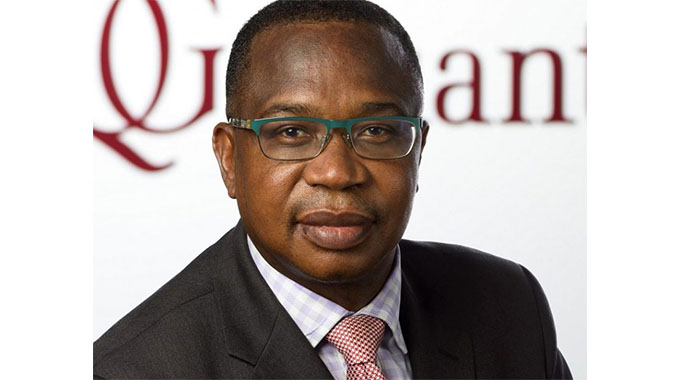
Senior Business Reporter
ZIMBABWE is likely to benefit from the establishment of a US$45 billion Resilience and Sustainability Trust (RST) loan fund from the International Monetary Fund (IMF), which is aimed at assisting countries to build resilience to external shocks and ensuring sustainable growth.
The intervention is also set to enhance member countries’ contribution to long-term balance of payments stability.
The facility is expected to come into effect on May 1 following approval on April 13 by the IMF executive board. The loans will have a 20-year maturity and a 10-and-a-half-year grace period.
Zimbabwe is one of the 190 members of the Bretton Woods Institution. Finance and Economic Development
Minister, Professor Mthuli Ncube and his team are participating on the on-going IMF World Bank annual Spring Meetings in Washington.
“The Executive Board of the International Monetary Fund (IMF) approved the establishment of the Resilience and Sustainability Trust (RST) to help countries build resilience to external shocks and ensure sustainable growth, contributing to their long-term balance of payments stability,” said IMF in a latest statement.
“About three-quarters of the IMF’s membership will be eligible for longer-term affordable financing from the RST, including all low-income countries, all developing and vulnerable small states, and lower-middle-income countries.”
According to IMF, the new fund will complement its existing lending toolkit by focusing on longer-term structural challenges, including climate change and pandemic preparedness, that entail significant macroeconomic risks and where policy solutions have a strong global public good nature.
“It will channel Special Drawing Rights (SDRs) contributed by countries with strong external positions to countries where the needs are the greatest, providing policy support and affordable longer-term financing to strengthen members’ resilience and sustainability and thereby contributing to prospective balance of payments stability,” reads the statement.
“The loans will have a 20-year maturity and a 10½-year grace period, with borrowers paying an interest rate with a modest margin over the three-month SDR rate, with the most concessional financing terms provided to the poorest countries.
“The RST will stand ready to commence lending operations once a critical mass of resources from a broad base of contributors is achieved and once sufficiently robust financial systems and processes are in place, which is anticipated to occur by the end of the year.”
Fundraising toward the estimated total resource needs of about SDR33 billion (equivalent to US$45 billion) will be initiated immediately, said the IMF.
In March, the IMF said it had noted positive signs of the economic recovery in Zimbabwe starting last year after two years of recession, adding that the Government had done well in addressing macro-economic imbalances while also ensuring that vulnerable members of society were supported.
The IMF said given the challenges that remain, including poverty in some parts of the country, there was a need for authorities to implement “the necessary reforms that would foster higher, more inclusive growth and pave the way for re-engagement with the international community”.
This is largely the Government position, which the IMF appears to back, that no person and no community should be left behind while the top priority in foreign policy is re-engaging the international community.



 Online Reporter