admin
admin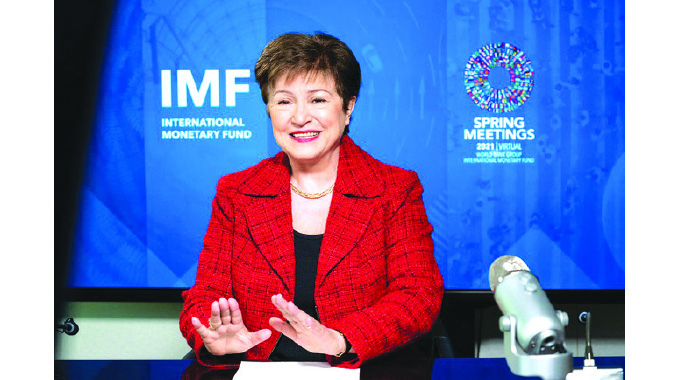
WASHINGTON. – The International Monetary Fund’s (IMF) board yesterday failed to agree on whether Kristalina Georgieva should remain as its managing director after a series of lengthy meetings.
Georgieva’s position has been in question since the World Bank published a report accusing her of pressuring staff to distort data.
The IMF head served as the World Bank’s chief executive, essentially its second most senior official, from January 2017 until late 2019. Georgieva denies the claims. But the scandal is forming a shadow over the IMF and World Bank’s annual meetings, which take place this week from Washington, DC.
Georgieva served as chief executive of the World Bank from 2017, before joining the IMF in late 2019.
A report, prepared by the law firm WilmerHale and requested by the bank’s ethics committee, published in September said that during her time at the World Bank, “Georgieva became directly involved in efforts to improve China’s ranking [in the Doing Business Report].”
The “Doing Business” rankings are a flagship piece of annual research from the World Bank that assesses how friendly a nation is to do business in.
The report alleged that Georgieva applied “undue pressure” on bank staff at the time to make data changes to boost China’s ranking just as the bank was seeking Beijing’s support for a major capital increase.
Georgieva’s lawyer says the WilmerHale probe violated World Bank staff rules in part by denying her an opportunity to respond to the accusations, an assertion the law firm disputes.
In the 2018 report, China was initially ranked 85, but after influence from within the leadership team and interventions from Beijing; the country ended up in 78th place — the same level as the year before, according to the WilmerHale assessment.
In a statement on September 16, Georgieva said, “I disagree fundamentally with the findings and interpretations [of the WilmerHale report].”
Since then, the IMF’s executive board has had different meetings to assess the allegations and what they mean for the institution.
Joseph Stiglitz, a former chief economist at the World Bank, said the report was being used unfairly to “discredit and oust” Georgieva.
Stiglitz said he believed Georgieva was a target of conservative forces after she went further than her predecessors to financially support developing world countries and “positioned the fund to take a global leadership role in responding to climate change”.
He said: “Having read the WilmerHale report, having talked directly to key people involved, and knowing the whole process, the investigation appears to me to be a hatchet job.”
France and other European governments have backed the Bulgarian economist to complete her term as IMF chief, However, some officials in the United States are a little more sceptical.
The scandal threatens to overshadow the high-profile meetings, where Georgieva will take a lead role in discussions on global recovery from the Covid-19 pandemic, debt relief and efforts to speed vaccinations, along with World Bank president David Malpass.
All in all, there are broad questions about the reputation of the IMF going forward.
Erik Nielsen, a group chief economist at UniCredit, said that the “serious accusations” surrounding Georgieva come as the IMF is dealing — both intellectually and culturally — with a shift away from the so-called Washington Consensus of austerity.
“And in the middle of the investigations, it was claimed this past week that she more recently leaned on IMF staff to soften their criticism of environmental policies in Brazil, following intervention from the Brazilian government. Not surprisingly, the once wonderfully impressive culture of the IMF as an institution lies in tatters,” he said in a research note Sunday.
The IMF said in the wake of a Bloomberg article that the decision to alter the language of the report was part of the normal process. A spokesperson also said that “the IMF considers climate change a globally critical economic issue and made that point with regards to Brazil very clearly in the staff report,” according to Bloomberg.
Timothy Ash, an emerging markets senior sovereign strategist at Bluebay Asset Management, called the issue a “fundamental crisis of confidence in the IMF.”
“The damage has been done. People are now questioning all the work the IMF does and not just that with some kind of tie to the World Bank Doing Business report,” he said in a recent research note. – CNBC-Reuters


 Online Reporter