Online Reporter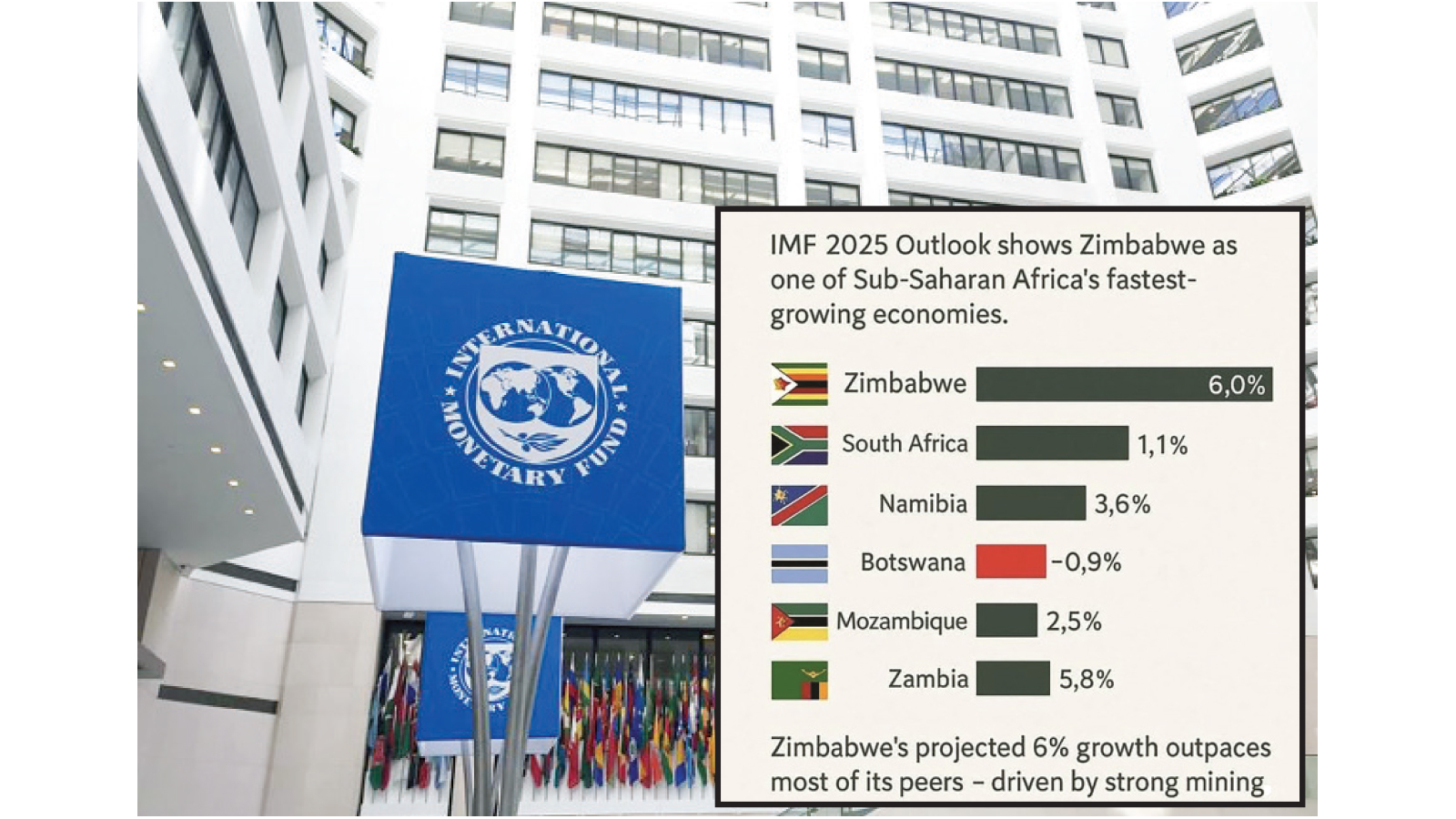
Victoria Ruzvidzo-Editor’s Brief
IN my 32 years in journalism, I spent about two decades plus on the business desk.
Much of what we wrote about the International Monetary Fund (IMF) was always negative.
Either the institution was introducing a painful programme such as the Economic Structural Adjustment Programme (ESAP), or it was refusing to lend financial assistance to Zimbabwe to get it out of its many-fold economic challenges then.
To compound the situation, there were periodic staff monitored programmes that always spoke about how Zimbabwe had sunk.
I remember in many instances the central bank was always fire-fighting to save the country from being expelled as a member. This would have had far-reaching implications that the frail economy then, could not afford to handle.
The other time, Zimbabwe was on the verge of being expelled and managed to pay an instalment literally minutes before the decision was made.
There were always issues between Zimbabwe and IMF and former President Robert Mugabe told the institution off on many occasions.
There was certainly no love lost between Zimbabwe and the Bretton Woods institution.
Indeed, the IMF was extremely tough on Zimbabwe. Of course, getting a cue from the United States. That country, with overarching influence on the IMF, hated Zim with a passion.
The IMF cut funding to this country on suspicious grounds.
So it is against this background that the softening stance by IMF on Zimbabwe has come as a real surprise – a pleasant one at that, given that its mood affects how investors and other global institutions behave towards a particular country.
And to have the IMF, of all institutions, stating that the economy has performed beyond expectations is not a mere statement, but a testament that Zimbabwe’s performance under the Second Republic has made even the most rabid critic begin to recognise effort.
I am someone of a sunny disposition, always expressing optimism even in the toughest of circumstances, but I had never imagined or even dreamt of a day when IMF would give a thumbs up on anything to do with Zimbabwe. It was unfathomable. But all this has changed.
It really illustrates the tangible achievements by Zimbabwe which the world is witnessing.
Recovery and growth in agriculture, mining, tourism and other sectors have had a phenomenal impact on the economy’s performance.
This country can’t be ignored anymore!
Indeed the IMF staff monitored mission that was in this country from October 29 to November 5 was impressed, reporting that the economy was performing stronger than expected.
“Zimbabwe’s economic recovery in 2025 is stronger than previously anticipated given the rebound in agriculture and solid performance in mining, while inflation has continued to significantly ease, supported by a stable foreign currency exchange rate. The economy is expected to maintain a strong momentum in 2026,” said part of the statement released after the visit.
Zimbabwe is really scoring high on many fronts and those that previously doubted the improved performance probably as temporary or just as a veneer have heard it from the IMF.
It has said 2026 is billed for a strong economic performance too.
The stability of the Zimbabwe Gold (ZIG) has tamed inflation in a most amazing manner.
Indeed the National Development Strategy 1 has transformed the economy as we drive towards our Vision 2030 of an Upper Middle Income Economy.
The launch of NDS2 already looks set to consolidate the gains thus far.
A bit of background on the IMF will put much into perspective:
Formed in 1944 in the Bretton Woods of New Hampshire US, hence the name, this is a global institution.
Its statements have an effect on investors and global perception. We have had all kinds of doomsayers, telling us variously that we cannot make it as a nation. That we were dropping in a tailspin into abyss. Among those was the IMF.
That trajectory has taken a dramatic reverse. Now, as reported in our Saturday edition of this newspaper, we are unexpectedly rebounding.
We have seen wonders in the economy. Wheat production continues to break records. We have seen how tobacco still rules the roost, we know our gold output is very high, courtesy of small miners largely, and we definitely know manufacturing is growing as we refine it.
Added to that, is our entrepreneurial spirit, which takes into cognisance technological developments. As if that was not enough, we move on rural industrialisation, witness the Village Business Units, Pfumvudza, irrigation schemes and other such.
The IMF was formed for a number of reasons, among them financial assistance, typically known as lender of last resort. What does lender of last resort mean?
The IMF offers loans to economies.
Out of the 196 countries in the world, 189 are members. Its authority is well-established, hence it is such a game-changer to hear good vibes from it.
If we look around,we have been named the best tourism destination by Forbes. We have a record tobacco output, gold is performing very and we have various interventions in place.
We are open for business!
In business perception matters greatly as stated earlier, investors get their cue from organisations such as the IMF, so its latest statement in Zimbabwe puts us in good stead.
It adds to our brand, doesn’t it?
So as we wind up 2025 and move to 2026, the economy is already set up to succeed. Let’s make the most of what this endorsement and many more are bringing to our path. The Zimbabwe we want beckons!
In God I trust!
X handle: @VictoriaRuzvid2; Email: [email protected]; [email protected]; WhatsApp number: 0772 129 972.