Chronicle Editor
Gibson Mhaka, Features Reporter
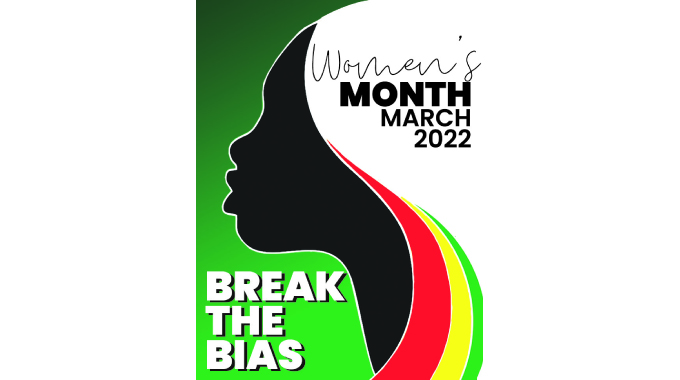
ON March 8, Zimbabwe joined the rest of the world in commemorating International Women’s Day, reflecting on the challenges faced by women and the progress made so far in their advancement in pursuit of gender equality.
An area that has been of concern in the fight for gender equality is that of Information and Communication Technology (ICT) where women have been conspicuous by their absence.
In the past decades, there has been a lot of talk about the transformative power of technology in society, yet little attention has been paid to an emerging digital gender divide.
ICT is one sector where women are under-represented yet information and communication technologies are important tools for advancing gender equality.
According to Intel’s report Women and the Web: “On average across the developing world, nearly 25 percent fewer women than men have access to the internet, and the gender gap soars to nearly 45 percent in regions like sub-Saharan Africa.”
Access to ICT is of particular value to women in politics since ICT tools such as mobile phones, the internet and social media channels have the potential not only to serve as an equaliser for female politicians, but to increase their political participation and empowerment.
It is also well accepted that ICT tools have the potential to promote gender equality, which is a fundamental human right and key to the achievement of not only Sustainable Development Goal (SDG) 5, but also works as a key enabler for achieving other SDGs.
It is important to note that as the clock ticks down to 2030, the deadline for SDGs, Zimbabwe and other Sadc countries are still far from achieving women’s “equal and effective” participation in politics. Women still find themselves under-represented in parliament and far removed from decision-making levels.
According to the Africa Barometer 2021, women form 25 percent representation in lower houses, and 24 percent overall, which is far from the 50 percent mark provided for by global and continental gender instruments.
As claimed by gender and ICT experts, it would remain a dream for the country to achieve the global pledge in question by 2030 if gender dimensions of ICT are not identified and addressed.
They argued that while a large number of gender-neutral ICT tools were available and used for political campaigns and outreach to supporters and citizens, few of them have a gender dimension.
Women’s Coalition of Zimbabwe (WCoZ) committee member on Media and Information Communication and Technology cluster Ms Chioneso Rutsito said access to ICT can empower women politicians to get their voice heard at community, state and international levels.
“ICT helps female politicians to create their own space and agency. Despite the limitations of access by all women audience, online communications and connections, enabled by digital technology, can also help female politicians to mobilise existing communities, as well as build new ones unconstrained by size or geographic location,” said Ms Rutsito.
Murehwa Rural District Council (MRDC) Ward 1 Councillor, who is also Gender Committee Chairperson and Vice Council Chairperson of the same council Alderman Resta Dzvinyangoma said closing the gender gap was still a pressing concern in the ICT industry.
“Closing the gender gap in the tech industry is no easy mission. It is important to note that while ICT tools can offer both men and women space to participate in public life as committed citizens, it may be of particular value for women in politics since mobile phones, the internet and social media channels offer women politicians and candidates a platform to present themselves and their political programmes before citizens,” said Alderman Dzvinyangoma.
She said considering low cost and the role that personal initiative plays in its use, ICT can serve as an equaliser for female parliamentarians who are otherwise politically disadvantaged, having the potential to advance women’s participation in politics.
“Another consideration is the low level of participation by rural women who must be encouraged to gain equal access to ICT training and education as well as new employment and entrepreneurial opportunities generated by these technologies,” added Alderman Dzvinyangoma.
As an advocacy tool, ICT has the potential of providing tools that may break constraints on voice, particularly public voice and alleviate some of the barriers faced by women in politics. This includes illiteracy, poverty, time scarcity, hindrances of mobility and cultural and religious taboos.
Gender equality and political activist Sikhululekile Moyo, who is also Bulawayo Ward 17 Councillor, said although ICT tools create a hostile space for women in politics, with increasing attacks and very limited restrictions to harassment, defamation and threats, their effective use can help female candidates improve their communication strategies during campaigns.
“Online political communication, especially through social media, allows politicians to have more control over their own messages, and this works especially well for unelected or young women, whose status makes them less likely to be constrained by the political party apparatus.
“Women, however, require training and support to be able to use social media platforms, creating their own websites to use to disseminate information about their campaigns.
This is because capacity building and training initiatives aimed at improving social media knowledge and skills of women in politics can strengthen their communication strategies and voter outreach plans,” said Cllr Moyo.
Furthermore, access to digital technologies can help educate men and boys on changing, sometimes deep-rooted traditional perceptions of women and how they can support women to reach positions of power where women have equal opportunities to participate in all levels of political decision making without hindrance, without fear, and with full support.
It is important to note that Zimbabwe long committed to improving gender equality in political decision making when it ratified the Maputo Protocol on April 15, 2008 that offers specific provisions on women’s political participation.
The protocol is laudable for its emphasis on the right of women to participate, without discrimination, in all elections, equal representation of women in the electoral process and equal partnership of women with men at all levels of development and implementation of State policies.
Women Affairs, Community and Small and Medium Enterprises Development Minister, Dr Sithembiso Nyoni is on record urging women across the country, particularly those in rural areas, to embrace and exploit ICT centres availed by the Ministry of Information Communication Technology (ICT), Postal and Courier Services in almost all the provinces.
Dr Nyoni said her ministry has the mandate to see that women are empowered adequately to participate in the political and economic spheres since their contributions play an integral role in building stronger economies and improving livelihoods.
“Our goal as the ministry is to ensure that women are empowered sufficiently to participate in the full spectrum of the political and economic activities that are essential in building stronger economies and improving the quality of life for women, men, families and the community as a whole,” said Dr Nyoni.
Speaking on the occasion of the 2021 Commemoration of Girls in ICT programme, Minister of Information Communication Technology (ICT), Postal and Courier Services, Dr Jenfan Muswere also stressed the need to bridge the global gender digital divide saying the drive has become more urgent in the wake of the Covid-19 pandemic, which has necessitated speedy adoption of digital means of doing business.
He said the Government, through his ministry, was making huge investments in developing long term ICT solutions and technologies that will enhance gender equality in the ICT sector and provide solutions for the country’s economic sustenance.
The Covid-19 pandemic has demonstrated the importance of ICT tools in efforts to achieve gender equality, especially in developing countries like Zimbabwe where the pandemic has revealed both gaps and opportunities to engage more women in decision making and leading response and recovery efforts.
The role of ICT as a tool for women’s political empowerment and participation has also attracted the sustained attention of the United Nations in recent years.
Commenting on the importance of ICT tools in advancing the political empowerment of women, Jensine Larsen founder of World Pulse, a global digital network connecting tens of thousands of women across the globe once said: “A woman with a laptop can be more powerful than a man with a gun.”
Midlands Chapter Chairperson of the Women in Local Government Forum (WILGF) from Zibagwe Rural District Council, Councillor Idirashe Dongo said as the role and uptake of digital media devices and other technologies increases and creates a lot of new political opportunities for women.
They have also exacerbated existing patterns of gendered violence and introduced new forms of intrusion, abuse and surveillance.
“While the use of ICTs presents women politicians with an opportunity to hold virtual meetings, briefings and campaign events to reach their constituencies, it can also be a barrier to women participating effectively in decision-making.
Violence against women that is mediated by technology is increasingly becoming part of women’s experience and their online interactions.
“These forms of violence against women perpetrated via technology, which cause psychological and emotional harm, reinforce prejudice, damage reputation, cause economic loss they also pose as barriers to women’s participation in politics and public life,” she said.
According to the Inter Parliamentary Union (IPU), social media is the main channel for psychological violence against women politicians.
Zimbabwe Gender Commission (ZGC) Commissioner Peter Mawonera (Chief Chikwizo) said women in general face considerably more challenges with regard to accessing and using ICTs.
“Women often have complex relationships with technology and machines as a result of being socialised over time to believe that machines and technology are a man’s domain and not for women and girls, thus generating a gender bias attitude towards modern technology.
Majority of women have less time and face religious and or cultural constraints that restrict their access to and use of technology.
“Women face specific barriers such as unfamiliarity with the dominant languages of the internet. Absence of training in computer skills due to domestic responsibilities and the fact that the information delivered by ICTs is not valuable to them,” said Commissioner Mawonera.
According to World Wide Web Foundation, men remain 21 percent more likely to be online than women, rising to 52 percent in the world’s least developed countries.
As a possible solution to promoting effective participation of women in politics, Commissioner Mawonera said: “The Government should get into partnerships with telecommunications companies to encourage or promote universal access.
The Government should subsidise costs of ICTs; both hardware and software. There is also need to encourage private-public partnerships between Government, donors and corporate sponsorships for ICT programs to train women through seminars and forums.”
Information Technology (IT) expert Mr Joel Tsvakwi said many political parties were failing to explore the benefits offered by ICT tools to promote women’s political participation.
“ICT is becoming more important in the daily work of political parties and their members but there is still much potential for facilitating their increased effectiveness, particularly in the area of attracting female voters and candidates. Few parties for example, managed to build up databases of their female supporters.
“Digital media and the internet can provide new forms of communication and engagement for women that make networking easier, increase their social capital and facilitate the creation or growth of their supporters,” said Mr Tsvakwi.
He said there were also challenges to be aware of, particularly accessibility and safety issues.
“The cost of accessing digital technology is a major obstacle for low-income women in developing countries like Zimbabwe. Meanwhile, just as digital ICTs present new opportunities for women to express themselves, share their opinions and lobby on issues important to them, hate speech, online harassment and threats are also increasingly affecting individual and groups of women who use internet for political participation, freedom of speech and for access to information,” said Mr Tsvakwi.



 Online Reporter