admin
admin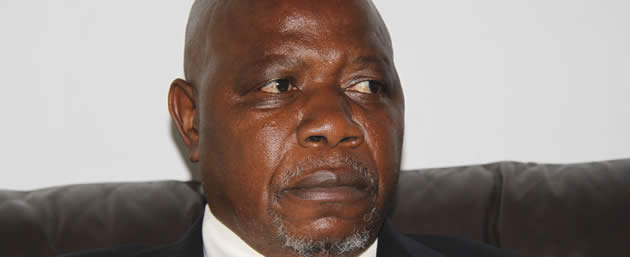
Fortious Nhambura The Interview
IN December last year Government instituted a 25-member panel of inquiry into the operations of Zimbabwe’s media industry, the Information and Media Panel of Inquiry (IMPI), to inquire into the values, ethics and standards of the media sector in relation to the country’s laws and population needs. Our Senior Reporter Fortious Nhambura (FN) caught up with the Chairperson of IMPI Mr Geoffrey Nyarota (GN) to talk about the operations of the panel.
FN: Briefly, Mr Nyarota, could you please highlight our readers on what the mandate of the IMPI is?
GN: Since Independence, Zimbabwe has not undertaken a systematic and comprehensive inquiry into the state of the media and information sector. Meanwhile, there have been vast changes in the Zimbabwean media establishment in general, specifically in the way we practice our journalism, in the quality of content of our media products, as well as in the training of media and information practitioners as well as the media legal framework.
These changes have provoked criticism from within the media, from civil society as well as from the political establishment and prompted fierce debate.
IMPI was set up by the Ministry of Information to inquire into the current state of the media and information sector and to propose recommendations to rectify whatever is recognised to be shortcomings or problem areas.
FN: What are your terms of reference regarding the views that you are collecting?
GN: In broad terms the IMPI Terms of Reference are to inquire into media platforms and the public interest in and the quality as well as the relevance of the content of media products; especially the newspapers, television, radio, magazines and social media; media as business; that is media funding strategies and opportunities; identify fiscal constraints to the industry, as well as weaknesses, if any, in current business models and practices by players in the media industry; issues of media ownership, media diversity and customer choices; the impact of fast-changing technologies on delivery of news content; that is emerging trends of integration and convergence and the film industry and opportunities and prospects for development of a much-needed content industry in Zimbabwe, with emphasis on investment and training.
It also sought to look into general media training and training capacity building through evaluating the arrangements for scope and quality of information/media training proffered in the country through a skills audit; as well as to gauge the relevance and responsiveness of such training to the needs of the industry; the status of media law reform with emphasis on bringing existing media laws into alignment with the new Constitution of Zimbabwe; while focusing on the laws of defamation; laws affecting public access to the media; the welfare needs of employees in the media industry and information sector by assessing their employment opportunities and conditions of service; remuneration patterns in the media industry and evaluate how they compare regionally and globally; ethics, values, professionalism and standards of journalism; the extent of political polarisation and interference in the practice of journalism and the media in general and how gender and marginalised groups are portrayed in the media.
FN: But how representative is your body?
GN: IMPI is extremely representative in terms of reflecting the broad spectrum of the population of Zimbabwe. To start with, the membership of the panel conducting the inquiry is drawn from a cross-section of interest groups — from the media houses, both print and electronic, from the legal profession, from the training institutions, the entertainment sector as well as the professional media organisations.
IMPI is conducting interviews with all stakeholders such as the publishing houses and the broadcasting services, the professional media organisations, such as the Zimbabwe Union of Journalists (ZUJ), the Zimbabwe National Editors’ Forum (ZINEF) and the Voluntary Media Council of Zimbabwe (VMCZ), and media advocacy groups such as the Zimbabwe chapter of the Media Institute of Southern Africa (MISA) and the Federation of African Media Women of Zimbabwe (FAMWZ), to mention a few. Above all, IMPI has undertaken a comprehensive outreach programme. A total of 76 meetings were convened nationwide. The views of ordinary citizens, who as consumers are significant stakeholders, were canvassed.
FN: What are some of the pointers and major issues that have so far come out during your outreach?
GN: In brief the major issues that have been highlighted by members of the public are: poor or sub-standard quality of content of media products, both print and electronic; prevalence of political polarisation and political interference in the media; non-accessibility of media products, radio and television in particular, but newspapers as well, especially in the rural areas; focus of media coverage on Harare to the total exclusion of smaller towns and rural areas.
Also highlighted is the tendency to sensationalise news, especially on the part of the privately owned newspapers; the need for speedy media law and policy reforms in order to align repressive legislation with the new Constitution of Zimbabwe; need to licence community radio stations and corruption in the journalism profession.
FN: What necessitated the setting up of IMPI?
GN: The need to conduct a comprehensive inquiry into and a study of the current status of Zimbabwe’s media and information industry as a prelude to the compilation of recommendations for the redress of identified problems, shortcomings or inadequacies.
FN: After what happened with the Copac process (interference from political forces), how apolitical is the process of inquiry now being undertaken by IMPI?
GN: IMPI is completely apolitical. Two months down the road we have not been subjected to influence or pressure from any politician, not even the Minister of Information, Professor Jonathan Moyo himself, despite suggestions to the contrary, as alleged in sections of the press. We always emphasise at our meetings that the IMPI process is completelyapolitical. In most venues where we have held meetings participants have expressed appreciation of this assurance. Right from the beginning both Prof Moyo and his deputy, Hon Supa Mandiwanzira, have assured us that in selecting us as panellists they were motivated only by what they perceived to be our potential to undertake a successful and meaningful inquiry on the basis of our respective skills, experience and qualifications, and not by any other considerations.
FN: Similar bodies have been set up in the past but their recommendations have not been implemented. How are you sure that your views will be considered in the formulation of the policies dealing with the media?
GN: I am personally convinced that the Ministry of Information, Media and Broadcasting Services is motivated by a genuine desire to see a programme of meaningful change being implemented in the media and information sector.
For instance, the Minister has made public pronouncements on the need for reform of oppressive and counter-productive media laws, such as AIPPA. Already the Criminal Defamation Law, which has haunted Zimbabwe’s journalists over the years has been overturned with the landmark ruling by the Constitutional Court last week. This judgment effectively decriminalised (criminal) defamation in Zimbabwe.
Unfortunately, IMPI has its fair share of detractors, some of them in the media, and they have been relentless in seeking to cast aspersions on the programme, but I am convinced that the IMPI report and recommendations will influence the formulation of the media policies of the future in Zimbabwe.
FN: What are your views as regards the setting up of a school of journalism in Zimbabwe and the national council for media practitioners?
GN: It had become common knowledge for a long time and our own inquiry has reinforced the view that the fundamental problem with the practice of journalism in Zimbabwe lies in the skewed journalism training process in the country.
In the total absence of controls, virtually anyone can set up a journalism training facility and there is a fair number of dubious training institutions, which are churning out half-baked journalists, the majority of whom fail to secure employment in the mainstream media.
There is no official audit on the calibre or qualifications of the people who are training Zimbabwe’s journalists. As a result while the number of training institutions is burgeoning the calibre of journalists and the general standard of journalism are fast deteriorating.
The training of journalists has been reduced in some instances to nothing other than a viable commercial enterprise, with each institution using its own curriculum in the absence of any co-ordination.
Our report will reveal that there are institutions whose enrolment is upwards of an incredible 400 students, each one of them fully expecting to secure employment in the mainstream media as journalists and totally oblivious of the fact that they attended courses in media and social studies, and not in journalism.
In these circumstances it is clear the need for streamlining of journalist training is vital. Establishment of a school of journalism is the obvious route to such a goal.
In fact, the establishment of a school of journalism will be one of our major recommendations.
IMPI will also recommend the setting up of a national council for media practitioners. The demand for such a council has been overwhelming on the part especially of those journalists who have attended our outreach meetings.
FN: One of the issues that have been raised by citizens is the apparent media polarisation. How can this be addressed?
GN: At each and every one of the meetings that IMPI convened throughout the country participants complained bitterly about the prevalence of political polarisation in the Zimbabwe media. Coupled to this was the observation that the Zimbabwe media was obsessed with coverage of politics, much of it partisan.
Some people linked polarisation to unethical journalism and corruption, while others blamed it on media owners who align themselves with political parties.
Strict enforcement of ethical journalism practice and elimination of control by media owners on the editorial operations of their newspapers are two strategies to limit polarisation.


 Online Reporter