Online Reporter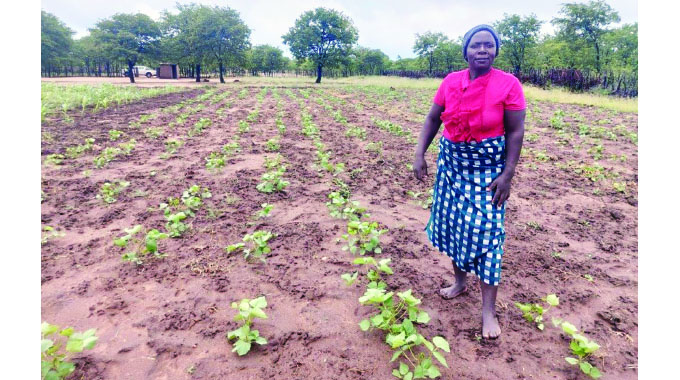
Johnson Siamachira
Correspondent
At dawn, the sun casts its first golden rays over the parched hills of Gwanda district in Matabeleland South, illuminating the struggles of 52-year-old Mrs Maureen Chauke.
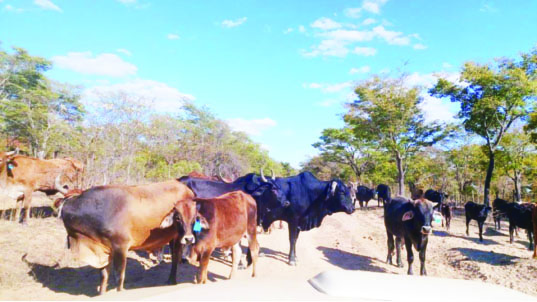
A smallholder farmer, Chauke used to wake up at 5 am to guide her cattle to sparse pastures, their grazing limited by an unforgiving climate where rainfall barely reaches 500 millimetres a year.
“We had to earn our living after heavy sweating,” she reflects, her voice tinged with the resilience of countless seasons spent battling nature,” she said.
Mrs Chauke’s story is not unique in Matabeleland South province, where farmers face relentless droughts and soaring temperatures threatening their livelihoods. Here, livestock production is akin to a high-stakes gamble, often yielding little more than frustration. Yet, amid these challenges, a shift is underway, fuelled by innovative practices and a commitment to change.
Mrs Chauke is one of the beneficiaries of the Livestock Production Systems in Zimbabwe (LIPS-Zim) project, which started in 2020.
The project, implemented by Government and development partners, was targeted to improve the country’s livestock production.
The four-year European Union-funded project focused on increasing agricultural productivity in nine districts in Zimbabwe’s agro-ecological regions IV and V. These are semi-arid areas that receive little rainfall and where crop production is nearly impossible without irrigation.
The project used a holistic approach that included herd rationalisation, good animal husbandry practices and critical business development skills.
Without a basic understanding of good agricultural practices in livestock production, most smallholder farmers cannot sustain livestock herds to move past subsistence livestock farming.
The LIPS-Zim project was led by ILRI in collaboration with the French Agricultural Research Centre for International Development (CIRAD), the International Maize and Wheat Improvement Centre (CIMMYT), the University of Zimbabwe’s faculty of veterinary sciences and the Ministry of Lands, Agriculture, Water, Fisheries and Rural Development.
The initiative promoted climate relevant innovations in livestock-based production systems in Zimbabwe’s semi-arid regions IV and V.
These areas are characterised by low rainfall and limited agricultural viability, making traditional farming methods increasingly untenable.
In Zimbabwe, livestock production is crucial to rural economies. Yet, the sector struggles with low productivity due to various factors, including high feed costs, limited access to quality feed, and the impacts of climate change.
Farmers in these regions often spend up to 70 percent of their production costs on feed alone.
Mrs Chauke was the first female farmer to join the LIPS-Zim project in Gwanda.
“Access to economic opportunities outside of subsistence farming was a challenge for me,” she admits. Through the project, she learnt to cultivate drought-resistant fodder crops like velvet beans, mucuna and sunhemph, which provide a reliable feed source for her livestock.
During the 2023/2024 farming season, Mrs Chauke earned US$200 from the sale of fodder.
Before implementing these changes, Mrs Chauke’s 15 dairy cows each yielded about 12 litres of milk daily, costing her US$75.60 a month in feed.
Now, with a diet based on velvet bean (Mucuna pruriens), hyacinth bean (Lablab purpureus) and sunhemp, her cows each produce 25 litres daily, while her feed costs have dropped significantly.
“Dairying was not profitable before,” she says.
“Now, it’s no longer business as usual for me.”
Through LIPS-Zim, Mrs Chauke and her fellow farmers received training in business skills such as budgeting and record-keeping.
“This new knowledge to look at livestock production as a family business, and the training in budgeting, marketing and good agricultural practices has transformed my livestock farming enterprise,” she explains.
“We did not treat livestock farming as a business before, and as a result, we could not make any profits.”
According to the Zimbabwe National Statistics Agency, livestock and livestock products contribute significantly to the economy of Zimbabwe, with cattle accounting for 35-38 percent of the Gross Domestic Product (GDP) contributed by the agricultural sector.
However, many smallholder farmers struggle to access markets and improve their herds.
Mrs Chauke’s experience illustrates a broader trend among participating farmers, who see their cattle’s average live weight increase from 400kg to 520kg, enabling them to secure better market prices.
Mrs Chauke says her one-hectare fodder production plot has changed her life, with the proof in her pocket.
“Before joining the feed trials, I sold my beef cattle for US$350 each, but now they fetch US$700,” she beams.
She sells four to 10 cows annually to commercial buyers who collect them directly from her farm, significantly reducing her transportation costs.
Mrs Chauke’s new-found success has allowed her to invest in her children’s education.
At the start of the project, she owned 17 cattle. By the end of 2021, she sold 10 to pay for her children’s university fees. Now, she has rebuilt her herd to 18, ensuring she can continue supporting their education, which costs about US$6,550 annually.
“One of my children graduated from the University of South Africa and now works for an investment bank in that country,” she says proudly.
In Buhera district, in eastern Zimbabwe, Mrs Shirley Makoni’s experience mirrors that of Mrs Chauke.
In 2024, working with CIMMYT, she intercropped jack beans, a drought-tolerant legume, with maize. While her maize withered under the sun, the beans thrived, providing vital feed for her cattle.
“This was incredible,” Makoni says. “Thanks to the jack beans, my cows survived the drought.”
“We need to further explore how these drought tolerant legumes such as jack bean can be integrated in mixed crop-livestock farming systems of semi-arid regions like Buhera and their contributions to soil fertility and livestock nutrition,” said Dr Isaiah Nyagumbo, a cropping systems Agronomist from CIMMYT.
Similarly, Mr Mark Zenda, also from Buhera shifted his focus from crop farming to livestock production as rainfall patterns changed.
“With drier land and scarce water, we had to find alternative sources of food and income,” he explains.
Through feed formulation training from LIPS-Zim, Mr Zenda improved his milk production from 300 ml to 2 litres per cow daily. His cattle now weigh more, leading to better prices at the market; US$500 for a 350kg animal, compared to just US$250 for a 250kg one before the project.
Crucial to strengthening fodder production and tying the project together is the mechanisation component.
By processing forage legume like jack bean, lablab, pigeon pea, mucuna, and cowpea, farmers secure resilient, nutritious livestock feed despite erratic weather.
In a nutshell, the project has successfully integrated sustainable livestock production practices, climate-smart innovations, and mechanisation to scale fodder production, safeguarding livelihoods and strengthening food security.
In the words of Mrs Chauke, “I can now buy sugar, cooking oil, soap, and flour; developments I never dreamt of. I have even built a modest new home for my family.”
For her and countless others, life is no longer merely about survival; it is about thriving against the odds.