admin
admin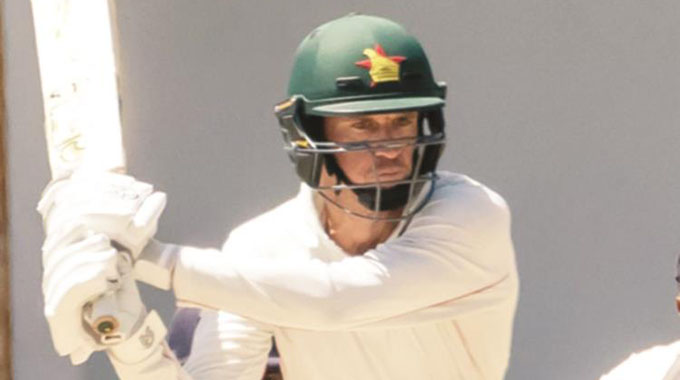
Robson Sharuko
Senior Sports Editor
IN terms of sheer defiance, it was one of the greatest displays by a captain, of a Zimbabwean sports team, in history – leading from the front, playing with both courage and spirit and refusing to wilt in the searing desert heat.
In a vigil that lasted 309 balls, in which he still remained unbeaten, Sean Williams stood like a fountain of hope, shone like a beacon of light, providing an oasis of life, in a desert of destruction.
His resistance, in the face of a relentless onslaught, redefined what it means to be a leader, for those who are handed the honour to captain our sports teams, and even provided a rainbow of light, in the gloom of defeat.
In the process, he provided a new template for defiance, to other captains of the country’s national sports teams, especially when the odds are heavily staked against them. It’s something Warriors captain, Knowledge Musona, can pick some lessons from, as he prepares to lead his severely-crippled side, in their final two AFCON qualifiers, against Botswana and Zambia, this month.
The similarities are striking.
Williams found himself without the services of many of his experienced players — Brendan Taylor, Craig Ervine, Kyle Jarvis and PJ Moor — for one reason, or another, for this tour of duty in the Gulf.
It’s what Musona will face, in a few days’ time, with his Warriors set to be without regulars Marvelous Nakamba, Tendayi Darikwa, Marshal Munetsi and Tino Kadewere, for the two Nations Cup qualifiers, against Botswana and Zambia.
But, as Williams showed, it’s the will to keep on fighting, irrespective of the odds, and the circumstances, which really matters.
Where others would have been collapsed, crushed by the sheer size of the challenge, and the failure of most of frontline lieutenants, Williams refused to be blown away by the Rashid Khan blitz, on day four of the second Test, in Abu Dhabi.
And, like a true leader, he rallied the remainder of his troops, providing both inspiration and guidance, to a tail, which no one had imagined would offer such remarkable resistance.
At the end, he was the last man standing, a proud and unbeaten warrior who had run out of partners, still willing to fight on and, in the process, providing domestic sport with a new definition of what it means to throw everything into a fight, for one’s country.
Of course, it would be unfair not to mention Donald Tiripano’s superb show, itself probably a bigger contribution, given he is not really expected to score the amount of runs (95), which he got in that second innings.
But, there is a responsibility that comes with being a captain, the one who should always lead from the front, the one the others expect to derive inspiration from and, in cricket, more than any other game, this is a very important position.
When wicketkeeper Regis Chakabva fell for a duck, the latest victim of Khan’s blitzkrieg, the Chevrons appeared dead and buried, at 142-7, with just one of their established batsmen, Williams, standing alone in those ruins.
His team still trailed Afghanistan by 116 runs, an innings defeat loomed large, and the showdown was likely to end in just four days in which the Asians had batted only once. But, rather than surrender, which others would have done, Williams decided to draw inspiration from the tough challenge, launching a superb counter attack, to take the contest into a fifth day and ensure, at least, Afghanistan would have to bat again.
Test cricket provides a thorough examination of an athlete’s mental, and physical, qualities, the concentration levels have to be very high because, for about every days, every delivery matters.
“They say cricket is a very mental game and I agree with that, because probably the hardest thing to do on the field is to eliminate all the distractions and live in the present moment,’’ Justin Langer, the coach of the Australian team, told the Board of Control for Cricket in India.
‘’Having said that, technique and a certain level of physical fitness is also very important to succeed.
“I think mental toughness is the ability to eliminate all distractions and give a 100 per cent attention to the next ball about to be bowled to you. As humans we tend to either live in the past or in the future.
“In cricket you are required to give your all to the ball you’re about to face.’’
It’s even worse when one finds himself, as his team’s last recognised batsman, with the opposition sensing victory, and needing to score more than hundred runs, just to make them bat again.
But, Williams decided this was not the moment to throw in the towel, at least, for the sake of his team, and his country.
And, rather than surrender, and enjoy an extra day rest, he decided to give it his best shot.
If his team was going to fall, which appeared inevitable at that stage, surely, they would have to go down with a fight, with him playing the central role, in the compelling fightback.
And, this is what he did, in a display of a never-say-die spirit, which caught the imagination of as many Chevrons fans as the neutrals.
Williams scored an unbeaten 151, in 309 deliveries, hitting 13 fours, and a six, while also sharing a record-breaking 187-run eighth wicket partnership, with Tiripano (95), which started on Saturday and spilled into the final day on Sunday.
This was the highest eighth-wicket partnership for the Chevrons, in Test cricket, eclipsing the 168-run stand when Andy Blignaut and Heath Streak defied the West Indies in 2003. Tiripano eventually fell, five runs short of a deserved century, to Khan’s googly, but Williams still hung around, and added a further 33 runs, in the partnership of Blessing Muzarabani.
For Williams, who remained stranded on the other end, when Victor Nyauchi fell, this was his third century, as the Chevrons skipper, in four Tests, moving him level with the legendary Andy Flower and just one century behind Brendan Taylor.
Williams now has scores of 18, 39, 107, an unbeaten 53, 105, 8 and an unbeaten 151, since he was handed the role to captain the Test team, and his stock, around the world, has been rising.


 Online Reporter