Chronicle Editor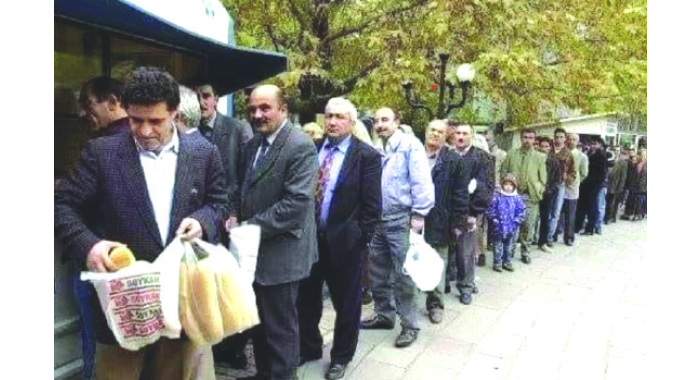
ISTANBUL (Turkey) — On a sunny afternoon this week in Istanbul’s Uskudar neighbourhood, retiree Niazi Toprak sat on a bench reading the newspaper as he waited for a fresh delivery of bread to arrive. Joining him were dozens of other people who had also lined up at the nearby kiosk belonging to the city’s subsidised bread programme.
Istanbul Halk Ekmek, or “Public Bread”, sells a 250g (8.8 oz) baguette for 1,25 Turkish liras ($0,09) — cheaper than at nearby bakeries, where prices start at 2,50 liras ($0,18).
Though the difference is measured in pennies, the savings add up for Toprak and many other Istanbulites who queue at more than 1 500 such kiosks across the city each day.
“Everything is getting expensive, from your food to your bread, from your shirt down to the socks you wear,” the 71-year-old Toprak told Al Jazeera.
A former truck driver and produce wholesaler who retired five years ago, he recently moved in with his children because money is tight.
“My retirement social security only brings in 800 liras ($56) a month, so that’s not enough these days to live alone on,” Toprak said. “We are four people in the house, and our rent is 2 000 liras ($140 a month). Each of us eats at least one loaf a day, so I plan on buying four loaves from here. You need to save every bit of money you can these days.”
The Turkish lira has lost roughly 48 percent of its value against the United States dollar this year, experiencing an all-out crash in November.
That same month, Turkey’s annual inflation rate jumped to 21,3 percent, according to government statistics. But critics of the government doubt even that eye-watering calculation, pointing to what appear to be far larger increases in the prices of food, rent and energy.
The Istanbul municipality, currently headed by the opposition Republican People’s Party’s (CHP) Mayor Ekrem Imamoglu, has put out its own figures showing the cost of living in the city has increased more than 50 percent in a year.
According to the Istanbul Statistics Office, the price of wheat has gone up 109 percent, sunflower oil 137 percent, toilet paper 90 percent, sugar 90 percent, and natural gas 102 percent.
For many, the price of bread is the pulse of the Turkish street.
The country’s Bread Industry Employers’ Union estimates 200-300kg (440-660 pounds) of bread is consumed per person per year in Turkey. It’s most often a soft baguette, sliced up like toast and used to scoop up eggs, cheeses, olives, jams, and other breakfast foods.
In thousands of Istanbul’s cafeteria-style restaurants called “esnaf lokantasi” that cater to workers craving home-cooked options, the slices are presented alongside beans, or soup, or other dishes.
On Istanbul’s sidewalks, a baguette is sliced in half and used to make a sandwich of chicken, or ground beef, or fish.
Bread is such an important staple that during the height of strict lockdowns during the coronavirus pandemic, Turks were allowed to leave their homes for two things: visits to the pharmacy, or visits to the bakery.
“Bread is an essential item in Turkish cuisine, and it’s frequently consumed especially if you are a poor family,” said Berk Esen, an IPC-Stiftung Mercator fellow at the Center for Applied Turkey Studies and an assistant professor at Sabancı University.
“For a family of five or six people for instance, where parents and children and elderly live together, maybe at least two pieces of bread are eaten every day.
So even if the Halk Ekmek bread is just a few liras cheaper, over a month that adds up to a substantial amount for a low-income family, and the price gap between that bread and what is in the markets is only going to widen as inflation goes up.”
Inflation has become the political hot-button issue in Turkey, with opposition parties even calling for early elections, alleging that the governing Justice and Development Party, or AKP, and President Recep Tayyip Erdogan seem to be oblivious to the hardship being faced by many in Turkey.
While Erdogan has the authority to appoint or sack government ministers and central bank policymakers, municipal governments in major cities like Istanbul and Ankara are currently headed by opposition figures.
Istanbul’s Mayor Imamoglu has rolled out his own local efforts to alleviate poverty in the city. Halk Ekmek
“Public Bread” daily production has doubled to more than 2,5 million baguettes and other varieties of bread.
Anonymous benefactors can go online to pay utility bills for struggling residents. The city also distributes baby formula and milk for thousands of mothers in need, and offers modest scholarships for students grappling with rising costs in the metropolis of 16 million people.
Similar programmes run by the federal government also exist, such as aid for new mothers, and scholarships for students. But critics say the lifelines have not kept pace with rising need as inflation squeezes Turkish households.
The federal government is also currently negotiating with labour groups on boosting the minimum wage, and authorities have stepped up inspections of grocery stores to check for price gouging and hoarding of essential items.
Istanbul’s subsidised bread programme has been around since the 1970s. While it was founded by the CHP, Esen said successive governments have recognised its importance and worked on expanding it, including the AKP, which headed the municipality for more than a decade. — Al Jazeera



 Online Reporter