Andrew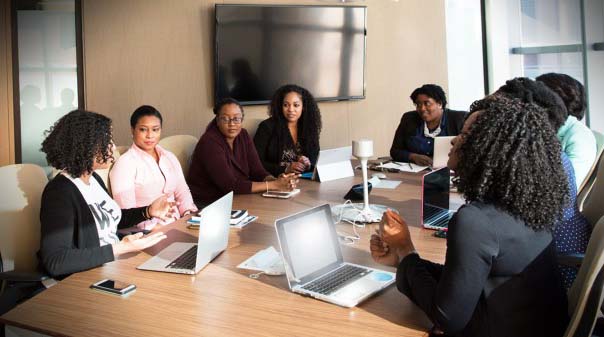
Michael Tome
Business Reporter
The gender equality wave sweeping across the country, has given women impetus to realise their resolve to be in leadership positions as the trend has ushered in possibilities for women to be valued as equals to their male counterparts.
The working landscape is changing and the business world is no longer just a men’s game.
However, women continue to be vastly under-represented in decision-making positions, particularly in politics, businesses, and communities yet some have proven to be powerful agents of change.
The far-reaching benefits of diversity and gender parity in leadership and decision-making are getting increasingly recognised.
Those that have managed to get leadership roles, have undeniably proved their capability and abilities.
Research has found that the global share of women in senior management roles is increasing and in 2019, the proportion of women in senior management roles globally grew to 29 percent, the highest number ever recorded. In 2020, this percentage remained the same.
In that context, the Chartered Governance and Accountancy Institute of Zimbabwe on Thursday hosted a Women in Governance and Accountancy webinar, which sought to address and advise women in leadership positions on a myriad of issues with regards to conduct and discharge of their day to day duties.
Themed “become a glass ceiling breaker” the meeting focused on inspiring success among women.
In her presentation entitled leadership, essential components for career development, Procurement Regulatory Authority of Zimbabwe (PRAZ) chairperson Dr Vimbayi Nyemba, spoke of the need for women to be confident in performing their duties.
She implored women to be constructive towards each other and censure the notion that women are not able to work together.
“We are tired of people who say women cannot collaborate, women cannot work together they pull each other down. Let us build and develop our careers and leadership skills through collaboration and networking.
“Women are very good networkers, we have that attribute that makes us good leaders in business but when women meet their discussions are social they do not end in discussing business. I think it also becomes a weakness on our part. Instead of discussing business, we are so much inclined to social issues. We should use our power of networking to discuss issues related to our professions and career development, men take that in seriously,” Dr Nyemba said.
She challenged her peers not to accept mediocrity but to strive for greater possibilities also pointing out transparency and integrity as attributes necessary for women in leadership positions.
“We have come to a stage where women are saying we are not ordinary, it is up to us to change our lives no one is going to come and change our lives. There is no success without failure not forgetting that Integrity is a currency, it is very important,” she said.
In October 2020 a survey showed that only 14 of the 193 United Nations (UN) members have a woman in the highest position of executive power, which is less than 10 percent of the men in power.
Currently, 24.9 percent of women are elected in parliaments, which is more than double that of 1995’s 11.3 percent.
Rwanda is still the striking leader of this change as its national parliament consists of more than 60 percent women while other countries like Cuba, Bolivia, and the United Arab Emirates are at the top with a participation above 50 percent.
Presenting on the topic “Change Management: Explore the power in women leaders in the face of change” The Sunday Mail Editor, Victoria Ruzvidzo, spoke at length about how women should have an appetite for personal development and be well-read to have a better understanding of management issues.
She enlightened the participants on how the trends had shifted with notable growth in the number of women occupying positions of power. Critically, she highlighted how women that have been given a chance to lead had excellently executed their duties.
“World is experiencing disruptions and changes of high proportion and is becoming more receptive to women leaders, women must rise to the occasion as we are wired differently and those in leadership positions are amply demonstrating that women are game-changers,” said Mrs Ruzvidzo.
She quoted Michelle Obama who is famed for saying; “no country ever flourish if it stifles the potential of its women and deprives itself of the contribution of half its citizens.”
Mrs Ruzvidzo pointed on how women are good collaborators and encouraged her peers to leverage their natural ability to multi-task in order to forge a shared purpose and vision in support of women’s emancipation.
“Women should have rich networks, we have many prominent women, the likes of Dr Divine Ndhlukula and we can leverage on such networks so that we go the next level, you can get ideas from the next woman.
“We should be visionaries and result oriented, women must not lack confidence, or have fear from uncertainties, we should maximise on natural attributes,” she said.
Facts and figures of economic empowerment from the United Nations (UN) Women found that the global share of women in senior management roles is increasing incrementally, with 87 percent of global mid-market companies having at least one woman in a senior management role.
According to the UN when more women work, economies grow as women’s economic empowerment boosts productivity, and increases economic diversification and income equality in addition to other positive development outcomes.
Empowering women in the economy and closing gender gaps in the world of work is key to achieving the 2030 Agenda for Sustainable Development and achieving the Sustainable Development Goals, particularly Goal 5, which seeks to achieve gender equality, and Goal 8, which pushes for promotion of full and productive employment and decent work for all as well as Goal 10 on which seeks to reduce inequalities.


 Online Reporter