Online Reporter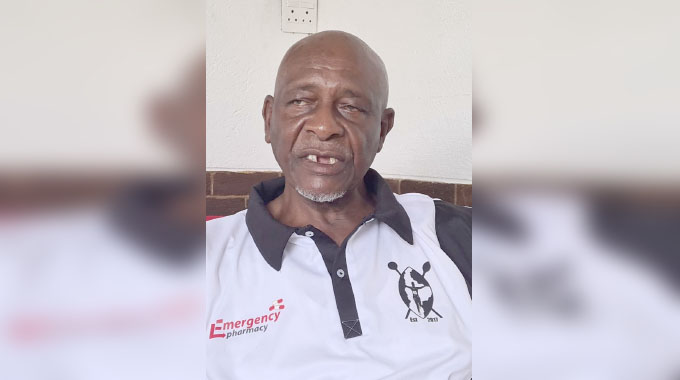
THE arrival of independence in 1980 marked a significant change for the football community, a transformation that had been set in motion years earlier by the renaming of two major clubs — Highlanders and Zimbabwe Saints.
Before these changes, Highlanders were known as Matabeleland Highlanders, while Zimbabwe Saints were called Mashonaland United. According to Highlanders legend Lawrence Phiri, there was considerable tension between the two teams’ supporters, often leading to street fights whenever the fixture was announced.
However, in 1975, following the release of nationalists from detention such as the late Vice-President, Joshua Mqabuko Nkomo, and the late former Cabinet Minister, Herbert Ushewokunze, a staunch Zimbabwe Saints supporter and benefactor, both teams were urged to abandon their old names. This was a call for unity as the country moved towards its final struggle for independence.
“The most significant thing is that when independence came, we had already initiated a new change, particularly when the Honourable Joshua Mqabuko Nkomo requested us to change the name from Matabeleland Highlanders to Highlanders,” said Phiri, who enjoyed success at the club as both a player and manager, winning, among other trophies, the league and the Chibuku Cup.
Phiri noted that independence heralded a new era of opportunity for footballers. Under Rhodesia’s rule, many talented players had been denied international exposure due to the country’s exclusion from global sport owing to its segregationist policies.
“As the football fraternity, we were excited because independence meant we would now be free, and football would be governed in an independent Zimbabwe. That was a significant moment,” Phiri recalled.
He emphasised the importance of eliminating ethnic divisions, as Highlanders were often perceived as a team for the Ndebele-speaking population, while Zimbabwe Saints were seen as a club for Shona speakers.
“Matabeleland Highlanders were associated with people from the southern region, predominantly Ndebele speakers, while Saints were linked with the northern region, which consisted mainly of Shona speakers. However, our team was diverse; we had white players and Shona-speaking players as well,” said Phiri.
Among the Highlanders’ notable players were Isaac Mafaro, Itai Chieza, Stanley Nyika and Peter Zimuto. Phiri reminisced about the electrifying atmosphere that surrounded Highlanders and Zimbabwe Saints matches.
“The anticipation for such a match was immense. We would be in camp for an entire week, ensuring we were well-prepared for the epic battle. The preparations were intense,” he said.
He commended national leaders for fostering unity and eliminating regionalism in sport.
Phiri described Highlanders as an inclusive club even before independence, attracting white players who felt welcomed within the team.
Reflecting on the past, he lamented the lost opportunities for many talented players due to the political climate of the time. He mentioned footballers such as Bruce Grobbelaar, Tymon Mabaleka, the Chieza brothers, George Shaya, and Majuta Mpofu, who he believed deserved greater recognition and lucrative careers abroad.
“They were exceptionally talented and could have achieved more. We produced very good players in those days,” said Phiri, who played for Highlanders from 1965 to 1982 and managed the team from 1984 to 1992.
Phiri also shared how Majuta Mpofu missed opportunities to play in Brazil and South Africa due to his laid-back attitude.
“He was a humble character who didn’t like being pushed beyond his comfort zone. He wanted to do things at his own pace, which cost him opportunities with clubs in South Africa. But he was an incredibly talented player,” said Phiri.
With independence, Zimbabwe rejoined the Fifa family, allowing clubs and national teams to compete internationally. Since then, numerous Zimbabwean coaches, administrators, and players have garnered foreign interest.
Bruce Grobbelaar, Benjani Mwaruwari, and Peter Ndlovu belong to the pioneering group of Zimbabweans to feature in England’s top division, paving the way for future generations.


 Colletta Dube