Online Reporter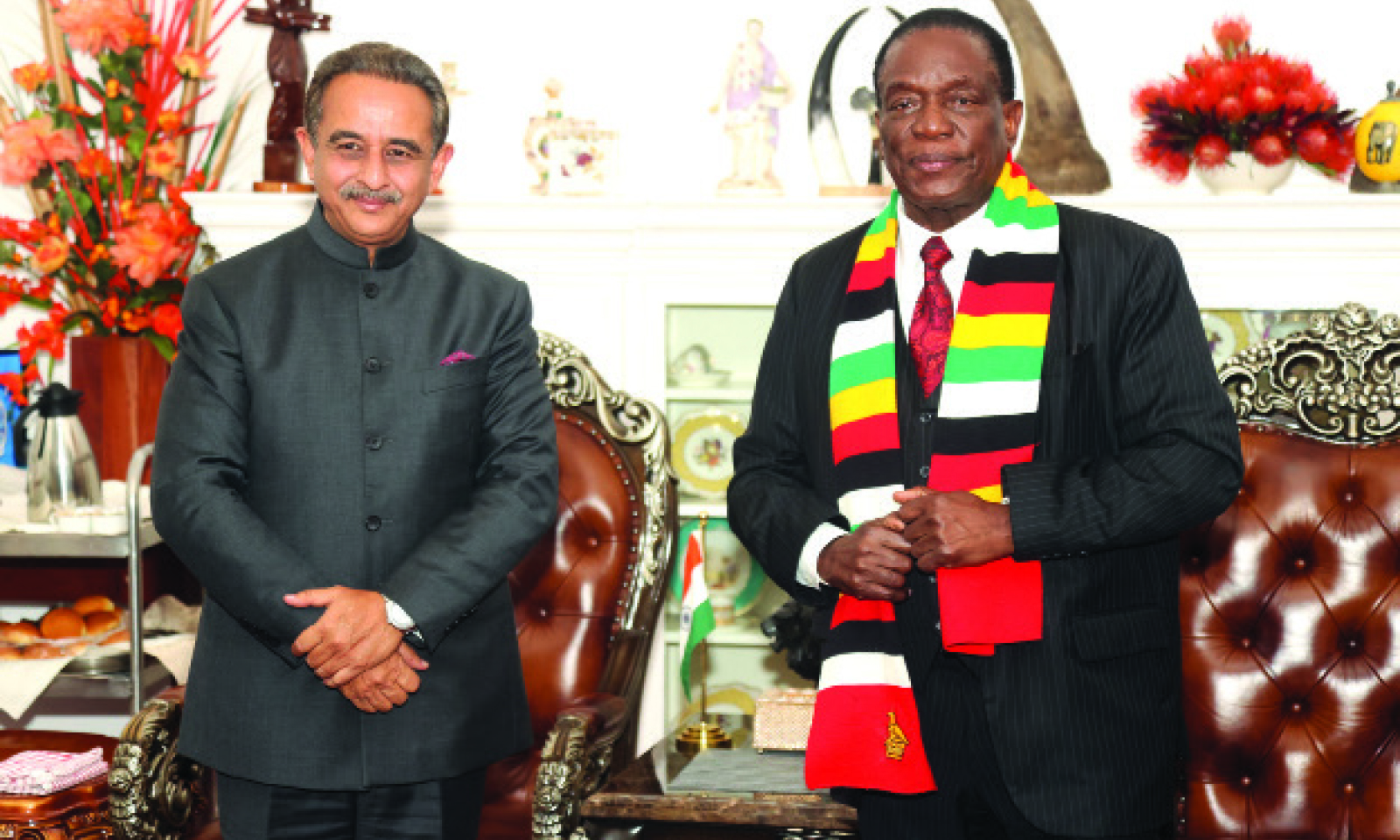
Zvamaida Murwira
Senior Reporter
INDIA has thrown its weight behind Zimbabwe’s bid for a non-permanent seat on the United Nations Security Council for the 2027 to 2028 term, a development that significantly strengthens the country’s push for greater global representation.
The endorsement was delivered yesterday by Indian Minister of State for External Affairs, Mr Kirti Vardhan Singh, when he paid a courtesy call on President Mnangagwa at State House in Harare.
Speaking to journalists after the meeting, Mr Singh said Zimbabwe and India will support each other to land the post.
“Yes, we are supporting each other in our proposal to become members of the UN Security Council. We have already proposed to give a word of acceptance for Zimbabwe to be a non-permanent member in 2027-2028 and the Government of Zimbabwe and His Excellency (President Mnangagwa) has assured his support for India to be the non-permanent member in the 2029-2030 and we will support each other,” he said.
Mr Singh said the two countries have a long history of cooperation.
“We have continued to support each other even at various international forums, including the UN, the voice of the Global South and other international forums. We have traditionally been very strong supporters of each other”.
Zimbabwe’s bid for a seat on the UNSC has received growing international support, with endorsements already secured from Russia, Cuba, India, Senegal, the Southern African Development Community (Sadc) and the African Union (AU).
If successful, Zimbabwe’s tenure would mark a significant milestone for both the country and the continent, as Africa seeks to amplify its voice on global security and policy matters.
The UNSC comprises five permanent members — China, France, Russia, the United Kingdom and the United States — and 10 non-permanent members elected for two-year terms.
Major decisions require at least nine affirmative votes, although any of the five permanent members hold veto power.
To pass a resolution, at least nine of the 15 members must vote in favour.
Mr Singh said he discussed several other issues with President Mnangagwa to deepen cooperation between India and Zimbabwe.
“We have a long history of very cordial, strong bilateral relations and we have very active engagements from both sides with ministerial visits and high-level visits. My visit to Zimbabwe was in that context of strengthening our bilateral relations with Zimbabwe and discussing some bilateral issues including trade, investment and development opportunities for both our countries,” he said.
“We had very fruitful discussions. I am very grateful to the Government of Zimbabwe for the very warm welcome, generosity and hospitality. We had very fruitful discussions on bilateral trade and development initiatives that can be done in the future with the Honourable Minister of Foreign Affairs and also His Excellency, the President.”
India and Zimbabwe share a history of close and cordial relations, with cooperation spanning various sectors like trade, investment and development assistance. The two country’s relations date back to the days of the liberation struggle that saw Harare attain its independence in 1980.
India has supported Zimbabwe’s development through lines of credit, grants and capacity building initiatives.
There are thousands of members of the Indian community in Zimbabwe, a reflection of good bilateral relations between the two countries.
A significant number of Zimbabweans of Indian origin contribute to the country’s economy and society.
Yesterday’s meeting was also attended by Foreign Affairs and International Trade Minister Professor Amon Murwira, Permanent Secretary Mr Albert Chimbindi and other senior Government officials.