admin
admin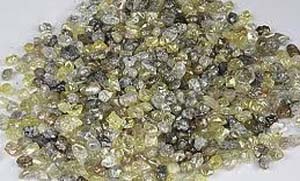
According to a report by India Times, an influential Indian daily newspaper, Batswana, Canadian and Russian mines have had their open-cast potential exhausted and are now going for costlier underground mining operations, which typically yield reduced production.
Mines and Mining Development Minister, Dr Obert Mpofu on Wesdnesday said more demand for local gems would challenge miners to produce more for India, the world’s biggest polisher and cutter of rough diamonds.
“We value the Indian initiative to look at Zimbabwe for their mineral needs,” said Dr Mpofu from Harare, just before he held a meeting with a delegation from CII Gems and Jewellery, from India.
“We will respond positively because India has been a friend to us. They have always been telling the world that Zimbabwe has complied with Kimberley Process requirements. India has been positive in its dealing with us. As I speak to you now, there is a delegation in our boardroom from India, representing CII Gems and Jewellery. India is one country we want to collaborate with; even the European Union but they have been confused by Britain’s foreign policy on us. We also work with the United Arab Emirates, the Middle East. India is a big market for diamonds like Russia and the US.”
Operations at Marange are relatively cheaper compared to other mines because the diamonds there are still near the surface. The occurrence of the gems near the surface means extraction costs are lower compared to deeper and older mines in Botswana, Canada and Russia, so companies operating at Marange can produce more, cheaply.
The India Times reports that two of the largest diamond mines in the world — Canada’s Ekati and Diavik mines — have exhausted open-pit resources and now both are underground mines. Three more mines — Russia’s Udachny and Botswana’s Jwaneng and Orapa — would become underground operations in the next two to four years. Output at all the five formerly the world’s biggest mines, has already started declining, some by up to 28 percent.
“Gem processors in India’s Surat, the world’s biggest diamond cutting and polishing centre,” said the India Times, “are looking at Zimbabwe for the required supplies of rough diamonds during the year as diamond production of mining companies like De Beers has decreased phenomenally. Two of the largest diamond mines in the world — Canada’s Ekati and Diavik mines — have exhausted open-pit resources and now both are underground mines. Converting a mine from an open pit operation to an underground operation typically results in curtailed production given the geology of Kimberlite pipes — the geologic formation of the resource is shaped like a carrot and gets narrower at depth. Ekati’s production declined 28 per cent year-over-year in 2012 and Diavik’s output is estimated to fall 17 per cent year-over-year in 2013. Three more of the world’s largest mines are set to go underground over the next few years as Russia’s Udachny mine is expected to be converted to an underground operation in the next two to four years and Botswana’s Jwaneng and Orapa mines are expected to follow suit.”
The forecast for increased demand comes soon after the Zimbabwe Mining Development Corporation chairman Mr Godwills Masimirembwa said that diamond firms at Marange would double production to 16,9 million carats this year.
The Government through ZMDC operates four joint venture mines in Marange and one wholly State-owned operation, Marange Resources.
The five produced eight million carats of diamonds last year and generated $685 million in exports. It was reported recently that ZMDC had set up another joint venture with Meikles to mine diamonds in Manicaland. Experts estimate that the Marange deposit alone holds about 25 percent of the world’s proven diamonds.
India has over the past three years, been spending $15 billion buying rough diamonds yearly from across the globe.
An Indian diamond analyst based in Surat, Aniruddha Lidbide said: “As the rough diamond production in world’s leading mines are on a decline, Zimbabwe is the only hope for Indian diamantaires. It is only Surat, which has the skill to cut and polish the Zimbabwe stones.”
Dr Mpofu said India has substantial influence in global diamond trade because of the large proportion of roughs it processes.
He is hopeful that Zimbabwean producers would enhance their capacity to meet the anticipated increased demand from the Asian giant.
He said: “With the investments that are coming through, we are gearing ourselves up to a place in the industry.
“We are happy with that, but I must say, we need serious investors who will bring meaningful investment to the country, not those who simply want to loot and go.”



 Online Reporter