Vusumuzi Dube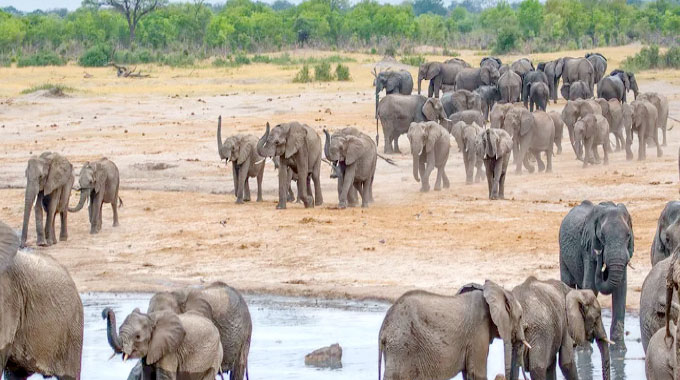
Nqobile Bhebhe, Zimpapers Business Hub
ZIMBABWE’S tourism sector continues to gain global traction, with Indian tour operators now actively packaging the country as a must-visit destination in 2026, buoyed by growing international recognition and sustained destination marketing efforts.
The renewed interest follows Zimbabwe’s accolade as the Forbes Magazine’s 2025 Best Destination, a milestone that has amplified the country’s visibility on key source markets and reinforced confidence among global travel trade players.
In an update Tourism and Hospitality Industry Ministry said the country was making strong inroads into the fast-growing Indian outbound market.
“As India’s Outbound Travel Market continues to expand rapidly, Zimbabwe is making a notable impression at the Outbound Travel Mart (OTM) in Mumbai, showcasing its rich mix of Wildlife, Heritage, Nature, Adventure and Sports experiences at South Asia’s largest travel trade event,” said the ministry.
OTM is regarded as South Asia’s largest travel trade exhibition, attracting thousands of tour operators, travel agents and destination marketers from across the region and beyond.
The ministry noted that Zimbabwe’s presence at the event was yielding tangible results, with encouraging engagements already translating into concrete travel packages.
“The showcase comes at a strategic time when the Indian travel trade is actively seeking new and emerging destinations and engagements with Tour Operators have been encouraging with some already packaging Zimbabwe for travel in 2026, signalling growing confidence in the destination.”
Industry analysts say India represents one of the world’s fastest-growing outbound tourism markets, driven by a rising middle class, improved air connectivity and increasing appetite for long-haul and experiential travel.
Zimbabwe’s diverse tourism offering ranging from the Victoria Falls, Hwange National Park and Mana Pools to rich cultural heritage sites and adventure tourism positions the country well to tap into this lucrative market.
“With sustained promotion, strategic partnerships and targeted market engagement the Indian market holds significant potential to drive increased arrivals, unlock investment opportunities and contribute meaningfully to the growth of Zimbabwe’s Tourism Sector,” the ministry added.
The latest developments underscore Zimbabwe’s broader tourism recovery and growth trajectory, as the country leverages global accolades, strategic market penetration and public-private collaboration to consolidate its position as a premier destination on the international stage.
Zimbabwe is targeting India, the world’s most populous country with an estimated population of over 1,4 billion people, as a key growth market for inbound tourism.
This week, IH Securities said the country’s tourism sector is moving into a more stable growth phase, with expansion expected to firm slightly to 3.1 percent in 2026, underpinned largely by domestic travel, which continues to act as a key shock absorber for the industry.
Tourism is one of Zimbabwe’s most strategic economic pillars, playing a critical role in foreign currency generation, employment creation and broad-based economic linkages.
The sector feeds directly into services GDP while supporting airlines, hospitality, transport, arts and crafts, construction and agriculture through strong value-chain connections.
Iconic attractions such as Victoria Falls, Hwange National Park and Great Zimbabwe position the country as a high-value destination, helping diversify export earnings beyond minerals and agriculture, a key objective under national economic blueprints.
Tourism receipts also provide vital liquidity in the economy, easing pressure on the balance of payments and supporting infrastructure development in resort towns and surrounding communities.
In its latest sector outlook, the research firm noted that the industry is transitioning from the sharp post-pandemic rebound to a more sustainable trajectory aligned with broader economic fundamentals.
“The tourism sector in Zimbabwe has undergone a clear transition in 2025, marking a shift away from the post-pandemic recovery phase experienced in the early years of the decade toward a more normalised growth trajectory.
“Sector growth is expected to moderate to 2,9 percent in 2025, reflecting a return to structural, sustainable expansion, with Government positioning tourism as a key pillar of economic diversification and foreign currency generation under the National Development Strategy 2 (NDS2),” reads part of the report.
IH Securities said while overall growth is moderating, the outlook remains positive.
“Looking ahead, tourism sector growth is expected to firm slightly to 3,1 percent in 2026. Growth in the sector is expected to be anchored by domestic tourism, which remains a critical stabilizing force.
“Domestic tourist arrivals peaked at over one million in 2023, before declining by 6,5 percent to 974 000. Arrivals are projected to fall a further 3,0 percent to approximately 945 000 in 2025, with volumes expected to stabilize through 2026, consistent with the broader normalization of travel demand following the post-Covid surge.”
The firm said the easing in domestic numbers reflects the fading of pent-up demand that characterised the immediate post-Covid period rather than structural weakness.
At the same time, international tourism is projected to provide an important growth offset.
“In contrast, international tourism continues to strengthen, with international arrivals forecast to increase from 1,79 million in 2025 to 1,87 million in 2026.
“This growth is expected to be driven by enhanced destination marketing, expanded air access and improved visibility of flagship destinations such as Victoria Falls, Hwange National Park and Great Zimbabwe.
“Zimbabwe’s growing international appeal was further underscored by its ranking among Forbes’ best countries to visit in 2025, aligning with global trends that saw international tourist arrivals exceed pre-pandemic levels in H1 2025 globally.”
Performance indicators across the hospitality segment also show the sector settling into more typical operating levels.
“The normalisation of growth dynamics is also evident in hotel occupancy and accommodation performance.
“National average room occupancy recovered sharply from a low of 19 percent in 2020, surpassing pre-pandemic levels to reach 48 percent in 2024, before moderating to approximately 42 percent in 2025.
“While this decline reflects softer utilisation, it is partly attributable to capacity expansion driven by renewed capital investment across the sector.”
IH Securities indicated growing renewed investor activity as a sign of confidence in the industry’s medium-term prospects.
“Major industry players announced and implemented significant investments in 2025, including Rainbow Tourism Group’s acquisition of Montclair Resort and Conference and African Sun’s disposal of Monomotapa Hotel to fund refurbishments across its portfolio, with a major renovation of the iconic Elephant Hills Resort in Victoria Falls expected to commence in November 2026.”
Policy measures are also expected to continue supporting the sector, the report notes.
“Policy support remains a key tailwind into 2026, with continued duty suspensions on tourism capital equipment and transport assets, alongside a ZiG339 million budget allocation aimed at strengthening marketing, product development and institutional capacity within the sector.
“Additional reductions in regulatory fees are expected to lower the effective cost base for operators, enhancing Zimbabwe’s competitiveness as a tourism destination.”



 Online Reporter