Chronicle Editor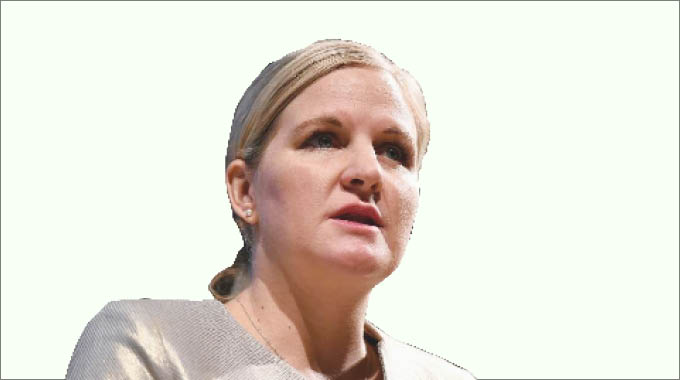
Michael Magoronga, Midlands Correspondent
EQUAL recognition, safeguarding and promoting of indigenous languages play a key role in economic development and are a vital cog in attaining Vision 2030, Youth, Sport, Arts and Recreation Minister Kirsty Coventry has said.
Cabinet recently adopted Principles for the Languages Bill, which underpin the need for promotion of multilinguistic, respect of language rights and linguistic preference as a fundamental to the process of nationalism, development of augmentative and alternative communication systems for the people with impediments that inhibit communication.
The principles also recognise and promote languages as cultural wealth and seeks the establishment and maintenance of institutional structures such as the National Languages Board.
Addressing the Parliamentary Portfolio Committee on Primary and Secondary Education capacity building workshop on indigenous languages held in Kwekwe on Saturday, Minister Coventry said languages were blocks for development.
“Government is in the process of promoting local languages as witnessed by a meeting we are attending and as such, the Languages Bill principles seek to position the officially recognised languages as blocks for development and cultural resources. Language is an enabler of development in all sectors of the economy,” she said.
“These all are to be deployed in areas where they can render optimal utility such as primary and secondary education, research and technology, innovation, higher and tertiary, the culture and creative industry, day to day lives, private business, in courts and private business as well as family set-ups.”
She said the country must harness the talent within the youths and give them a platform to express themselves and exhibit their talent to achieve Vision 2030.
“Our languages have been lost in the past and do not just drive forward an economy, but drives a national pride that we no longer see in our youths today. It is imperative that if we want to achieve Vision 2030, let us give them a platform to showcase their talent and cultural heritage. Language is a vital part of national development,” Minister Coventry said.
She indicated that Government was in the process of formulating a National Languages Committee made up of different ministries, whose duty, among others, will be to advise her ministry on all matters relating to languages as a career of culture.
The committee will advise how to promote and safeguard local languages that spearheaded the crafting of enabling policies, National Languages Policy and the Languages Bill to advance the achievement of the objectives of the constitution and the African Union’s agenda 2063.
She said it was also imperative that minors be taught in their native languages.
“The State should do all it can to ensure that minors are taught in their mother languages. This is the only way we can foster development and the only way we are going to attain Vision 2030,” said Minister Coventry.
Speaker of Parliament, Advocate Jacob Mudenda said the Ministry of Primary and secondary Education should include the element of ensuring that teachers are made available for each of the 16 official languages across the country in its 2022 budget.
“Officially recognised languages should be treated equitably. Ministries of Primary and Secondary Education and that of Higher and Tertiary Education should include in their 2022 national budgets the exercise. If that budgetary element is not there, Parliament has the power to reject it. We have to engage the private sector and academia for economic development. There should not be any minority or superior language in Zimbabwe like what is happening in Binga, Gokwe and Kariba there,” Advocate Mudenda said.
There was consensus that the Languages Bill should be expedited and passed into law to addresses existing language gaps.


 Online Reporter