Chronicle Editor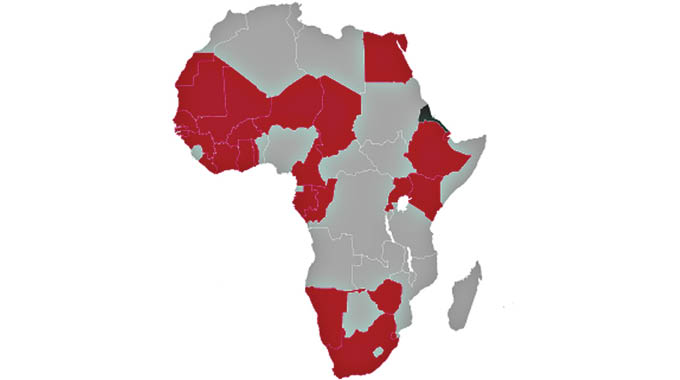
Dumisani Nsingo, Senior Business Reporter
Only three months before commencement of trading under the African Continental Free Trade Area (AfCFTA), captains of industry have called for speedy implementation of reforms so as to improve the competitiveness of the manufacturing sector.
Zimbabwe officially joined the AfCFTA last month, which is expected to boost intra-Africa trade. The agreement came into being on May 30 last year after it was ratified by 22 member countries including Zimbabwe, in what the African Union believes will be a continent-wide market of 1,2 billion people worth US$2,5 trillion. Trading under the AfCFTA agreement is expected to begin on 1 July 2020.
Confederation of Zimbabwe Industries (CZI) vice president Mr Joseph Gunda said the country’s manufacturing sector risks playing second fiddle to those other countries that benefit from numerous incentives for exporting their products.
“We are not yet ready (to participate in the AfCFTA). We need some more time as a country to resource ourselves, rebuild our manufacturing sector so that we can manufacture products competitively.
“Our cost of production are still high against our counterparts and others are getting incentives from exporting. We don’t seem to have those (incentives). If we begin to follow the rest when we are not equipped, we will fail therefore we need more time,” he said.
Initially, Government said it would fully implement the AfCFTA after 15 years when the country is expected to have fully re-industrialised.
“We have been lobbying that, let’s give it, let’s say 15 years for us to build our competitiveness and our capacity. We still have a lot of challenges on our way — the foreign currency challenges. We also have issues to do with power generation,” said Mr Gunda.
“Therefore, for us to open up and freely trade under those circumstances I’m afraid we may end up becoming a dumping site whereby our industries will not be able to competitively manufacture products and will find more cheaper products coming in from other countries dominating our own.”
Zimbabwe National Chamber of Commerce (ZNCC) Matabeleland chamber president, Mr Godwin Muhoni, said the country’s manufacturing sector competitiveness would be put to test when it starts participating in the AfCFTA. Zimbabwe imports most of its raw materials from other countries.
“Zimbabwe is not yet ready to participate in such forums and the reason is very simple, our industry is lagging behind. Our industries are largely dependent on other nations for raw material or inputs, particularly South Africa. We cannot compete at a certain level as industries in South Africa,” he said.
“Our local factories still need some time in order to be able to compete with already grown industries in other nations. We are aware of our economic realities such that we need to first nurture our own companies and allow them to grow and be at a point where we can allow them to compete with any other companies in the world.”
However, Mr Muhoni said the country’s Information and Communications Technology (ICT) firms have the ability to compete against other players in the world.
“There are some companies especially those that are in the ICT that can fairly compete with those from other countries not only in the region but worldwide,” he said.
Leadership Standards Systems and Strategy expert Mr Sebastian Zuze said the participation of Zimbabwe in the AfCFTA augurs well with the country’s socio-economic development agenda of becoming an upper middle-income economy by 2030.
“AfCFTA is where Africa is trying to create a one single market. The reason why Africa is doing this is to play a part towards socio-economic development agenda. Each African country has an agenda to contribute towards its socio-economic including Zimbabwe,” he said.
“We need a bigger market. We cannot become an upper middle-class economy if we are trading in a smaller market. The President has signed for the AfCFTA to make sure that the goods, capital and labour must move freely. “We must remove barriers of trade among African states and the Government is doing this so that our industry can access a bigger market. If you are going to grow a company let’s say in Bulawayo it needs to have a bigger market.”
Mr Zuze, however, noted the need for the country’s firms to become competitive to withstand competition from their regional counterparts.
“Our industry must understand that we have signed, we ratified and we must now say we need to be competitive. In other words, there is going to be competition among the African states, as much as we collaborate.
“We need to understand that there will be ‘healthy competition’ because we are all Africans. Our companies must have strategies to become competitive. In other words they must look at best practices,” he said.
Mr Zuze said there was a need for the country’s companies to identify their comparative competitive advantages while also mitigating risks of losing their existing or potential markets.
“Government is not doing this to fix industry, it’s doing this to make industry more competitive so there has to be a dialogue between industry and Government. Our industry should concentrate on their competitive advantage. We also need to sort out the issue of risk management,” he explained.
“The AfCFTA presents opportunities but whenever there is an opportunity there is a risk. There is a risk that we might lose other markets, which we might have had because other countries might do better than what we are doing. We need to identify those risks and put mitigatory measures.”
Industry and Commerce Minister Dr Sekai Nzenza also emphasised the need for local manufacturers to be competitive.
“We have signed onto the AfCFTA. We are excited about that but we also recognise the challenges we face as a country. We have to be competitive, produce quality and we need to have standards. So, I’m talking about three things, competitiveness, quality and standards and fourthly increase local manufacturing that fits in very well with our 2020 strategy of growth so that we will be competitive on the AfCFTA,” she said. — @DNsingo



 Online Reporter