Business Reporter
COMESA member states must convert recent regional commitments on green industrialisation into tangible national action as implementation is now the bloc’s immediate responsibility, Minister of Industry and Commerce Mangaliso Ndlovu has said.
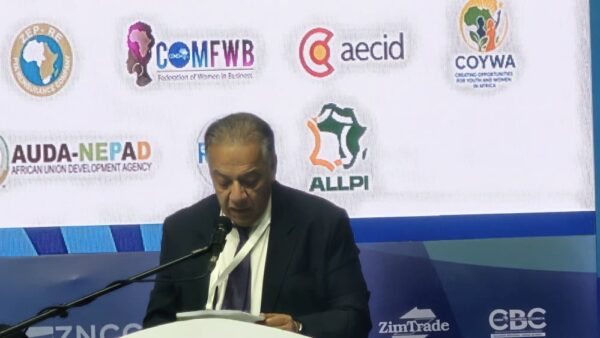
Delivering remarks at the COMESA Green Industries Connect forum at the Harare International Conference Centre today, Minister Ndlovu reported that at the recent meeting of COMESA ministers responsible for industry and investment, held on 8 September 2026, ministers committed to an inclusive transition to a circular economy and the promotion of green and circular businesses.
“They also called for implementation of the COMESA Green Pharmaceutical Manufacturing Strategy for 2026 to 2035,” he said. “We welcome the circular economy programme and reaffirm support for cleaner production and stronger regional value chains, including in the leather sector.”
The Minister stressed that the focus must now shift from agreement to execution. “Our immediate responsibility is to convert these commitments into implementation,” he said, urging member states to integrate regional priorities into national industrial development programmes, assign clear institutional responsibilities, mobilise resources and establish mechanisms for monitoring delivery.
While noting that the COMESA Secretariat and its specialised institutions have an important coordinating role, Minister Ndlovu insisted that national governments must ensure agreed programmes translate into investments, modernised production facilities, viable enterprises and measurable employment outcomes.
He reiterated that the private sector must remain at the centre of the transformation, with government providing clear and predictable policies, appropriate regulation, laboratory infrastructure and a conducive investment environment. “Businesses in turn must identify viable opportunities, invest in productive capacity, adopt cleaner technologies and strengthen their participation,” he said.
Turning to the domestic industrial agenda, Mr Ndlovu said the region’s industries must become more efficient, competitive and environmentally responsible by optimising energy efficiency, transforming waste into productive goods and services, and making better use of raw materials.
He revealed that Zimbabwe is already taking concrete steps to decarbonise its industrial base. “In Zimbabwe, we are working with the Climate Technology Centre and Network on a national decarbonisation road map,” he said, adding that further opportunities exist in iron and steel, mineral processing and other manufacturing industries.
Minister Ndlovu noted that investment in renewable energy, energy-efficient machinery and water recycling systems is not only good for the environment but also lowers production costs for manufacturers, improves reliability and strengthens industrial capacity.
On waste management, he stressed that efficient systems require effective linkages between waste collection, recycling and manufacturing, supported by appropriate infrastructure, standards, financing and reliable markets. “I therefore encourage member states to strengthen regional value chains in recycling and resource recovery while ensuring that business, women and young people participate meaningfully in creating businesses, jobs and investment opportunities,” he said.
The Minister commended COMESA for laying an important foundation for advancing green industrialisation, noting that the COMESA Industrialisation Strategy and Action Plan identifies priority sectors including agro-processing, leather and textiles, energy and minerals.
His remarks reinforced the forum’s central message that the transition to a circular economy requires deliberate policy action, targeted investment and inclusive participation to deliver sustainable industrial growth across the region.
The event continues with panel discussions on the leather sector, policy development and investable circular business models, culminating in a closing ceremony where key recommendations and next steps will be outlined by Amb. Dr. Mohamed Kadah, Assistant Secretary General (Programmes) at the COMESA Secretariat.