admin
admin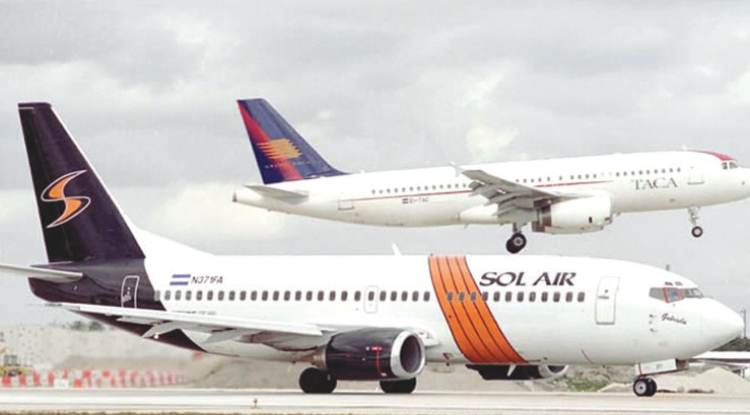

Richard Muponde Business Correspondent
THE Civil Aviation of Authority of Zimbabwe is allegedly charging $2 million as mandatory fuel guarantee to all airlines operating in the country, a situation stakeholders said was against the fulfillment of the open sky policy.
Players in the sector said Caaz demands that the money be deposited with the regulator before one starts flying, adding this was scaring new players from taking into Zimbabwe’s skies.
This, said some of the operators, was the reason why two years after Government licensed at least 30 airlines to operate few have managed to take off.
Some of the players that were given licences then are Fly Kumba, Fresh Air, Royal Air, Sol Air, but the majority have failed to fly. Some said they failed to secure aircrafts.
Sol Air was given a licence for the Harare-Kariba-Victoria Falls and the Victoria Falls-Buffalo Range route in February 2012.
Local companies Beks Safaris, Wilderness Safaris and diamond mining firm, Anjin, have also applied for licences to the Air Services Board for permission to ply various routes in the country and elsewhere.
Caaz general manager Mr David Chawota confirmed that airlines had to pay the money although he said it was not fixed and it was meant to sustain operations. He said the amount depends on the kind of operation a company needs to undertake.
“For instance some want to operate one day, others seven days so the figure depends on that and one has to calculate the figure depending on how they want to operate. What we only prescribe is that one has to have financial capacity to operate for the first six months of getting into the business without depending on their profits because they can’t make that profit in such a period. One does not have to have that money, there are financial institutions which can help with funds to operate. So the $2 million issue is not true,” said Mr Chawota.
However, a tourism player who spoke on condition of anonymity for fear of conflict of interests said the amount was exorbitant and urged Caaz to reduce the money to encourage more players into aviation albeit without compromising safety of passengers.
“That figure stops airlines from growing and actually hinders the open skies policy. It definitely discourages the growth of tourism to levels we want it to reach. Skies should be opened so that more players including local ones venture into aviation although measures should be in place so that the safety of passengers is not compromised,” she said.
The source said tourism needed more airlines for it to grow including more domestic flights which encourage domestic tourists to visit places at a low cost.
Another tour operator who applied for a licence said domestic players can not afford such an amount which comes on top of acquiring planes which he said cost an arm and a leg.
“For instance an Embraer jet Phenom 100 which has a capacity for four passengers in its normal configuration, which can carry up to seven passengers with a single crew, with optional side facing seat and belted toilet cost $3,6 million in 2008 when it was first delivered and in 2015 it’s now at $4,5 million. You can see for yourself how expensive it will be for a local player to be in the aviation industry,” he said.
The country has more than 10 operational foreign airlines that include South African Airways, Kenya Airways, Air Botswana, Ethiopian Airways, BA Comair, Air Namibia, South African Airlink, TAAG, Emirates and Zambezi Airlines and the recently launched budget airliner fastjet which plies the Harare-Victoria Falls route.
Another low cost airline Fly Africa a fortnight ago surrendered its operating licence amid reports that it owed Caaz, the National Handling Services and other service providers more than $2 million, a situation which resulted in the airline stopping flights into Zimbabwe.



 Online Reporter