admin
admin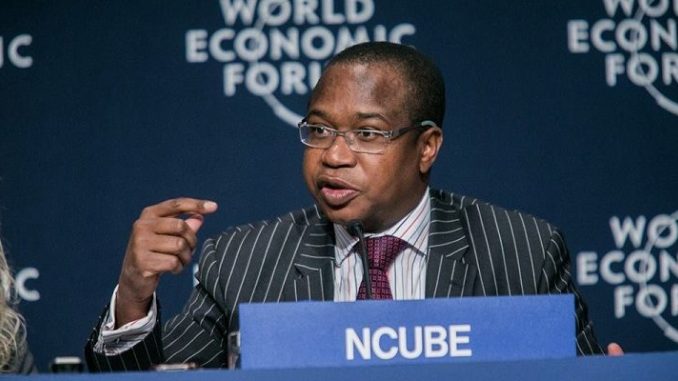
Africa Moyo
The drive to introduce a new currency, which was indicated by Government recently, dovetails with industrialists’ perspective that the country requires a “softer currency”.
Finance and Economic Development Minister Professor Mthuli Ncube, has indicated Government’s willingness to re-introduce the local currency principally to deal with prices distortions rocking the market.
In an interview with Bloomberg this week, Prof Ncube said a lot, including fiscal discipline, needed to be done before the local currency was re-introduced.
“. . . making sure there is compliance on the revenue collection front; we need to build the micro-institutions for full monetary policy conduct in the sense of introducing a monetary policy committee, making sure we put in place a framework for inflation targeting but also growth targeting,” said Prof Ncube.
“Externally, making sure we can begin to address our arrears in terms of what we owe to other nations, the Bretton Woods institutions included, but fiscal discipline is key.
“If you noticed what has been happening, since October 2018 the premiums in the parallel market have stabilised and this is because of fiscal discipline.”
Industrialists are still haggling over the immediate course of action to address price disparities in the market, which have generally led to sky-high prices of most basic commodities.
Some industrialists have proposed a return to full re-dollarisation, but the fact that it is not printed locally, has seen many critics shooting it down.
Industry views on local currency, dollarisation
Confederation of Zimbabwe Industries (CZI) president Sifelani Jabangwe, says the country can only dollarise if it has adequate reserves of US dollars.
He said any attempts to re-dollarise when the country did not have “enough greenbacks” would be suicidal.
“The issue of dollarisation is still under debate because we are looking to say, ‘do we have enough US dollars to fully dollarise’.
“Dollarising would be ideal for the time being but the challenges are two; do we have enough US dollars to fully dollarise and will we be competitive if we dollarise?” said Jabangwe.
Industry’s biggest worry is that dollarising at this point increases the cost of production, which will make local products expensive in foreign markets.
A number of local companies, particularly in the extractive industries, say the products are more expensive on international markets compared to those from other countries.
Already, research has shown that the cost of business in Zimbabwe is about 50 percent higher compared to regional averages, and dollarisation would compound the situation.
Further, the US dollar is prone to externalisation, which resulted in many phony briefcase companies laying siege on Zimbabwe to get the greenbacks.
The country had become a source of US dollars for the region and Asian businesses during the short stint it dollarised.
Said Jabangwe: “The US dollar is a medium for international transactions. If we dollarise, the demand for the US dollar will rise because it would also be used for buying bread, tomatoes, and so on.
“So the ideal situation would be to have our own local currency, but others say we have the bond already, although others say it is not a currency but we are using it to buy goods and some people prefer to keep the bond notes compared to the rand.
“The best way forward is that we need a softer currency. Or as an interim measure, let’s have a transfer mechanism between that which Government has put in place, and the US dollars (but) the long-term objective is to have our local currency.”
He added that dollarising would increase demand for US dollars since only 30 percent of companies in the manufacturing sector are on the Reserve Bank of Zimbabwe’s foreign currency priority list.
This leaves 70 percent of the firms to scrounge for forex on the parallel market, which Government has decided to clamp in a bid to curtail ballooning rates that resulted in a spate of price increases.
Jabangwe also said they have no qualms accepting RTGS and mobile money purchases as long as “there is a transfer mechanism” to eventually convert the money into US dollars.
Economists views on dollarisation, local currency
Economist Persistence Gwanyanya believes that introducing a local currency would be panacea to foreign currency challenges.
“The current dollarised scenario where we are having to import foreign currency for local use is unsustainable as current forex generation is not enough to meet the country’s import demands,
hence increased reliance on commercial facilities such as the one from Afreximbank, which is believed to cost around seven percent per annum,” said Gwanyanya.
He added that reliance on such commercial facilities was unsustainable.
“So, the way to go is to introduce our own currency and have the market allocate forex.
“RBZ should concentrate on inflation control through managing money supply growth,” said Gwanyanya.
Zimbabwe National Chamber of Commerce (ZNCC) chief executive officer and economist Takunda Mugaga, called on Prof Ncube to put a well-thought out plan before instituting currency reforms.
“My greatest fear lies in Professor Mthuli announcing a ‘wrong flight plan’. To bring back our currency calls for macroeconomic convergence, which manifests itself in a narrow fiscal gap, a narrow trade deficit, as well as improving market confidence.
“We need to resolve the external debt issue, land tenure issue, domestic debt, as well as re-engaging the international community due to perceived high risk in the country,” said Mugaga.
University of Zimbabwe economics department chairperson Professor Albert Makochekanwa, also wants the country to introspect, increase production and restore confidence in the banking sector, before introducing the local currency.
“The baseline is that every country would want its own currency, but in the case of Zimbabwe most people have no confidence in the banking sector.
“The introduction of a local currency needs serious production and we are not producing enough. Let us address fundamentals first and gain confidence in our banking sector,” said Prof Makochekanwa.



 Online Reporter