admin
admin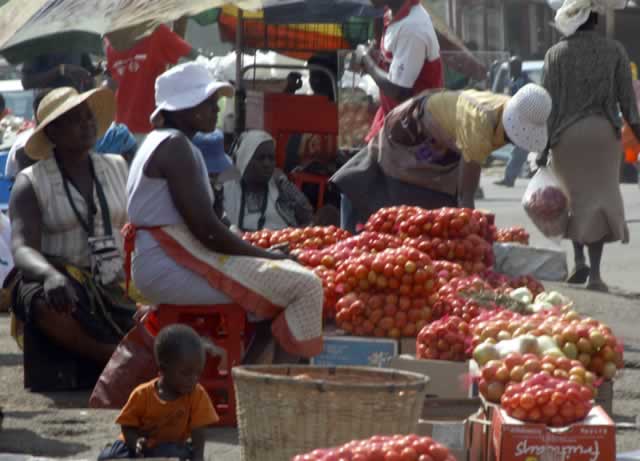
Tichaona Zindoga Features Correspondent
It must have been former Finance Minister Tendai Biti who a couple of years ago referred to Zimbabwe as having now turned into a nation of traders. That was not hyperbolic. The economic situation in Zimbabwe over the last decade or so has taught Zimbabweans, famed for their industriousness and resourcefulness, to turn to informal trade — and that is from the Government and private sector offices right down to the streets.
Perhaps it is the latter that mostly captures the substance of the change — and the gaping need for formalising the informal sector.
Fungai Gondo (29) of Glen View is one of the latest addition to the stage for survival that is in Harare’s streets.
For the benefit of aliens from Mars among us: the snobbish (or simply old-fashioned) complaint is that Harare has lost its sunshine status because vendors and hawkers have invaded every street and alley, including the once holy ground of First Street.
If one is not so snobbish to walk in First Street they may find it inconvenient to negotiate the streets and pavements among the human traffic and trade clatter, ware and paraphernalia which at times renders virtual impossibility to pavements.
Fungai sells CDs and DVDs and he has a clear modus operandi: he leaves Glen View around 3pm and just in time for the increasingly fierce rush hour traffic he will set up his stand somewhere in downtown Harare.
“I do this because if I go during the day, I risk losing out during municipal police raids,’’ he explains.
Not that he is totally immune from such swoops, which may see him lose a dollar of his day’s US$8-9 takings.
He does not see an end of his nocturnal routine, unless things change.
“We want licences to sell on the streets where the people are,’’ he says acknowledging that the city fathers indeed provide for vending – but for specific spaces and standards in the interest of city planning and public health.
Harare City Council has built sheds for the sale of mostly fruits and vegetables but these have fallen into disuse and are an eyesore.
Traders also shun these markets for their perceived lack of competitiveness.
While Harare has remained stilted on, and with, antiquated provisions for its sunshine ideal – as many will argue – bigger and brighter cities have accommodated traders on the street.
And for them it makes perfect economic and aesthetic sense.
South Africa’s commercial hub of Johannesburg, which boasts being a “world-class African city’’, has a policy on informal and street traders.
It aims to upgrade “street trading and informal traders into a new mercantile class who operate in a semi-formal retail environment . . .’’
The Business Act 71 of 1991 regulates informal trade and legislates licensing of informal trade such as hawking, fruit and vegetables, takeaways and boot-trading, among others.
The Gauteng Department of Economic Development states that it support informal traders and vendors and has had programmes such as Grow Your Business skill development programme in which thousands of informal traders have been incapacitated in business planning, financial management and finance sourcing.
On July 7, a top provincial official embarked on a walkabout of the city’s vending sites on Bree Street.
The Bree Street market sites, one could note as with others at the heart of Johannesburg, are not anything close to state-of-the-art facilities.
The official also met leaders of informal traders. Informal traders here have associations.
Authorities in the capital Tshwane, formerly Pretoria, also make clear recognition of informal trade.
They go a little further: they believe informal traders – the ones that would be treated with disdain elsewhere – render a “global’’ edge to the city.
Says the city on its website: “For the City of Tshwane, informal trade is a positive development in the micro-business sector because it contributes to the creation of jobs and has the further potential to further expand the city’s economic base and contribute to the creation of a globally competitive world class African city.’’
Tshwane issues trade, hawkers, food vending and one-day event licences.
The two major cities conform to what Rhonda Douglas has described as an “inclusive city’’.
It is, she explains, a city “that values all people and their needs equally. . . one in which all residents, including the most marginalised of poor workers, have a representative voice . . .”
Most people interviewed said they had been forced into vending by poverty and others pointed out the shrinkage of the formal job sector due to the de-industrialisation of the last/decade or so.
Women in informal Employment: Globalising and Organising, a global thinktank seeking to improve the status of the poor in the informal economy, especially women, has a catchy phrase for it.
Informal trade is the “refuge occupation’’ with easy entry barriers in a dualist economy.
Wiego cites such factors as flexibility and affordability as reasons why the informal trade is resorted upon.
Yet the think tank provides statistics that show how informal trade is important to the economies of Africa, among other this world countries.
That street traders make 10-15 percent of the population while contributing 15-25 of total informal business. Informal trade accounts for 40 percent of employment in cities such as Abidjan, Bamako, Cotonou, Lome and Ougadougou. Informal traders make 85 percent of all trade in Benin, Burkina Faso, Chad, Kenya, Mali and Tunisia.
One-half to two-thirds of informal traders are women in such countries as South Africa, Kenya, Senegal; and Benin, Cote d’Ivoire, Mali and Togo, respectively.
The think tank importantly notes that street vendors “are an integral part of urban economies around the world’’ as conveyers of affordable goods and services conveniently.
It adds that street vendors are “considered a cornerstone of many cities’ historical and historical heritage’’.
A 2003 paper used as background for the 2005 World Development Report situates the criminalisation of street trading.
“Street vending in Africa: A Synthesis of Empirical Findings from Kenya, Cote d’Ivoire, Ghana, Zimbabwe, Uganda and South Africa’’ says local authorities in Africa are “the major obstacle’’ in formalising and developing the informal sector.
It charges: “Most of them use outdated, restrictive policies, policies and by laws originally intended to control and regulate the growth of indigenous enterprises and make vending principally illegal, and view vendors as responsible for making cities dirty, obstructing traffic and therefore a public nuisance.’’
What is more: “Such views and perceptions were for dealing with cities designed for colonial governors.” Only South Africa out of the whole of Africa, the author gives a nod of approval with respect to its responsiveness to street vending activities.
Thus the author, in seeking the dealing with the spectre of insensitive colonial relics suggests ways that could see street trade thrive.
“The South African case provides a lesson on what constitutional and policy response can do to informal economic activity,’’ says the author.
She urges governments to be “committed to change’’, collaborate with development partners to strengthen street vendors, open communication channels and have information exchanges.
The paper suggests that informal exchange should be made easier by translation of written material into local languages.
On the streets of Harare the swelling of the tide of street traders seems to suggest the need for a different approach from the one that has been obtaining and a new paradigm of the formalisation of the informal.



 Online Reporter