Nqobile Bhebhe, Zimpapers Business Hub
Zimbabwe needs to mobilise large-scale private capital into rail, energy and urban infrastructure to lower the cost of doing business and support the country’s transition towards an upper-middle-income economy, the Infrastructure and Development Bank of Zimbabwe (IDBZ) has said.
IDBZ chief executive officer Mr Willing Zvirevo said infrastructure bottlenecks, particularly in rail and energy, were undermining the competitiveness of local businesses and could constrain the attainment of Vision 2030 targets.
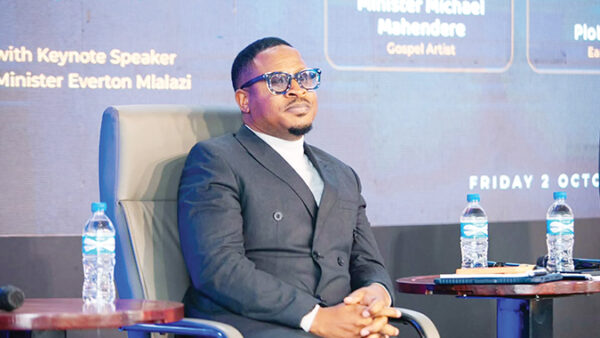
He said this on the sidelines of the ongoing Zimbabwe Economic Development Conference (ZEDCON) 2026 in Bulawayo, where infrastructure financing and development were among key issues under discussion.
“The theme of the conference is basically looking at what kind of infrastructure we need that will fit our status, our aspired status as an upper middle-income society,” said Mr Zvirevo.
He said rail infrastructure had emerged as a major gap because Zimbabwe’s reliance on road transport was increasing the cost of moving goods, particularly for exporters.
“So we identified certain areas that are lagging in rail infrastructure because what is happening is that when we look at our competitiveness as a country, we are finding that our goods are quite expensive when we try to reach foreign markets with our exports,” he said.
“And a major contributor to that cost is the mode of transport that we are using.
“Most of our goods are moving on road transport and rail is much cheaper. So we need to revamp our rail infrastructure.”
ZEDCON spotlighted the need to recapitalise the National Railways of Zimbabwe (NRZ) and develop commercially viable economic corridors capable of attracting private investment.
Mr Zvirevo said energy was another critical infrastructure gap requiring urgent investment if Zimbabwe was to sustain economic growth.
“The second issue was energy. No country will develop in the dark,” he said.
“So we realised there is a huge gap between the current energy supply and what is required to meet the economic growth that is required to achieve Vision 2030.”
Zimbabwe’s power sector requires investment not only in generation capacity but also in transmission infrastructure, which is critical to moving additional electricity to mines, industries, businesses and households.
Mr Zvirevo said the scale of the investment required meant the country could not rely solely on the balance sheet of the state utility, Zesa.
“So there is significant investment required in both generation and transmission infrastructure and we were then looking at what kind of models and there is obviously an acknowledgement that our state utility Zesa does not have the balance sheet that will be able to attract the required scale of resources to address both generation and transmission,” he said.
He said greater participation by independent power producers and other private sector investors would therefore be necessary.
“So we were leaning towards accounting for private sector investors to work with Zesa and other local and foreign private sector independent power producers to make sure that we scale up on energy generation and also we strengthen our grid, our transmission infrastructure so that we can supply.”
Beyond meeting domestic demand, Mr Zvirevo said additional power generation could position Zimbabwe to participate more strongly in the regional electricity market.
“The beauty about energy is no longer being looked at as just a local issue; the whole of the Southern Africa region is in a deficit,” he s aid.
“So if you can produce more in Zimbabwe, even beyond what is demanded by our local market, you can export energy through what is called the Southern Africa Power Pool.”
However, he said investment in generation would need to be matched by investment in transmission infrastructure to unlock regional electricity trade.
“But to do that, you need to make sure that the transmission infrastructure to connect you to our regional countries is also sorted.
“So that’s part of the discussions we were looking at.”
Mr Zvirevo said urban infrastructure was the third major area requiring coordinated public and private sector investment, particularly as Zimbabwe’s urban population and economic activity expanded.
“The third issue was around urban infrastructure. It is a discussion which is going to happen this afternoon,” he said.
“But again, it’s to say, as an upper middle income society, what sort of urban infrastructure do we want to see in terms of transport mobility, in terms of water and sanitation, in terms of housing?”
He said the scale of infrastructure requirements made collaboration between Government and the private sector essential in developing bankable projects capable of attracting domestic and international capital.
“So all these are elements that we need to work together, both our public sector and private sector, to find pathways that would then attract the required capital from the private sector.”
Established by the Government in 2005, IDBZ is Zimbabwe’s development finance institution mandated to mobilise and deploy capital towards economic and social infrastructure.
The bank supports projects from feasibility and structuring through to financing and implementation, while also funding productive sectors aimed at driving industrialisation, exports, value addition and beneficiation, as well as the green transition.
The infrastructure financing debate comes as Zimbabwe seeks to accelerate investment in productive infrastructure to support economic growth and improve the competitiveness of local industry and exporters.