admin
admin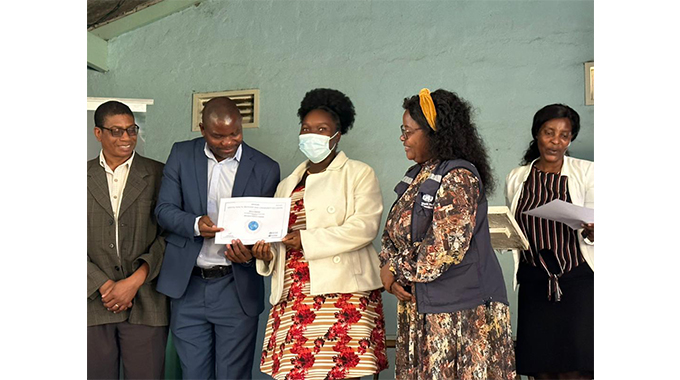
Thandeka Moyo-Ndlovu, Senior Health Reporter
A TOTAL of 450 Ingutsheni Central Hospital workers have undergone a World Health Organisation Quality Rights training programme aimed at improving services for those in need of mental healthcare.
The institution which is the biggest mental health centre in the country, services mental patients from all over Zimbabwe and has about 720 workers.
So far, Bulawayo has the highest number of healthcare workers who have undertaken the recommended online course for improvement of care and support.
WHO’s Quality Rights initiative aims to improve the quality of care in mental health and related services and to promote the rights of people with psychosocial, intellectual and cognitive disabilities.

The associated Quality Rights e-training, available in 11 languages, covers: taking care of one’s own mental health; supporting friends, family and colleagues with their mental health; tackling stigma, discrimination, abuse and coercion in mental health services and taking action in support of the transformation of mental health services towards a person-centred, rights-based recovery approach.
The training has been developed for different groups, including people involved in making decisions about mental health care provision, those who provide mental health care and psychosocial support and people who have received or are receiving support for their mental health.
Speaking at the graduation ceremony at the hospital yesterday, the chief medical officer Dr Nemache Mawere said the training will help the institution provide world-class health services.
“At Ingutsheni we have had a few challenges regarding the care of mental patients. Some of them resulted in the imprisonment of our colleagues which was a sad chapter. We have also had incidents of compromised care with December 15, 2022 events at Khumalo Ward being the height of how bad things can be if the rights of mental patients are not respected,” said Dr Mawere.
“That was the turning point for me and I went looking for the quality rights people to train us so that we have a mindset change among our staff in the clinical and non-clinical areas. I am glad we are increasing the body of knowledge and we all have a uniform approach to care.”
Dr Mawere said no one is immune to mental illness hence the need for everyone to play their role in bringing dignity to the mentally unwell.
“I am happy we are going to receive testimonies from those who are now aware that knowledge in respecting the rights of the mentally ill is the cornerstone to achieving our goal of having a world-class institution as part of vision 2030-towards an upper middle-income economy like other countries,” he said.
WHO mental health focal person Dr Debra Machando said the course had brought in positive changes in mental health services.
“We are glad that Bulawayo has taken the initiative to register for this online course as a whole. I think we have the highest number of workers who have participated compared to other provinces. I have also realised that when empowered we become better-placed to deal with mental patients who sometimes require us to be a little bit more patient,” said Dr Machado.
He said there were powerful testimonies from those who participated in the training and how it changed their mindset.
“We now hope that everyone who comes to Ingutsheni will get the best care and we commend the leadership for such a commitment to ensure that more than half of the workers are trained,” said Dr Machando.
The graduation ceremony was graced by Bulawayo provincial medical director Dr Maphios Siamuchembu.
One of the graduates Sister Nicole Gwasira said the course had made her realise how easy it is to infringe on the rights of mental patients without noticing.
“During the course, we kept on repenting for some of the things we said unawares and some decisions we took in the name of doing right. We have learnt a lot and are now able to give our clients the best services,” she said.
Zimbabwe loses US$163 million annually due to undetected and untreated mental health disorders, chief among them being substance and alcohol abuse, a development that affects production and eventually the economy. – @thamamoe



 Online Reporter