Online Reporter
Nqobile Bhebhe, Senior Business Reporter
WHEN Government officials toured Bulawayo-based Ingwebu Breweries’ newly commissioned US$2,5 million polyethylene terephthalate (PET) packaging plant in July last year, the mood was one of optimism.
The investment was hailed as a milestone for Bulawayo’s re-industrialisation agenda, with expectations that it would modernise operations, expand markets, create jobs and restore one of Zimbabwe’s oldest beverage manufacturers to sustained profitability.
Government described the project as a model of industrial transformation and public-private collaboration.
Speaking after touring the plant, Special Advisor to the President responsible for Monitoring Implementation of Government Programmes, Dr Jorum Gumbo, described the investment as a milestone aligned with the country’s broader re-industrialisation drive.
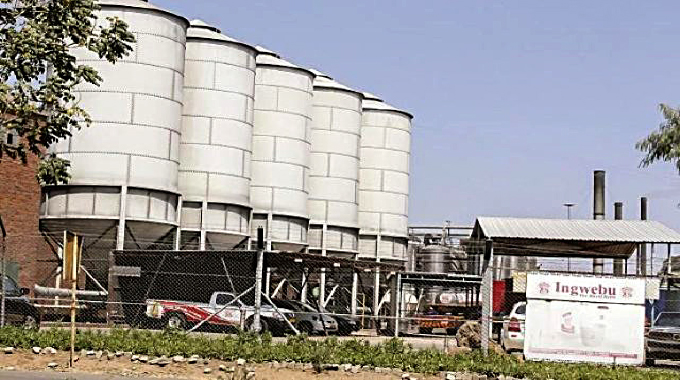
He said the new plant signifies a new era for Ingwebu Breweries and Zimbabwe’s beverage sector, reflecting a strategic leap forward from traditional packaging to modern, efficient and sustainable PET bottles.
“Replicating this success nationwide will ensure no one and no place is left behind,” added Dr Gumbo.
A year later, however, that optimism has given way to difficult questions following prolonged salary arrears and production challenges at the municipally owned brewery.
Workers recently returned to work after staging demonstrations over outstanding salaries stretching for about 15 months, bringing into sharp focus the financial pressures confronting the company.
The developments raise broader questions about whether Ingwebu’s difficulties stem principally from ageing production infrastructure, delayed recapitalisation, governance challenges or a combination of these factors.
Based on information made public by management, the issues appear closely intertwined rather than mutually exclusive.
Managing director Mr Dumisani Mhlanga has consistently maintained that obsolete production equipment remains the company’s greatest operational challenge.
According to management, much of the brewery’s machinery has exceeded its economic lifespan, resulting in frequent breakdowns that disrupt production schedules and increase maintenance costs.
“Ingwebu is an old establishment and, naturally, we are facing serious operational challenges because much of our equipment has outlived its productive lifespan. Most of it is now almost obsolete,” said Mr Mhlanga.
Engineering teams are reportedly engaged in near-continuous repairs simply to keep operations running, while the recent failure of the company’s only operational boiler further constrained production. “As of yesterday (Monday), the only functional boiler at the brewery crashed. That has further crippled our operations because the boiler is the heart of the brewing process,” further said Mr Mhlanga.
From an operational perspective, that explanation carries weight. Manufacturing businesses rely on dependable production systems.
Frequent mechanical failures reduce output, increase downtime, raise maintenance costs and weaken the cash flows required to pay employees, suppliers and financiers.
A modern packaging facility, however advanced, cannot compensate for bottlenecks in brewing, fermentation or steam generation further upstream.
The PET packaging project therefore represented an important investment, but it addressed only one stage of the production chain.
Packaging is the final step in manufacturing.
If critical brewing infrastructure remains unreliable, the overall gains from downstream investment are naturally constrained.
The experience illustrates a broader lesson for industry.
Modernising one department while critical production assets remain obsolete can create operational bottlenecks that limit the full benefits of capital expenditure.
It also raises legitimate questions about investment sequencing.
If core production equipment had already reached the end of its useful life, stakeholders may reasonably ask whether recapitalisation should have prioritised those assets alongside packaging improvements.
Management has acknowledged the need for further investment and says the company is seeking strategic investors to recapitalise the business and replace ageing machinery.
“We are in the process of procuring essential equipment over the next few months to replace some of the ageing machinery that has become unreliable. At the same time, we are actively engaging potential investors who can inject fresh capital into the business and support the modernisation of our operations,” Mr Mhlanga said.
The success of that process is likely to be central to Ingwebu’s recovery.
However, equipment alone may not fully explain the brewery’s predicament.
Workers continued reporting for duty for more than a year despite not receiving full salaries reflects both remarkable commitment and significant financial hardship.
While difficult operating conditions undoubtedly place pressure on any business, prolonged salary arrears also raise legitimate questions about financial planning, cash-flow management, risk mitigation and the timing of recapitalisation efforts.
Businesses operating in challenging environments are generally expected to anticipate operational risks, communicate openly with employees and implement contingency measures before financial pressures escalate into labour disputes.
Whether those interventions could have been undertaken earlier is a question that stakeholders may reasonably ask.
The search for strategic investors is now under way after operational challenges have become severe.
The situation also brings governance into focus. Industrial assets do not deteriorate overnight.
Their replacement requirements typically become evident over many years.
This naturally raises questions about when management, the board and the shareholder first identified the need for comprehensive recapitalisation, what options were considered and whether sufficient interventions were implemented before the company’s financial position deteriorated.
These are not merely management questions.
As a municipally owned enterprise, Ingwebu operates under the oversight of the City of Bulawayo as the sole shareholder.
Public enterprises are expected to maintain robust governance structures, regular performance monitoring and clear accountability mechanisms.
Stakeholders may therefore legitimately ask what strategic oversight, financial support or long-term capital planning was undertaken as the brewery’s operational challenges intensified.
The issues extend beyond Ingwebu.
Many long-established manufacturers across Zimbabwe continue operating with ageing equipment that has become increasingly expensive to maintain and less competitive in modern production environments.
Economists often describe this as the “maintenance trap” where companies spend growing amounts repairing obsolete machinery instead of investing in new productive assets.
Escaping that cycle requires significant capital, access to long-term finance and timely investment decisions.
Ingwebu remains more than simply another beverage producer.
Founded more than a century ago, the brewery supports hundreds of workers directly while sustaining sorghum contract farmers, transporters, retailers and suppliers across several provinces.
Its fortunes therefore have implications not only for its employees but also for Bulawayo’s broader manufacturing ecosystem.
That explains Government’s continued interest in the brewery’s turnaround.
“This project is not only creating jobs and stimulating economic activity but also contributing to our nation’s development goals. As such, I commend the private sector for their commitment to excellence and their role in driving our economy forward, brick by brick, stone upon stone,” Dr Gumbo said during last year’s tour of the facility.
However, industrial revival depends on more than policy support.
Sustainable recovery requires commercially viable operations, sound corporate governance, disciplined financial management and continuous reinvestment in productive assets.
Transparency will also be critical.
While management has consistently explained that obsolete equipment lies at the heart of the operational crisis, considerably less information has been made public regarding the roadmap for settling workers’ salary arrears.
Management has confirmed that an agreement was reached with employees to progressively clear the outstanding salaries.
However, details regarding implementation timelines, payment schedules and the financial resources allocated to meet those obligations have not been publicly disclosed.
Greater disclosure would benefit all stakeholders.
Employees, creditors, suppliers and the shareholder all have an interest in understanding how the turnaround strategy will restore both production and financial stability.
Workers who have gone more than 15 months without full salaries are understandably concerned not only about the causes of the crisis but also about when outstanding wages will be paid.
A clearly communicated recovery plan covering both operational modernisation and employee obligations would strengthen confidence in the turnaround process.
Ultimately, the available evidence suggests that obsolete equipment is an important contributor to Ingwebu’s operational challenges, but it is unlikely to provide a complete explanation.
The brewery’s long-term recovery will depend on its ability to modernise production, secure fresh investment, strengthen governance, improve financial transparency and rebuild employee confidence.
Progress across each of these areas, not new machinery alone will determine whether Ingwebu can reclaim its position as one of Bulawayo’s flagship manufacturers.
Only then can the promise that accompanied the celebrated PET investment be fully realised.
For Bulawayo, the outcome extends beyond one company.
Ingwebu’s turnaround will serve as an important indicator of whether the city’s established manufacturers can successfully reinvent themselves in an increasingly competitive industrial landscape.