admin
admin“the critical role and contribution of rural women, including indigenous women, in enhancing agricultural and rural development, improving food security and eradicating rural poverty.”
Each country is allowed to have its own theme and this year, the Zimbabwean community celebrated the day under the theme “Elimination and prevention of all forms of violence against women and girls.”
Pomp and funfare marked the day, where speaker after speaker lauded the contribution that women in the rural areas continue to make in improving the livelihood of their families and the generality of the populace within their respective areas.
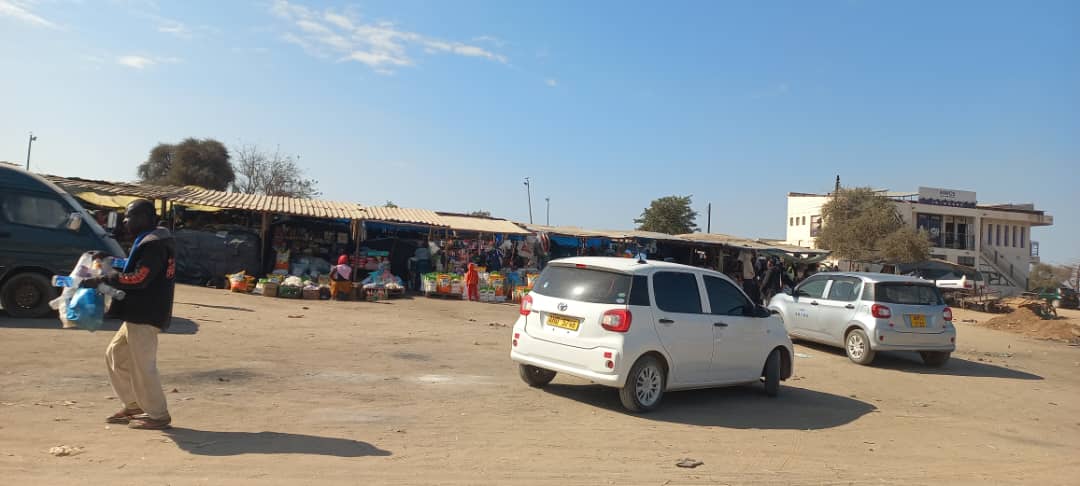
As champagne and wine flowed freely at some high-carpeted events throughout the country, I could not help, but think of Mai Bobhi, my late uncle’s wife who probably was among several women who trekked to the Mazivandadzoka Shopping Centre at her rural home in Shurugwi, to join in the celebrations.
Now in her early 60s, Mai Bobhi was still coming to grips with her new role as a second wife to Sekuru Chaitezvi who inherited her with the blessings of the whole village following the death of her husband.
You see, Mai Bobhi’s husband died six months ago after he suffered a stroke, just a few weeks after completing his tuberculosis treatment.
He died at a time when most people had certified him fit and ready to tackle the menial jobs that had been lying unattended for a good two years while he was bed-ridden.
Luckily for him, Mai Bobhi, an ardent hardworking woman, had kept the household running, while my uncle grappled from one disease to another, until the fateful day when he died in his sleep.
A month after his death, the whole family met during the unveiling of the tombstone, which also coincided with estate distribution (kugova mbatya) and subsequently the inheritance issue that everyone wanted finalised forthwith.
The day’s events moved swiftly and barely an hour after the proceedings had started, the whole village led by headman Mbaira unanimously agreed that Sekuru Chaitezvi — a successful farmer — had to assume responsibility for the social and economic support of Mai Bobhi.
The decision was premised on the need to ensure that her two youngest children who were now in high school, would remain in school, while ensuring that Mai Bobhi’s needs would be taken care of.
Her passionate plea to live an independent life fell on deaf ears and was actually met with threatening conditions, where she was given a choice to either take up the offer, or immediately leave the village for her rural home in Mberengwa — without the children of course.
Cornered, Mai Bobhi reluctantly took up the offer and immediately relocated to Sekuru Chaitezvi’s farm, where she quickly assumed her new role as the second wife.
Mai Bobhi is among thousands of women across Zimbabwe and the region who have had to be inherited against their will, which remains a socially acceptable cultural practice, despite the advent of HIV and Aids in our communities.
Despite the social nods it gets, wife inheritance is a serious form of violence against women and girls that has largely gone unnoticed, despite calls by human rights organisations and the Government to stop the practice forthwith.
The practice, that has strangely survived the ire of the law, mainly affects rural women, who because of their economic and social status are not able to make informed choices, let alone deny being inherited in the event that the heinous practice is thrust on them.
Some sections of society have also questioned the morality of this custom and its relevance to a nation that is battling with the problem of HIV and Aids, that already has heavily decimated the population and has seen an increase in number of orphans across the social strata.
If anything, wife inheritance can best be described as one of the worst forms of violence against women, and has since been described as the worst form of slavery, where a woman is given little choice to decide what is good for her. Because of the cultural value attached to it, a lot of civil organisations that operate in rural areas, with the permission of local leaderships in those communities-usually skirt around the issue for fear of reprisal.
It is probably for that reason that most speakers who took up the podium on International Day for Rural Women chose to hammer on other forms of abuse like physical and sexual, leaving out the issue of wife inheritance. While it would have been folly to ignore the two, it is equally detrimental to turn a blind eye on wife inheritance, a practice that fuels the HIV pandemic, in addition of being a barbaric custom that regards women as minors and incapable of making informed decisions on their welfare.
Some societies perpetuate the practices, albeit the problems that are widely associated with it. It is even sad for the other woman, who only wakes up in the morning only to be told that the matrimonial home, financial budget and the conjugal rights will now be shared with the late brother’s wife.
Half the time, it is not a contested decision lest the woman might find herself, without a roof over her head and all the comfort of being married off overnight.
So as speaker after speaker glowingly spoke about the “need to honour our rural women”, I could imagine what was going on in Mai Bobhi’s mind and that of hundreds of women in the same predicament, when it dawned on them that no respite was yet in sight.
They probably realised that while society threw them in the deep end by enforcing a cultural practice that had been condemned elsewhere, no one was willing to rescue them, let alone highlight their plight.
Wife inheritance is one of the worst forms of abuse against women and should be addressed with urgency.
Laws should ensure that widows automatically become the guardians of their children upon the death of their husband, unless the child’s best interests dictate otherwise, to curb this practice, while reducing the spread of HIV and Aids.
Women’s rights are fundamental rights that should be respected too!


Online Reporter
- Herald
- July 31, 2026
- 24 views
Norton Town Council renews integrity pledges
Diana Nherera Norton Town Council councillors and management on Thursday renewed their integrity pledges as part of the local authority’s commitment to promoting ethical conduct and combating corruption. Speaking…