admin
admin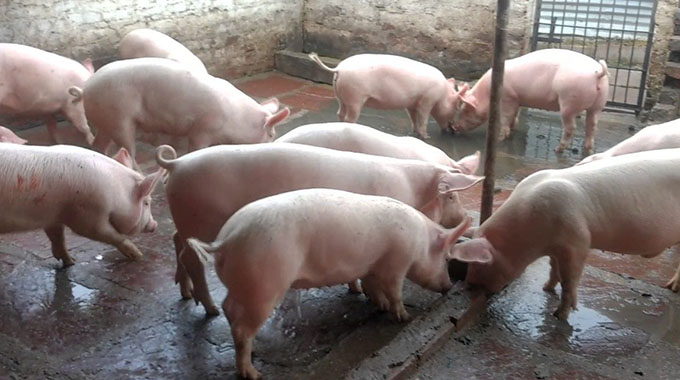
Sarudzai Mupangi Features Writer
Over the years, the production of livestock has declined to deplorable levels. The dearth of the viability of the Cold Storage Company serves as the ultimate emblem of the troubles in the sector, even though there is a glimmer of hope. Now is the time to give life to livestock, again.
Deputy Minister for Agriculture, Mechanisation and Irrigation Development in charge of Livestock Cde Paddy Zhanda said there is need for rebuilding the national herds for cattle and smaller livestock by injecting new genetics in communal and small-scale areas.
He said to achieve this new bloodlines have to be introduced so that farmers, no matter the size of their herd, view animal husbandry as a business.
“A farmer should not be impressed that he has 10 head of cattle, but he should be able to increase the value of his beasts by injecting new genetics through the introduction of bigger breeds and castrating small local oxen to improve breeds,” said Cde Zhanda.
“Farmers need to add the value of their animals by cross-breeding them with bigger and better exotic breeds.
“Livestock rearing can also be used by any serious farmer to support crop production because farmers do not have to always depend on Government for support season after season,” he said
Cde Zhanda reiterated the need to harness fodder production on an annual basis whether there is a drought or not, because cattle always need supplementary feeding.
He said this was important because the “land does not grow” but the size of herds and farmers have to be prepared at all times.
“There is no short-term therapy to fixing an economy but we are in the process of negotiating for a livestock finance system, which the private sector and other stakeholders should be a part of rather than wait for Government at all times.
“Government cannot be the sole financier of farmers but would co-ordinate and identify other sources. Our hopes should not be pinned on the National Budget alone,” he said
He bemoaned the situation at the CSC saying resuscitating of the giant institution would be a mammoth task without restructuring.
“Resuscitating CSC is going to be a mammoth task because it is facing tough competition from the private sector,” he said.
“With a huge debt over the parastatal it cannot be kick-started without restructuring the organisation.
“There is need to also cut down on imports to localise production. Of all forms of livestock poultry is doing well,” he said.
He said once people realise there is a deficit in a certain area this encourages more people into venturing into that business and this has seen the revival of the poultry industry.
“For every negative development there is a positive side to things and locals should be business minded,” he said.
CSC Chief Executive Officer Mr Ngoni Chinogaramombe said things were not well at the organisation and its herd had dwindled to 7 500 cattle.
“Things are not going well and there is nothing much we can do before budget announcement.
“Our plans will be determined by how much our organisation would be allocated after the budget, it is premature to talk figures now in terms of size of herd,” he said.
A cattle farmer in Masvingo province, Mr Alson Chifamba, said cattle rearing was a profitable business if carried out well.
“These animals come in handy even when one is facing financial challenges there is always a ready market for cattle.
“If only our industries would be resuscitated then farmers would maximise their profits. One industry would use cattle horns to make buttons, while the hide can be used by Bata (Shoe Company) and other companies to make shoes and luxury leather interiors for cars.
“The hooves are also used in the making of fire fighting foam for fire extinguishers. The bones make plates and cups while the intestines make durable tennis racquet strings all of which can be exported to bring in foreign currency,” he said.
Many everyday products use animal body parts as ingredients and companies use innovative ways of making sure every little bit of an animal does not go to waste.
Inedible parts of animals such as cows, pigs and sheep are used to make a variety of consumer items.
“We need to have a mind that is focused on making the most out of our businesses and animal husbandry is no lesser business,” he said.
“During the late 80s into the 90s some people even made a living by collecting and selling bones.”
Manure from cattle is mainly used in vegetable gardens which are sold in the same neighbourhood.
“I also use my cattle for draught power and hire them out to those who do not have any during land preparation which generates me good money,” smiled Mr Chifamba.
“In times of emergencies I provide ox-drawn transport to the nearest clinic. I am generous with my cattle but I make sure they are taken good care of.
“All of them have been branded in case they are stolen or get lost, it will be easy for me to identify them.
“Cattle are a vital part of people’s livelihoods, not only blacks because when the whites colonised us they took away our cattle to enrich themselves before they proceeded to our natural resources.”
The Zanu-PF Department of Production and Labour made strides in various areas around the country to build the national herd and so have various ministers and members of the National Assembly in conjunction with some local companies.
There has been no Government scheme to cover cattle production since 1997 and the efforts that have been made so far have seen a slight increase in the national herd.
The local beef industry was once white dominated and it benefited from generous import agreements with the European Union.
Unfortunately, at the onset of the agrarian reform that has benefited black Zimbabweans the EU banned beef imports from Zimbabwe citing cattle disease outbreaks just to frustrate local beef production.
Smallholder farmers’ livestock farmers whose animals make up the greater part of the national herd are crucial in the stabilisation of Zimbabwe’s agro-based economy.
Over three million of the estimated five million cattle that comprise the national herd are owned by smallholder farmers, and their animals account for about 75 percent of the local beef industry. Most of the profits generated by the industry are benefiting traders and abattoirs rather than the farmers, who are able to maintain only small herds, selling off one or two animals when need arises.
They do not sell for profit, but it is their respective sales, when combined, that explain the relative stability of the beef industry.
Beef and dairy production in Zimbabwe are important in the large-scale commercial sector and are consumed locally and also exported to countries such as South Africa.
Commercial beef production had declined drastically since 1992 from 139 000 tonnes to 67 000 tonnes in 1999 and this had been attributed to unfavourable weather conditions such as droughts.
However, since 2000 the figure has shown a positive increase, with the tonnage estimated at 105 000 in 2011.
- Feedback: [email protected]


 Online Reporter