Online Reporter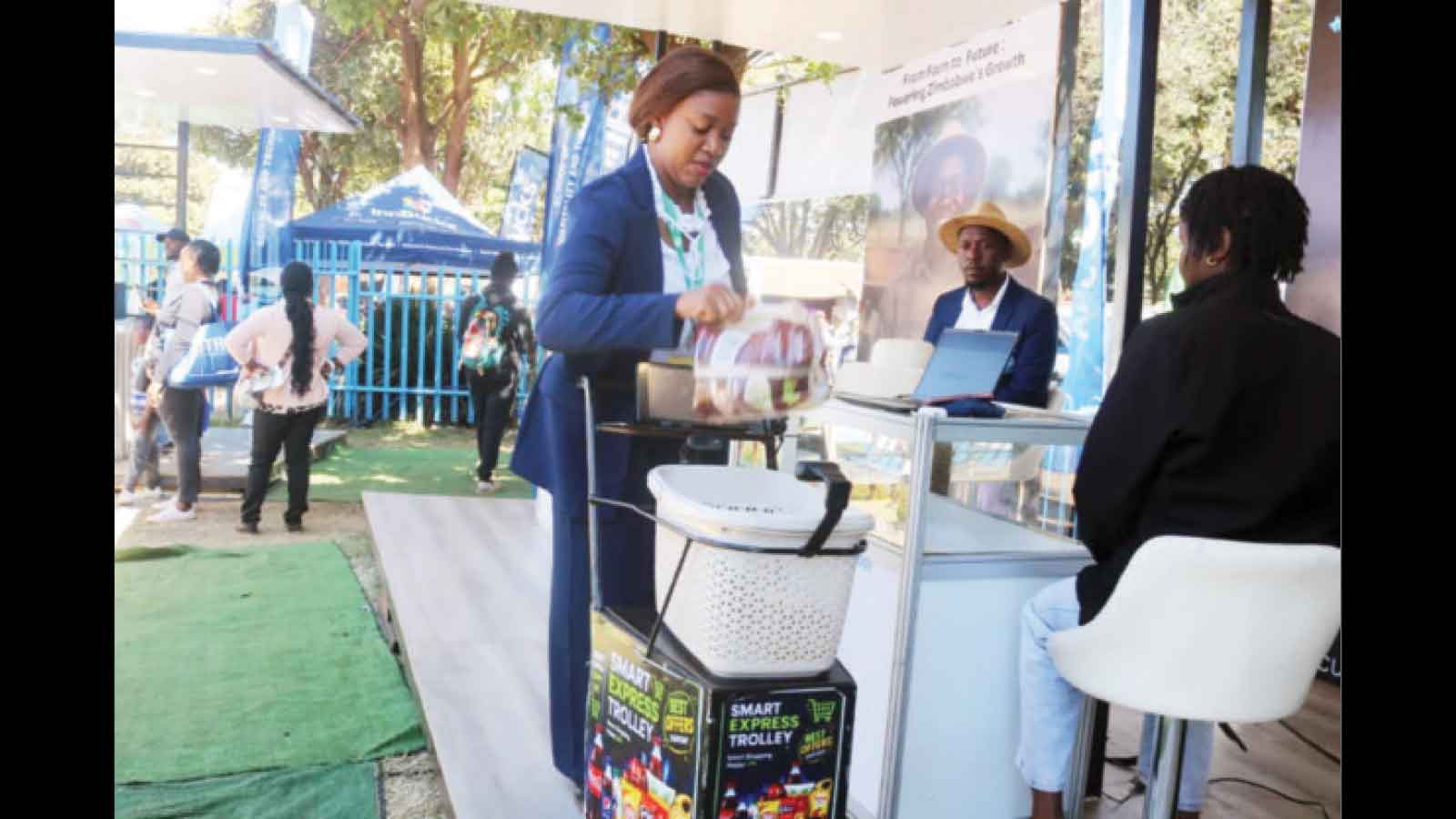
Trust Freddy and Remember Deketeke
FOR a week, the 116th Zimbabwe Agricultural Show felt less like a trade fair and more like a workshop.
It was not just bigger this year.
The show was different.
A record 640 exhibitors filled every available stand up from 613 last year.
And in the middle of it all, Zimbabweans were showing fellow countrymen how to solve local problems.
The real talking point was not the numbers.
It was what was sitting on the tables: a US$5 test strip, a shopping trolley that scans, an app that gives farmers a credit score, and drones being cleared to deliver blood.
The University of Zimbabwe stand attracted a crowd of mostly farmers and vets.
They were there for ResaTest.
Artificial insemination is key to the Government’s livestock growth plan and vision 2030.
The problem has always been access.
Testing frozen semen means laboratories, specialists, and costs that push many farmers out.
ResaTest changes that equation.
It’s a portable, dry-format test strip that gives a visual indication of sperm viability in minutes, right in the field.
“One pack costs about US$5 and you can test whilst in the field rather than taking samples to the laboratory or hiring experts so it cuts costs,” Anesu Walter Ganyani , a UZ researcher said.
However, he stressed that it is a screening tool, not a replacement for full lab analysis.
But by weeding out poor semen before insemination, it can reduce failed attempts, save resources, and accelerate genetic improvement in the national herd.
Three aisles over, Chinhoyi University of Technology students had shoppers scanning and packing at the same time.
The Smart Express Trolley was built by final-year engineering students, including Daphne Maguranyanga.
“We realised that people were taking time queuing on one till,” Maguranyanga said.
“With this trolley you just scan your items and it calculates the total price as you go. When you’re done, you click to pay and you immediately get your receipt. No need for your phone’s calculator.”
For retailers, it means shorter lines and for shoppers, it means control.
Still at CUT, Maminda was drawing a different crowd — communal farmers asking if technology can get them a loan.
“Maminda is a Zimbabwean-built agri-fintech platform,” explained part 5.2 student Courage Moyosvi. “Many farmers are productive, hardworking and reliable, but they remain invisible to formal systems because they don’t have collateral, formal farm records or a clear financial history.”
Maminda makes them visible.
Its credit-scoring model uses farm activity records, crop performance, satellite data from ZimSat-2, production history and market engagement to build digital farmer profiles.
Banks, microfinance institutions and input suppliers can then assess risk based on what a farmer actually does.
The platform also includes Maminda Farm OS, an ERP system to manage fields, workers, inputs, inventory, expenses, sales and reports.
“By organising day-to-day farm activity into one system, Farm OS gives farmers a clearer picture and creates the kind of structured data that supports better decisions and future access to finance,” Moyosvi said.
Outside, Drone Solutions had people stopping to ask: “Will it really work?”
Technical Engineer Tamuka Chikanda said yes.
The company is rolling out a nationwide initiative covering up to 200km.
“The drones are capable of transporting a wide range of medical supplies, including blood,” he said. “It travels about 130km per hour so once all has been approved we intend to reach the remote areas delivering medication using drones.”
Next to them, Agromet’s chief data scientist Tichaona Vakasai was demoing the Agromet application.
“We have created a platform that uses satellite technology, ZimSat-2 specifically, and historical weather information to provide farmers with useful predictions,” Vakasai said. “With that farmers are able to tell if there is a likelihood of certain conditions.”
The Grain Marketing Board was also exhibiting AI-powered silos to cut post-harvest losses, while drone sprayers equipped with GPS were on show for precision targeting of pests like the African armyworm.
The atmosphere peaked when President Mnangagwa toured the pavilions as children stood on tiptoes and adults craned their necks to catch a glimpse.
The show was not only about the future.
The ZPCS band entertained daily, while the Zimbabwe Defence Forces stand stayed packed with children climbing into armoured vehicles as adults queued to hold an AK47 for photos.
The livestock section delivered the week’s biggest crowd-pleasers — for very different reasons.
Children got the opportunity to ride ostriches, much to the awe of people who were shocked that the big birds could actually carry juveniles.
Handlers guided the rides as parents filmed and cheered.
Just meters away, the conversation turned to prices.
The “Master Meat” sheep were drawing serious interest from commercial farmers.
They were priced at US$600 each — much higher than the price of other cattle on display.
Breeders said the premium reflected genetics, meat yield and market demand for quality mutton.
Kidscan Zimbabwe, the country’s only non-profit dedicated to childhood cancer, brought inspiring survivors to their stand.
Some were treated as teenagers for Wilms tumour; today, one is studying medicine at UZ and another in Zambia.
Meanwhile,The Zimbabwe National Road Administration (ZINARA) was offering a 100 percent waiver on all penalties for outstanding vehicle licence arrears alongside a 50 percent discount for renewals.