Martin Kadzere Zimpapers Business Hub
IN financial performance presentations, corporate scale is typically measured in top-line and bottom-line.
Yet when Delta Corporation CEO Mr Matlhogonolo Valela addressed analysts on Wednesday, he anchored his presentation on a far broader metric: its US$2 billion annual socio-economic footprint.
Mr Valela revealed the company first presented this headline figure at the 19th COMESA Business Forum in Harare last month, immediately triggering a wave of inquiries from stakeholders wanting to know a simple question.
What exactly is Delta selling to spend that much?
Anticipating the same question from analysts, Mr Valela unpacked the math—explaining that the US$2 billion does not represent factory-gate beer and soft drink sales alone, but rather Delta’s participation across the entire agricultural, industrial and commercial value chain.
Coming on the back of a half-year in which group revenue climbed 18 percent to US$607,5 million and operating income rose 13 percent to US$112,2 million — building on its historic entry into Zimbabwe’s exclusive US$1 billion annual revenue club earlier this year—Delta’s numbers read less like a routine corporate update and more like a macroeconomic bellwether.
By injecting over US$500 million annually into direct local commodity procurement, Delta supports more than 150 000 livelihoods across Zimbabwe.
“Those transactions support no less than 150 000 jobs. The real math says it’s 200 000 plus, but we are being conservative,” said Mr Valela.
For every single job created inside Delta’s gates, roughly 25 downstream jobs are sustained across farming, transport, packaging, and retail.
The figures illustrate how an anchor manufacturer’s value chain acts as an economic multiplier.
At the core of that US$2 billion ecosystem is Delta’s deep integration with Zimbabwean agriculture.
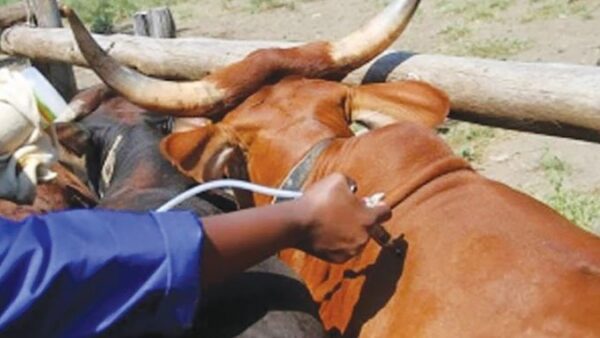
Through contract farming and out-grower schemes — spanning more than 11 000 commercial and smallholder farmers across roughly 7 500 ha of barley, 19 000 ha of sorghum and 10 000 ha of maize — the brewer secures almost all of its local barley and sorghum requirements.
During the briefing, Mr Valela warned against policy shifts that might weaken backward linkages — which stretch from inputs like seeds, fertilisers and pesticides all the way to malting and harvesting.
“That is the scale that sometimes, when we talk to policymakers, we need to contextualise it,” said Mr Valela.
“For every one job that we generate at Delta…we have 25 plus or minus jobs that are created in various parts of Zimbabwe.
“US$2 billion worth of transactions (annually) plus 150 000 jobs (are) directly related to our development activities and investment in agriculture as well as the economy.”
He said bypassing local fields in favour of imports would strip value from rural communities and drain foreign currency.
Mr Valela noted operating in Zimbabwe still requires navigating steep structural costs, from elevated domestic maize prices to heavy utility bills and expensive backup power.
Rather than passing every cost spike directly onto shoppers, Delta has leaned into operational efficiency and margin absorption — guided by a strict discipline of pricing to affordability rather than theoretical parity.
That balancing act is equally visible in its fiscal contribution. Beyond sustaining private supply chains, Delta remains one of the Treasury’s largest single revenue engines, remitting over US$193 million in total taxes during the six months — up 31 percent from the prior year.
The tax bill includes US$15 million in sugar surtax alone. By absorbing the brunt of the sugar tax alongside January’s Value Added Tax adjustments, Delta has sought to keep its beverages within reach of many.
With domestic foreign currency sales accounting for 97 percent of total revenue, robust consumer demand has pushed Delta’s existing plants to their limits, creating periodic shortages of popular packs such as returnable lager quarts.
To eliminate those supply bottlenecks ahead of the December festive peak and going forward, the group has deployed US$35 million in targeted capacity upgrades—part of a broader US$120 million capital expenditure programme.