Online Reporter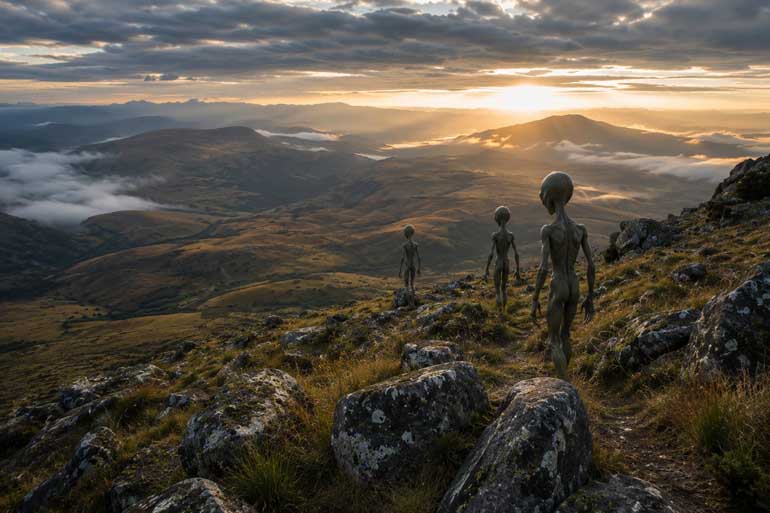
(Part 2)
Lloyd Makonya
Correspondent
WARNINGS against venturing alone, disregarding experienced guides or treating the environment carelessly may have served as important mechanisms for community safety.
Viewed through this lens, traditional narratives surrounding Nyanga Mountain reflect, not only spirituality, but also accumulated wisdom about living alongside a powerful natural environment.
Their message remains remarkably simple: Approach the mountain with humility.
Scientists offer a different explanation for the mountain’s reputation.
Nyanga Mountain’s weather is notoriously unpredictable. Dense fog can reduce visibility to only a few metres within minutes. Strong winds, slippery terrain and falling temperatures create conditions that can challenge even experienced hikers.
Hypothermia, fatigue and dehydration impair judgement. Disoriented individuals may unknowingly leave established trails, descend into hazardous areas or become trapped by the terrain.
Search-and-rescue experts note that mountain environments present significant operational challenges. Deep ravines and rapidly changing weather conditions complicate recovery efforts.
Where local traditions speak of spiritual forces, meteorologists point to environmental hazards.
Where some see the unexplained, others see the unforgiving realities of nature. Yet science and tradition are not always opposing forces. Both encourage caution. Both warn against underestimating the mountain.
The latest alien narratives surrounding Nyanga Mountain emerged from one of the Cold War’s most unusual intelligence experiments.
The Stargate Project sought to determine whether psychic phenomena, particularly a technique known as remote viewing, could be utilised for intelligence gathering.
Participants attempted to describe distant locations without physically visiting them. Remote viewing remains highly controversial.
While some proponents argue that certain findings warrant further investigation, mainstream science has not accepted remote viewing as a reliable method of obtaining verifiable information.
Official reviews of the Stargate Project concluded that it had not demonstrated practical intelligence value, contributing to the programme’s eventual termination.
Former United States Army intelligence officer and remote viewer, Mr Lyn Buchanan, nevertheless maintains that remote viewers independently identified similar underground facilities across the globe.
Sceptics counter that extraordinary claims require extraordinary evidence. To date, no geological surveys, archaeological findings or official records have substantiated the existence of an extraterrestrial installation beneath Nyanga Mountain.
Interestingly, Nyanga Mountain is not Zimbabwe’s only connection to UFO lore.
In September 1994, learners at Ariel School in Ruwa reported witnessing unusual aerial objects near their playground during morning break.
More than 60 children described seeing disc-shaped craft and small humanoid figures. Some claimed they received warnings concerning humanity’s treatment of the environment.
The incident attracted international attention and remains one of the world’s most extensively documented schoolyard UFO cases.
Psychiatrist, Dr John Mack, later interviewed several of the children, concluding that they sincerely believed what they had experienced.
Whether the Ruwa encounter represented misinterpretation, collective psychology or something genuinely unexplained remains a matter of debate.
Its place in Zimbabwe’s cultural imagination, however, is undeniable.
Perhaps the enduring fascination of Nyanga Mountain has less to do with proving the existence of extraterrestrials than with understanding why certain places inspire wonder.
Where meteorologists see dense fog and treacherous ravines, others perceive evidence of forces yet to be understood.
Where scientists investigate environmental hazards, local communities draw upon generations of accumulated wisdom. And where some dismiss the mountain’s mysteries altogether, others remain convinced that something extraordinary lies beyond the limits of conventional understanding.
Nyanga Mountain exists at the crossroads of these perspectives.
Whether its secrets are rooted in ancestral belief, environmental reality or humanity’s timeless attraction to the unknown, one truth remains unchanged. People continue to climb Zimbabwe’s highest mountain seeking adventure, answers and perhaps, a glimpse of something beyond the ordinary. Many return with photographs and memories. Some return with stories. And a few never return at all.
Above them, Nyanga Mountain rises through the clouds, silent and watchful, keeping its own counsel.