Online Reporter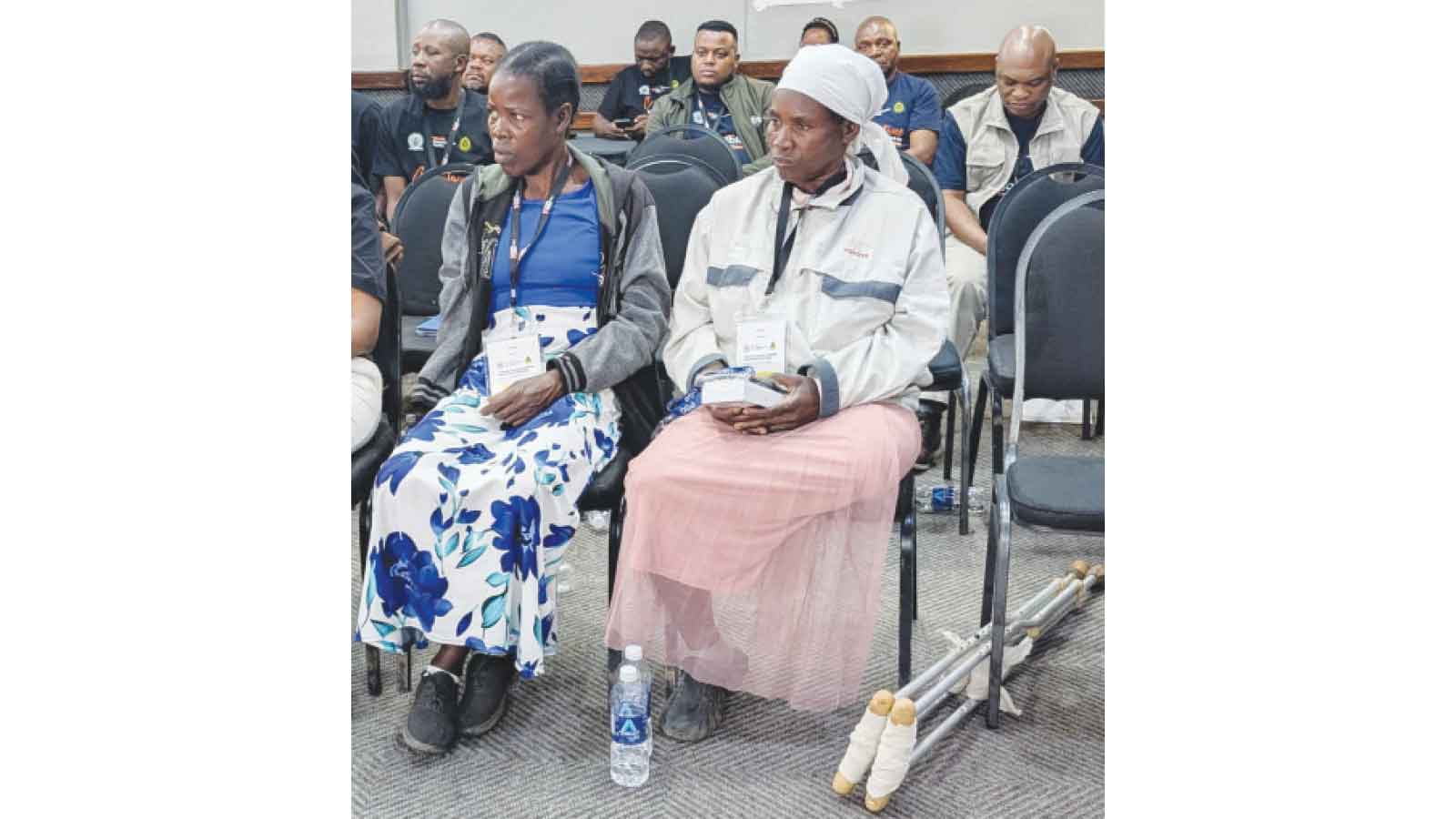
Ivan Zhakata-Features Correspondent
EVERY trip to the river could be the last. Every walk to the fields is a gamble with death.
For thousands of families living on the fringes of Zimbabwe’s national parks, safari areas and game reserves, this is not an exaggeration — it is everyday life.
In Ward 2 of Mbire District, Mrs Netty Mutenhaunga vividly remembers the day a crocodile turned an ordinary river crossing into a life-altering tragedy.
Her voice cracked as she recounted the horrific encounter.
“I was an able-bodied person, and I could carry out all my chores,” she said.
“I am now facing challenges because of my encounter with wildlife.”
The crocodile dragged her beneath the water before tearing off her arm.
“It took me into the water and removed my arm. People working in nearby fields came to rescue me.
“I was taken to Chitsungo Clinic before being transferred to Parirenyatwa Group of Hospitals. Later, I received further treatment in Zambia,” she recalled.
Years later, she still battles the trauma.
“I am experiencing challenges that continue to give me trauma. It is difficult to tell my story because I am still living with what happened.”
Her painful testimony silenced delegates attending the National Human-Wildlife Coexistence Strategy Development Workshop in Harare.
Then another survivor stood up.
Mrs Ponai Mafusire from Chiredzi struggled to hold back tears as she described how she almost died, while trying to save her child from a crocodile.
She had gone to wash clothes by the river when she heard a disturbance.
“I rushed to my child. The crocodile released my daughter and grabbed me instead,” she said.
The reptile repeatedly performed its notorious death roll.
“It kept rolling me in the water. I could hear my children crying as they tried to pull me away. I thought it was taking me down because I could no longer feel the ground beneath me.”
Villagers eventually rescued her after frightening away the crocodile.
Initially, she thought only her arm had been injured.
“I was looking at my arm because that is where I felt the pain. I didn’t realise my leg had been crushed.”
Her ordeal was only the beginning.
She underwent several operations, her family sold cattle to raise money for treatment and the Department of Social Welfare stepped in to assist. Doctors later delivered devastating news.
“They finally told me my leg would never recover and it had to be amputated. We had spent everything trying to save it.”
She now lives with one leg.
For both women, the scars are more than physical.
Their stories represent the untold suffering of hundreds of Zimbabweans whose lives have been permanently altered by encounters with wildlife.
Their experiences are reflected in national statistics presented by the Zimbabwe Parks and Wildlife Management Authority (ZimParks).
Between 2016 and 2025, Zimbabwe recorded 12 374 human-wildlife conflict incidents.
The figures are sobering. A total of 486 people were killed. Another 554 were injured.
More than 4 000 livestock were lost. Crocodiles alone claimed 173 lives, while elephants killed 114 people, together accounting for 83 percent of all recorded fatalities.
But behind every statistic is a grieving family.
Hwange District Alderman Jabulani Duvisa said the numbers only tell part of the story.
“Human-wildlife conflict has increased like never before in our area,” he said.
He believed the growing elephant population, combined with expanding human settlements, had intensified competition for land and water.
“The area is not expanding, but the animals are increasing,” Alderman Duvisa said.
“Communities are losing people, livestock and infrastructure. Women are now afraid to collect firewood, and children sometimes fail to attend school because elephants and buffaloes are roaming around.”
According to Alderman Duvisa, elephants destroy crops, lions and hyenas prey on livestock, while crocodiles continue to claim lives along rivers.
He recalled a recent tragedy near Matetsi, outside Victoria Falls, where a two-year-old child was taken by a crocodile, while the child’s mother was fishing.
“The community searched desperately. Several crocodiles were killed before the child’s remains were eventually recovered. These are the realities our people are living with.”
Further north, along the shores of Lake Kariba, communities face similar dangers.
Mr Clifford Tshalibamba from Nyaminyami District said people and wildlife were competing for the same resource — water.
“In Nyaminyami there are many wild animals and communities are constantly coming into conflict with them. Most incidents happen along the lakeshore because people and wildlife use the same water source.”
Mr Tshalibamba said fishermen remain among the most vulnerable.
“Many victims are fishermen who spend long hours on the lake trying to earn a living. Some are illegal fishermen who set nets in crocodile-infested waters because they have no other source of income.”
Elephants, he said, have also become a major threat to food security.
“They destroy crops during the rainy season. Families living near protected areas are the most affected.”
Livestock losses continue to pile up.
“Cattle and goats grazing near riverine areas are regularly attacked by wild animals. Families continue to lose their livelihoods.”
Despite the hardships, Mr Tshalibamba said communities were not opposed to conservation.
“We are not against wildlife. We understand its importance. What we want are practical solutions that protect both people and wildlife.”
The voices from Mbire, Chiredzi, Hwange and Nyaminyami formed the emotional centrepiece of the workshop.
Their stories reinforced why Government has embarked on developing Zimbabwe’s first National Human-Wildlife Coexistence Strategy.
In a presentation read on his behalf by the Head of Management Services, Mr Givemore Mukuya, ZimParks director of operations Mr Arthur Musakwa described the initiative as a defining moment.
“Today marks an important step in Zimbabwe’s journey towards safer, more sustainable coexistence between people and wildlife,” he said.
“The Government of Zimbabwe, working with its partners, has initiated the formulation of a National Human-Wildlife Coexistence Strategy — an important national framework designed to strengthen coordination, improve responses to human-wildlife conflict, and protect both communities and conservation priorities.”
Mr Musakwa said the workshop has brought together Government ministries, conservation organisations, traditional leaders, academia, the private sector, development partners and affected communities to shape practical, people-centred solutions.
For Zimbabwe, the challenge is no longer whether people and wildlife can coexist. The challenge is ensuring they both survive.