


 Andrew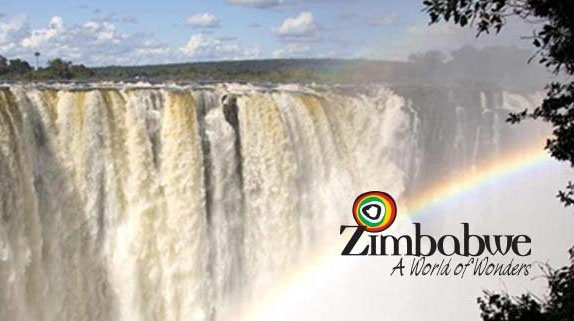
Charles Mavhunga
The storyline for Zimbabwe’s tourism brand continues to be inexpressible, given the unique situation where sanctions continue to remain disguised as smart, yet the reality on the ground is that they are not smart.
They are an expression of a sharpened machete meant to cause deep cuts in the country’s lifeline.
The sanctions are causing harm to the country’s tourism brand.
Zimbabweans are facing hardships as a result of the economic embargo imposed on the country by the United States and its allies, hence the need to provoke debate on branding factors in the struggle to liberate the country’s economy.
The strategic ambiguities of sanctions and their effect on the country’s brand factor form the basis on which this article has been written.
The tourism brand in Zimbabwe
The tourism brand in Zimbabwe is privileged to be linked to natural resources whose evolution dates back to the 1800s and beyond.
The country’s world-class resort centres include Mosi-oa-Tunya (Victoria Falls), Kariba Dam, Vumba Mountains, Great Zimbabwe and Hwange National Park.
Zimbabwe is a peace-loving country and welcomes people from all over the world. The safety record for tourists is number one out of top 15 destinations that include Thailand, Zambia, Fuji, Seychelles, Japan and Cambodia.
The tourism industry contributes to the well-being of communities through employment creation (181 000 jobs in 2014) and fosters entrepreneurship in Zimbabwe.
The mighty Mosi-oa-Tunya is on the United Nations Educational, Scientific and Cultural Organisation list of important World Heritage sites. Zimbabwe’s tourism brand is an important investment vehicle that is making huge contributions to the gross domestic product.
Zimbabwe’s tourism brand is top-notch, but the story of sanctions that are suffocating the industry is never told. Here are the details:
The sanctions jeopardy in Zimbabwe
The background of sanctions imposed on Zimbabwe by the US should be traced back to history, how independence was attained in Zimbabwe.
Freedom fighters waged a protracted war for more than 15 years to introduce respect for human rights in the country.
Human rights for blacks had been suffocated from 1890 to 1980.
The United Nations (UN) imposed sanctions on the colonial regime after observing the seriousness of the situation blacks were in regarding human rights violations.
The Rhodesian Front, led by Ian Smith, abused the rights of blacks beyond any reasonable measure, hence the UN had to act.
However, after independence in 1980, the sanctions were lifted, and the new Government took over the administration of the country, but the system inherited was colonial.
The new Government engaged in the revision of systems and laws to align these with global standards, and in efforts to liberate the country from new social and economic injustices.
The revision focused on land reform, labour laws reform, human rights laws reform, gender and equity reforms and industry laws reform, among other reforms.
Freedom fighters demonstrated the need to offer freedom to the citizens of the country, both blacks and whites, without prejudice.
However, in efforts to frustrate the struggle to liberate blacks from the colonial system, the former colonisers sponsored the formation of an opposition party under the guise of democracy.
The opposition team members picked a strategy to introduce sanctions to increase hunger and cause chaos in the country to stop freedom fighters from moving the development trajectory forward.
The UN failed to make sense of the sanctions bill since their basis could not meet the criteria recognised on a global scale of human rights abuse.
The sanctions story remained a personal declaration involving the US government and individuals seeking political relevance in opposition politics in Zimbabwe.
The sanctions are targeted at Government officials, which implies that the nation is also under sanctions since the leadership and administrators are affected.
However, the fact that the sanctions have failed to qualify for justification by the UN implies they are illegitimate.
According to China’s President XI Jinping, “When it comes to human rights, there is no such thing as a flawless Utopia. Countries do not need patronising lecturers. Still, human rights issues should not be politicised and used . . . as a pretext to interfere in the internal affairs of other countries.”
The statement from XI Jinping is an eye-opener for Zimbabweans to question the legitimacy of the sanctions in Zimbabwe.
Human rights lessons are difficult to understand if they are delivered by a former coloniser or a former slave trader.
Zimbabweans and the world at large should be enlightened so that they understand the illegality of sanctions.
Human rights lessons from the former coloniser and former slave trader should be viewed from the perspective of a lion fighting for the rights of an impala or zebra to be freed from the protective fence in a game park.
If the zebra accepts and offers support to the lion, it must understand that it is ready to become a five-star meal for the lion.
Reputable institutions such as the UN, the African Union and the Southern African Development Community have not justified the imposition of sanctions by the US.
They remain illegitimate and unfair to Zimbabwe. Their effects on the country’s brand are devastating.
Sanctions are rendering the country’s brand invisible. The mathematical principles of permutations and combinations come into play to establish the deadly effects of sanctions.
The whole story is that if sanctions are imposed, the country’s business will be suffocated, people will commit crimes because of competition for the squeezed resources, corruption would be rampant, and, thus, clearing the ground for those seeking political office.
In this light, Zimbabweans must be made aware of the fact that sanctions are illegal, and are an abuse of human rights.
The way forward for tourism
brand in Zimbabwe
To brand the country’s tourism industry, debate to move the agenda for collaborative thinking and patriotism should be tabled.
Collaborative thinking is grounded in community ownership of the country’s brand to establish an attractive destination for tourists.
Collaborative thinking is founded on the grounds of the inclusion of Zimbabweans to understand the importance of protecting their image as a country, and to understand the country’s values as a former colony that must liberate itself from self-pity through self-governance and self-protectionism.
This means the Government of Zimbabwe should speed up the enactment of the Zimbabwe Patriot Act to protect the country from insiders who dine with former colonisers to bring our economy to its knees by supporting sanctions.
The Act is noble at a time the country’s image is being distorted to validate the imposition of smart sanctions.
Developed countries such as the US have such an Act in a bid to protect the country from terrorists.
Zimbabwe should not hesitate to have a similar Act.
To be continued
Charles Mavhunga co-authored many textbooks in Business Enterprising Skills and is currently studying for a PhD in management with Bindura University. He can be contacted on [email protected]


 Bongani Ndlovu
 Online Reporter