Chronicle Editor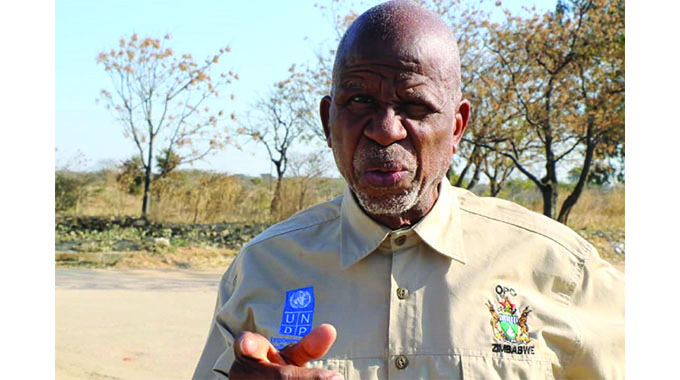
Kamangeni Phiri
FOR most farmers in Insiza District, practising traditional agriculture is as much of a lifestyle as a necessity.
Repackaged as agroecology, traditional agriculture is helping farmers and animals in this drought-prone district perched on the southern part of Matabeleland South province fight drought-induced hunger.
“This farming method demands a new mindset, but comes with huge benefits,” said Mrs Sibongile Ncube, a 51-year-old mother of three.
“For example, I can plant my field without first weeding it, but the benefits are real.”
Mrs Ncube should know; she used to record low harvests every season under the conventional farming system.
Then, she relied on her neighbours’ draught power to cultivate her three-hectare plot in Village 1 in Lochard area under Ward 22.
“I did not own cattle and my neighbours would naturally work on their fields first then come to mine much later when it was too late. This is why my yield was always low,” she recounted.
In the end Mrs Ncube was rescued by the Zimbabwe Project Trust (Zimpro), a local non-governmental-organisation which works closely together with the Government in improving rural household food security.
Zimpro reintroduced a part of agroecology known as Conservation Agriculture (Intwasa in isiNdebele and Pfumvudza in Shona) in Insiza around 2010.
Conservation Agriculture (CA) is a climate-proofed farming strategy where farmers dig holes as small planting basins that hold water and manure for the seed to thrive. The concept, which is a product of indigenous knowledge systems (IKS), involves the utilisation of small pieces of land to produce maximum yields.
Mrs Ncube began to outperform the same neighbours who used to help her till the land. Her hard work became apparent when she traded her maize for her first cow. Today Mrs Ncube is a lead farmer with seven head of cattle and some small livestock to her name.
“I still prefer digging planting holes even though I now have cattle. Draught power causes soil erosion while on the other hand the holes retain water and concentrate manure around the seed,” she explained.
Insiza District is a semi-arid area in Matabeleland South that lies in region 4.
The agroecology projects — hinged on IKS — are giving new hope to a community that has suffered decades of recurring droughts induced by climate change.
For the resource-constrained smallholder farmers, the biggest challenge they face in their farming activities is not drought per se, but the unpredictable effects of climate change.
Cyclones, extreme heat, floods, droughts and windstorms are some of the direct effects. The farmer also has to contend with changes in weed species and distribution, caterpillars and pests as well as potentially nutrient depleted soils and scarcity of fresh water sources.
But veteran farmer, 70-year-old Mr Makim Moyo of Lochard, believes the workshops and field events they regularly hold in their communities, equip them with the requisite skills to handle any surprise posed by climate change.
“Problems have a way of giving life lessons that help you develop. We have learnt to work together in finding solutions to our farming challenges. Recurring droughts have taught us to grow traditional grains like pearl millet and sorghum which mature fast,” he said.
When the programme was rolled out in Insiza, most smallholder farmers frowned upon it. They only changed their minds when they saw the benefits of climate proof farming.
“We worked hard together with our partners, Zimpro, to convince our colleagues to join the programme. Most families in our area are now food secure and enjoying healthy diets,” said Mr Moyo who is also a lead farmer.
Lead or model farmers are identified by communities to train and support fellow farmers in specific agricultural activities.
A few weeks back, lead farmers in Ward 22 met at the local Kombo Clinic in a three-day workshop on IKS. They discussed their forefathers’ lifestyles, cuisines and (traditional) farming methods.
“I started practising conservation farming in 2019 but I am already a master farmer. I am doing market gardening and my cattle and poultry are very healthy thanks to such workshops,” said Mr Nkosilathi Ndlovu of Village 5 in Kombo area.
The workshop covered traditional seed selection and preservation, storage of seed and grain, moisture retention, pest and disease control in crops using indigenous methods, livestock management, poultry, and weather forecasting, among others.
“The switch to traditional farming was easy because it’s environmentally friendly and cost free unlike the high cost associated with conventional farming. For example, we use wood ash, especially from the mopani tree, to preserve seed. We also use urine to deal with the fall army worm,” said Mr Ndlovu.
The Ward 22 farmers contributed resources towards the construction of a seed bank that will stock quality traditional seeds.
Chairman of the bank, Mr Peacot Bhebhe, said they will stock special seed maize (bhabhadla), red cob maize, pearl millet, finger millet, cowpeas and a traditional variety of sorghum which is not palatable to birds, among other seeds.
Mr Bhebhe said all farmers will have equal access to the seeds.
“The seed bank is critical in strengthening household food security. It will help protect our seeds from rats, weevils and unfriendly weather elements. All farmers will collect seed just before the onset of the rains and pay back after harvesting. If you get a 2kg finger millet seed pack, for example, you can then give the seed bank a 20kg bag of the same. This will help grow our seed stock,” he said.
The Insiza farmers copied the seed bank model from their counterparts in Matobo district who started implementing agroecology farming earlier.
Mr Bhebhe said their seeds will be preserved using indigenous ways.
“In the past we never used to buy seeds but we would record bumper harvests. Commercial seeds are full of chemicals that pose danger to our health,” he said.
Zimpro Programmes Officer, Mrs Violet Moyo, said her organisation was facilitating the transition of rural communities from conventional to IKSs-based agriculture with the aim of boosting household food security.
The organisation wants the farmers to adopt climate proof strategies that reduce the depletion of the ozone layer, the natural layer of gas found in the stratosphere that protects humans and other living things from harmful ultraviolet (UV) radiation from the sun.
“As farmers we are equally guilty of causing climate change through our behaviour. We should desist from spraying crops with insecticides as this contributes to destroying the ozone layer. A damaged ozone layer is the reason why we experience cyclones and extreme temperatures — it can be very cold or very hot. Let’s stop tilling our land using tractors as this damages the soil and also causes pollution,” she said.
Renowned traditionalist and historian, Mr Phathisa Nyathi, who coordinated and facilitated the three-day workshop, told the farmers to take pride in their identity as Africans.
“Food and names play an important role in distinguishing Africans as a people. They define us. Names speak. They are records of our history. Avoid giving children foreign names because this kills our culture,” he said.
In terms of crop choices, Mr Nyathi said, Africa was known to favour traditional grains like sorghum, rapoko, finger millet and pearl millet.
“These are African crops, adapted to our environment in many ways, not maize. Maize was adapted to a particular climate in foreign areas, and then the Portuguese introduced it to us,” said Mr Nyathi.
Significant contributions to Global Knowledge Systems, especially in areas of medicine, originated from Africa’s indigenous people.
Mr Nyathi said a reawakening of interest in IKS was critical in reversing the damage caused by colonialism in diluting local culture and lifestyles.
“Over the years, as a result of conquest, we began to doubt everything that was ours, including our systems, our cuisines, our attire. It’s the whole gamut of everything that was African that we began to doubt,” said Mr Nyathi.
IKS is the knowledge and practices of local people of a particular community gained over time through experience. It is mainly passed on orally from generation to generation.
“IKS is expressed through stories, folklore, rituals, poetry, songs, laws and drama, among others. However, if knowledge is not shared with the youth, we will be doing nothing as a people. Continuity is important. We need to share what we discussed at this workshop with the youths. We should upload our knowledge on platforms that appeal to our kids, platforms like YouTube, Facebook and Twitter,” said Mr Nyathi.



 Online Reporter