shloboe boe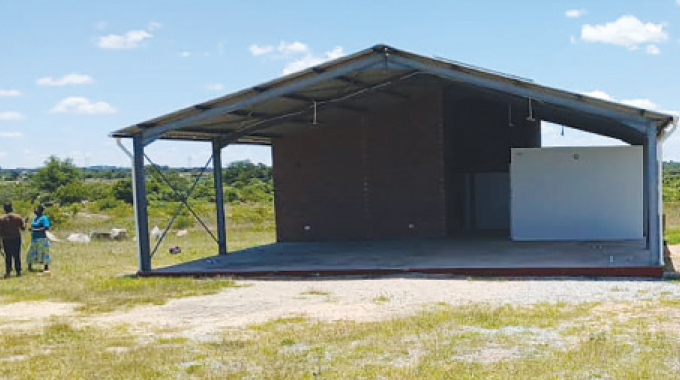
Patrick Chitumba, [email protected]
FARMERS under the Insukamini Irrigation Scheme cluster in Lower Gweru are reaping substantial rewards from a recently built pack shed.
This facility has not only minimised crop losses but also unlocked profitable export prospects, significantly improving the farmers’ livelihoods.
The pack shed, a result of a joint effort between the Government and the International Fund for Agricultural Development (IFAD), has revolutionised the local agricultural sector, bringing about significant improvements.
The Insukamini Cluster comprises four irrigation schemes: London, Insukamini, Mkoba, and Mambanjeni.
Equipped with a solar-powered cold room, the pack shed overcomes logistical hurdles posed by remote locations, ensuring farmers can store and transport their produce efficiently and effectively.
The facility enhances packaging and grading, enabling farmers to maintain high standards while awaiting collection by clients.
Farmers now have better storage options, allowing them to preserve produce quality and access international markets.
Ms Phyllis Dube, a member of the pack shed management committee, said local farmers have strategically diversified into horticulture to avoid oversaturating the market with crops like tomatoes and cucumbers, instead exploring more lucrative opportunities.
“The farmers have strategically shifted towards horticulture to avoid oversaturated crops like tomatoes and cucumbers. This is a welcome development because they are dealing with crops that are in demand,” she said.
Mr Richard Makuvire, a farmer at the Insukamini Irrigation Scheme, said they began pea production in May last year following the construction of the pack shed.
“As a cluster, we exported our peas to the Netherlands, Germany, the United Kingdom, South Africa, and other countries. We have already received our payments,” he said.
Mr Makuvire added that they planted one hectare of potatoes, which is now ready for the export market.
“The pack shed has boosted our revenue. Previously, we suffered losses due to spoilage, but now we can store our produce without losing moisture.
“From here, our crops are transported to Shurugwi for refining, grading, and packaging for the international market,” he said.
Beyond horticulture, Mr Makuvire said farmers in the scheme are also growing maize, wheat, and beans for delivery to the Grain Marketing Board (GMB), contributing to national food security.
Ms Ebina Moyo, another farmer, said they ventured into horticulture in January last year and now have a thriving cabbage crop that provides them with a stable income.
“Horticulture has been more profitable for us than maize production. Now, we are growing crops for export,” she said.
Ms Moyo, who has been farming since 1988, said they plan to increase their hectarage under horticulture to further boost production.
She added that growing for export has encouraged them to improve their farming methods, as international markets demand high-quality produce.
Ms Moyo said they conduct market surveys first to determine demand, then create a cropping calendar based on the clients’ needs.
Insukamini Irrigation agricultural extension officer Mr Anymore Hardwick said the scheme consists of 126 farmers working on 41.3 hectares of land.
“The farmers produce crops year-round. At the moment, we have a hectare of potatoes ready for export to South Africa, five hectares of cabbage, and 14 hectares of sugar beans,” said Mr Hardwick.
As part of their social responsibility, farmers donate grain to vulnerable community members, including the disabled, child-headed families, and the elderly.


 Online Reporter