Chronicle Editor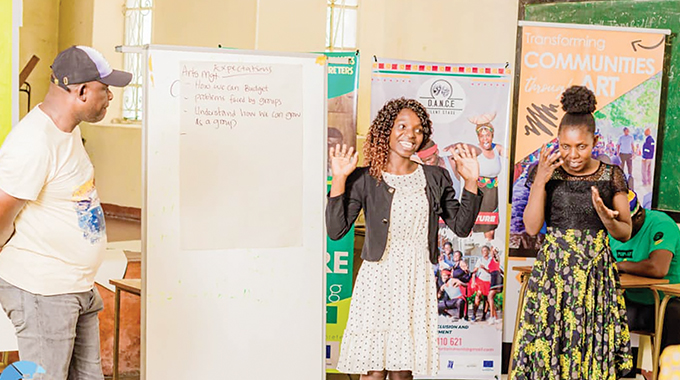
Gibson Mhaka, [email protected]
NARRATING her fears as a female entrepreneur who wouldn’t have a starting point if she were to face risks to her business, Ms Estery Nyakudya (29) from Bulawayo who owns a cake-making venture, highlighted the need for female entrepreneurs to receive the same insurance education as their male counterparts.
She said the constant fear of losing everything she has worked tirelessly to build hangs over her like a shadow. It’s a daunting reality for many female entrepreneurs.
“As women entrepreneurs, we’re building businesses from the ground up, often facing countless challenges. It’s inspiring to see our sector thriving, but there’s a glaring gap in our knowledge. We need more education about insurance. It feels like we’re building without a safety net.
“We’re the backbone of our economy, but we’re also incredibly vulnerable. It’s time for a change. It’s crucial for women entrepreneurs like me to have the same access to insurance education as our male counterparts. This knowledge is essential for building resilience and protecting our businesses,” said Ms Nyakudya.
She adds: “It’s disheartening that insurance policies often seem designed with men in mind. As women, we face unique challenges and risks, from economic vulnerabilities to healthcare needs. It’s crucial that insurance policies reflect the realities of our lives and provide the protection we deserve. We need policies that are not just gender-neutral, but gender-responsive.”
It is clear from Ms Nyakudya’s lament that inclusive insurance policymaking is not gender-neutral as women entrepreneurs who are now a driving force in many economies, lack adequate insurance protection to foster business growth and contribute to overall economic development.
Women and men are potentially impacted differently by financial sector policies, regulations and supervisory approaches in the insurance industry.
Women entrepreneurs, in particular, face numerous legal, economic and socio-cultural barriers that disproportionately hinder their access to insurance within Small and Medium Enterprises (SMs).
These obstacles include the over-representation of women in the informal economy, lower levels of financial literacy and legal restrictions preventing them from entering into contracts without male consent.
In such cases, they are comparatively more vulnerable to a multitude of risks that could plunge them into poverty. Despite these barriers, there is a significant market opportunity in providing inclusive insurance for women.
A World Bank study of 10 markets, based on in-depth interviews with industry representatives, brokers, agents, customers, regulators and insurance associations, combined with economic modelling techniques, found that the insurance industry could receive up to US$1,7 trillion in premium contributions from women alone by 2030.
Notably, half of this amount is projected to originate from just these 10 emerging economies.
“It’s important for women to realise the contribution they make to their households and businesses and to have financial protection in case something happens,” says Ms Brittney Burgett, head of communications at Bestow, an online life insurance company.
“If you have people in your life who rely on you for their well-being, you’re generally going to need life insurance.”
Ms Burgett’s observation clearly indicates that female entrepreneurs constitute a substantial and expanding market. However, the current insurance products available to these entrepreneurs fail to demonstrate a thorough comprehension of their unique risk and protection requirements.
Research indicates that a one-size-fits-all approach often fails to make insurance sufficiently appealing.
Without customised insurance products and solutions, women entrepreneurs may opt for low-risk business strategies to mitigate potential losses, thereby hindering their growth potential.
Another businesswoman, Ms Linnet Moyo (55), who is in the sewing business, said women are key decision-makers for insurance purchases but are often overlooked as target purchasers for many insurance products.
“As women, we have different behavioural preferences than men. Insurers who understand these differences are better positioned to serve women as customers.
“This might involve adapting insurance value chains, from product design to distribution, to better suit women’s needs. Women’s behavioural preferences influence how they purchase insurance. For example, studies show that women tend to spend a larger portion of their household income on healthcare and insurance compared to men,” she said.
Recognising that insurance can provide a safety net enabling female entrepreneurs to anticipate and optimise risks, redirecting efforts and funds towards growth and sustainability, the Insurance Council of Zimbabwe (ICZ) partnered with the Insurance and Pensions Commission (Ipec) to train business development officers in the Ministry of Women Affairs, Community, Small and Medium Enterprises Development on risk mitigation and business insurance for SMEs.
A two-day workshop to this effect was recently held in Bulawayo.
Women significantly dominate the Small and Medium Enterprises (SME) sector, comprising the majority of business owners. This trend is particularly pronounced in retail, hospitality, or agriculture and is evident across various regions of the country.
In his presentation on “Insurance Inclusion and Awareness: A Key to Micro Small and Medium Enterprises (MSMEs) Sustainability,” Ipec public relations manager, Mr Lloyd Gumbo highlighted that despite being key contributors to economic growth and employment, the MSME sector has limited access to financial services such as insurance.
“MSMEs contribute more than 60 percent of the country’s GDP and employ approximately 3,3 million people (1,6 business owners and 1,7 million employees). Formal insurance penetration has increased from five percent in 2021 to 24 percent in 2022, primarily in personal insurance.
“Only four percent of MSMEs have business insurance, with 74 percent of this being compulsory cover. The main barriers to business insurance are affordability and a lack of information about obtaining insurance and suitable products.
“The use of informal insurance has significantly declined from 15 percent in 2012 to one percent in 2022,” said Mr Gumbo.
He said MSMEs face many risks but lack risk management strategies.
“They are vulnerable to the personal risks of their owners and their family members, compounded by the personal risks of their employees. These personal risks impact the business,” said Mr Gumbo.
The 2022 Zimbabwe Finscope Survey revealed that a significant 48 percent of Zimbabweans lack insurance awareness. Notably, women involved in SMEs were disproportionately represented within this group, highlighting a critical gap in financial literacy and protection for this demographic.
ICZ marketing officer, Ms Ringisai Batiya said the training was necessitated by the discovery that SMEs are not insuring their businesses because of the lack of information.
She said many SMEs tend to fail in their business as they don’t have anywhere to start from after risks happen.
“The training on risk management and business insurance that you will benefit from today is informed by the lack of knowledge and awareness of these topics within the SME community. The aim is to equip you to raise awareness among SMEs during the business development training sessions you provide within your provinces.
“As we navigate an ever-evolving world, the need for resilient and profitable economic activities is paramount. Unexpected mishaps and natural or man-made disasters pose significant challenges to our communities, negatively impacting livelihoods.
“For instance, extreme weather disasters affect sectors like smallholder farmers and agro-processing businesses. Fires at SME industrial parks disrupt operations and income for business owners and employees.
“Resuscitating operations after such losses is difficult, especially for SMEs with limited financial resources or without insurance. Moreover, many SMEs have limited knowledge and appreciation of risk management and insurance as tools to protect assets and economic activities,” said Ms Batiya.
She said in line with the Zimbabwe National Development Strategy 1 (NDS1), there is a need to implement risk mitigation practices and security measures to protect all the various economic activities of SMEs.
It is important to note that the training served as a call to action for new thinking and further research on how insurance, as an integral part of all available financial services can be re-engineered to better serve the women’s market while achieving the broader goal of securing safety and prosperity for all.
Lifting constraints on women’s productivity is vital to achieving the shared growth needed to end poverty and build truly inclusive economies. Insurance that responds to women’s demands is one tool that can help remove some of these constraints.
FBC insurance managing director, Mrs Alice Shumba, who is also the chairperson of Women Insurance in Zimbabwe (WIZ), an organisation set up in 2020 to address the needs of women in the industry, said most entrepreneurs, particularly women, require relevant educational and awareness programmes to manage their risks effectively.
She said this would enable them to recover from losses and continue operating their businesses.
“Unfortunately, due to capital constraints, some businesses fold because of the absence of an insurance policy to cushion them against losses. The worst feeling is when one has actually paid insurance premiums but fails to adhere to the terms of the insurance policy, leading to improper risk management and subsequent loss.
“Entrepreneurs should request a risk survey from their insurer, which benefits both the insurance company and the insured by better understanding the business’s risks.
“Another area requiring attention is the language used in selling insurance. This is one area insurers can focus on to ensure inclusivity for those in the SME and MSME sectors. Using a single language might make the product seem elitist, while it should be accessible to everyone. We likely find that more people understand funeral policies than other short-term insurance products,” said Mrs Shumba.
She said there are significant challenges in insuring high-risk areas like drought, which is often prohibitively expensive for subsistence farmers, particularly women.
“Subsistence farmers in rural areas, mostly women, find it difficult to afford such premiums, which can reach as high as 15 percent of the sum insured. Therefore, there is need for partnerships between climate financiers, government institutions, and insurers to collaborate and provide a safety net for this vulnerable segment of the community.
“For example, I am aware of a pilot project implemented to provide drought coverage for vulnerable communities in Goromonzi through AFC insurance company, with support from Ipec, ICZ, and ARC (Africa Risk Capacity).
“The insured will receive a payout for losses incurred due to the El Niño-induced drought. This is the type of initiative that must be replicated to build public trust in insurance,” said Mrs Shumba.



 derick.khumalo