


 peter
peter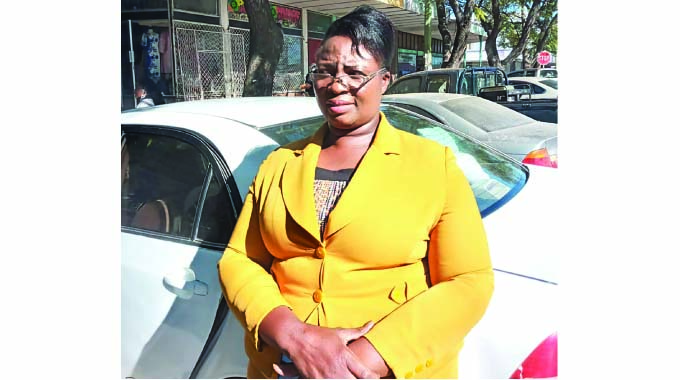
WE conclude our interview with former freedom fighter and survivor of the 19 October 1978 bombing of Mkushi Camp in Zambia, which accommodated women guerillas, Cde Queen Maligwa (nee Dube). In our previous edition, Cde Maligwa pseudonym Cde Simangaliso Mpofu who also trained in intelligence and counter-intelligence in then Yugoslavia told our Assistant Editor Mkhululi Sibanda (MS) how she left her rural home in Gwanda District, Matabeleland South Province as a 14-year-old walking barefooted. Today she rounds up her narration by telling us about her training at Mkushi and how she survived the 1978 bombing.
MS: Cde Maligwa we ended our conversation last week with you telling us how you insisted to Dr Joshua Nkomo that you were within the required age bracket of 16 when in actual fact you were just 14 so that you could be allowed to go for training. May you take us through what happened after that.

Cde Maligwa: We were the first group to open up Mkushi Camp which was exclusively for women cadres. As for the training, members of our group and instructors I think you have written a lot on it. I don’t think it is necessary to talk about that as like I said you have covered a lot on it in your previous interviews.
However, our training was more than six months during which we covered all the aspects of the military and like any other ZPRA training it was as rigorous as they come. After our training, I was given a section to command then soon after made company commissar. We left the camp where we had trained as another one was opened with the first occupied by the new recruits. Then on 19 October 1978 we were bombed by the Rhodesians and it was a very sad day. We lost a number of comrades there.
MS: Take us through what happened on that day….
Cde Maligwa: Before the attack we had stayed for almost a week without mealie-meal. So we were surviving on wild fruits and powdered milk. On that morning I had gone to look for a wild fruit called umkhuna with some comrades and when I returned to the camp I was told that I was needed at the camp headquarters. I quickly ran there and we were told that the Freedom Camp (FC) had been bombed on that morning so we should be alert. Some of us were given firearms with myself issued a Semenov with 10 rounds.
I went back to my position and broke the news of the bombing of FC. We then went to the kitchen to get powdered milk, saqalisa ukukhuma uchago. I had told my colleagues that we could be bombed. Then a few minutes later I saw the aircrafts flying towards us and I shouted to warn others. I started running towards the trees and as if the enemy had spotted me, they started firing at me. In a panic, I dropped my weapon and continued with my running.
We had been given Rusefa as the GP (gathering point) in case we were bombed. After getting out of the killing zone I was with four others. Among the four, there were Short and Malapela. I can’t remember the other two girls. It was while we were still coming to terms with our situation that we fell into an ambush of the Rhodesian soldiers who were wearing brown camouflage and were speaking in iSiNdebele.
MS: You were in trouble then….
Cde Maligwa: We were shocked. However, instead of killing us they asked us to take a different direction so that we could avoid their colleagues. They spared our lives. Those were some of the things that happened on that fateful day at Mkushi. We continued with our walk and at nightfall, we had become very tired. We decided to take a rest and chose a spot where there was an anthill.
We surrounded it with all of us facing different directions so that we could spot any danger. I told others that there was some fire that was smouldering and some figures that were moving. They dismissed me, saying I was just imagining things because of fear. However, those mysterious figures started moving towards us and were getting closer. Then BANG, they started firing in our direction. Short was hit on the arm and she started bleeding. What was interesting is that among the five of us, our group was composed of girls from Beitbridge and Gwanda districts. We had to come up with ways of stopping the bleeding Short was faced with.
However, we moved on during the whole night and in the morning we saw some people carrying guns and our hearts sank. But those were Zambians who directed us to where we were going. When we got to Rusefa an order was given that company and platoon commanders as well as commissars should go back to Mkushi to recover the bodies, fear ran down my spine as I was afraid to see dead people. Remember I was still very young although I was at that point a guerilla.

Despite that seeing my dead colleagues affected me. After that we were relocated to Kafue to stay at the farm of Aaron Milner who was a Cabinet Minister in the Zambian Government of President Kenneth Kaunda. He was a strong supporter of our struggle. From there we were moved to Solwezi where we established another camp. The situation at Solwezi was tough and at some point there was an attack from another ZPRA unit. From what I got the incident was caused by a flimsy grievance. It was some mutiny of some sort. I then devised a plan to leave Solwezi.
MS: What did you come up with?
Cde Maligwa: Some women cadres were falling pregnant and so I lied to the authorities that I was pregnant. When one fell pregnant she would be taken to Victory Camp (VC) which was for those awaiting training. Cadres at VC had refugee status.
When I got to VC I was sent to meet one of the ZPRA women commanders, Cde Gertrude, the former wife of the late Minister, Cde Simon Khaya Moyo. Gertrude thinking that it was a big problem spoke to me like a sister and it was recommended that I go through medical examination since I had said I was pregnant. When the medical team examined me they were taken aback to find out that I was still a virgin and the issue of pregnancy fell off. Gertrude then told me to return to Solwezi and face the problems like everyone else.
However, I was soon to be recruited into the Zapu intelligence unit which was led by Dumiso Dabengwa, the National Security and Order (NSO). I was sent together with others to the NSO training camp in Zambia which was called Mazowe Camp. A number of comrades were being trained in public security at Lilaya. I was at Mazowe for three months before we were sent to Yugoslavia for further training in intelligence and counter-intelligence.

MS: How many were you in your group?
Cde Maligwa: Our group was composed of both females and males. The leader of our group was Cde Sam Madondo. As for us the girls we had Thatcher who currently lives in the United Kingdom, Beatrice Saziso Ncube, Ruth Khabitshi, Simbisai Shumba, Anna Ncube, Joice Dungeni and Lindiwe Ngwenya who is still serving in the military and holds the rank of Brigadier-General. I can’t recall the name of the other comrade but she was from Plumtree.
It was in Yugoslavia that we met senior ZPRA commanders such as now Brigadier-General (Rtd) Abel Mazinyane and Ambassador Abu-Basuthu. They were on another programme separate from ours.
MS: So what did your programme entail?
Cde Maligwa: I can’t get into details but what I can tell you is that intelligence is a sophisticated discipline that teaches one to think fast, analyse situations critically, keep secrets and make sacrifices. It’s a very interesting discipline.
For me that background has assisted in life general. I can fit in any situation. We were in Yugoslavia until 1980 and returned home in April 1980. We moved to Sierra Assembly Point outside Gweru and from there I was attested into the Zimbabwe National Army where I started off by being deployed to the pay office.
I then went back to school, starting off by sitting for the Zimbabwe Junior Certificate (ZJC) and eventually O-level which I passed very well. From there I read for professional qualifications such as ZAAT (Zimbabwe Association of Accounting Techniques) and courses offered by the army.
I was later deployed to the military police.
I retired from the army in 2006 with the rank of Warrant Officer Class One. In 2010, I joined Anjin Diamonds and served there until 2014. I am married to a former freedom fighter as well, Lt-Col (Rtd) Douglas Maligwa and we have four children, Patience, Mduduzi, Mbekezeli and Dumoluhle Conrad. At the moment we are involved in different ventures but my husband is into full-time farming at our piece of land in Nyamandlovu, Umguza District.



 Bongani Ndlovu
 Online Reporter