Online Reporter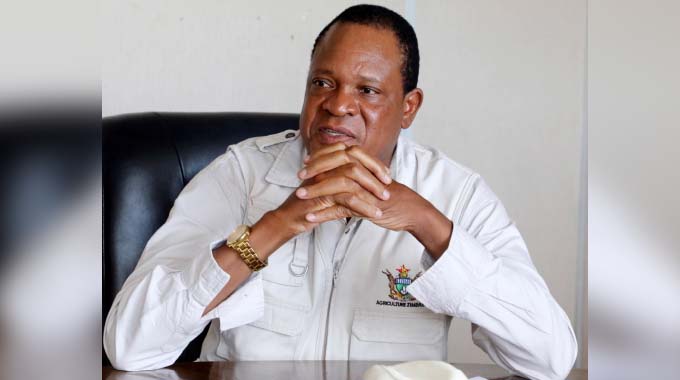
Edgar Vhera
Specialist Writer – Agribusiness
THE Government has urged the Kutsaga Research Institute to use its US$800 000 state-of-the-art Tissue Culture Facility to expand research into indigenous fruit trees and vegetables for rural development, economic growth and food and nutrition security.
Officially commissioning the Kutsaga Tissue Culture Facility recently, Lands, Agriculture, Fisheries, Water and Rural Development Minister, Dr Anxious Masuka, said the research institute should expand research into Baobab, Mupfura and Masau fruit trees.
“Under your tissue culture facility, you must lead in the research and production of these three indigenous fruit trees.
“We want you to experiment and come up with a marula tree that produces the best wine,” he said.
The Mupfura tree is highly valued across Africa, with almost every part used to produce a wide range of food, cosmetic and medicinal products.
The Masau tree is also used to create a wide range of food products, beverages, traditional medicines and other materials.
On the vegetable front, Dr Masuka said he expected Kutsaga Research Institute to produce Nyevhe/Ulude/Cat’s Wiskers (Cleome gynandra) under tissue culture.
He advised the institution to play a leading role in the Government’s 10 fruit trees per household programme for the estimated 1, 8 million rural households.
“Government is establishing 35 000 Village Business Units (VBUs) and 9 600 School Business Units (SBUs) under Rural Development 8.0.
“We expect Kutsaga to use these as decentralised centres for seed multiplication,” he said.
Kutsaga Research chief executive, Dr Frank Magama, said they were capacitating the rural masses under the VBU concept by giving true-to-type trees and vegetable seeds.
“Most of the fruit trees in the country are indigenous/landraces and produce fruit at different times of the year, but when we zone in on one clone, we can rapidly reproduce it to produce true-to-type genetics.
“Such cloned trees, when planted in different areas, apart from high yields, also ripen at the same time, thereby allowing aggregation of produce within an area for sale on the market at better prices,” he said.
Dr Magama said the same story applied to sweet potatoes, with the landrace varieties’ yields and taste now declining over the years.
Kutsaga executive director, production and operations, Mrs Rhoda Mavuka, said Kutsaga was supporting the Presidential Rural Development Programme (PRDP) through the production and distribution of virus-free vines.
“Under PRDP, we have supplied 5 128 469 sweet potato seedlings to 102 569 rural households, to all eight provinces in Zimbabwe.
“Varieties of sweet potato supplied to the programme include high-yielding white and bio-fortified orange-fleshed varieties, thus ensuring food and nutrition security,” she said.
These varieties include German II, Chingovha, Alisha, Delvia, Beauregard and Brondal.
Mrs Mavuka disclosed that her organisation was also playing a pivotal role in advancing national self-sufficiency in Irish seed potato production.