admin
admin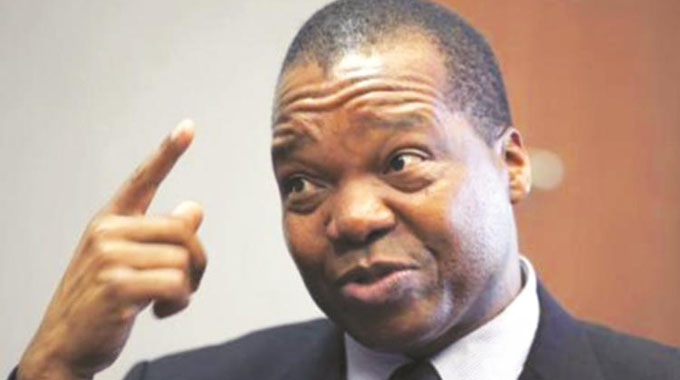
Africa Moyo Deputy News Editor
THE interbank foreign currency market has traded US$799 million since its introduction in February this year to address challenges previously faced by companies when sourcing forex to acquire raw materials and spares.
The revelations were made by Reserve Bank of Zimbabwe (RBZ) Governor Dr John Mangudya in the Mid-Term Monetary Policy Review Statement released on Friday.
Dr Mangudya announced introduction of the interbank market when the forex black market was causing chaos on the market resulting in rapid price increases.
“The introduction of the interbank foreign currency market was meant to address the foreign currency gridlock arising from widening parallel market activities by harnessing foreign exchange through the formal market.
“As a result, about US$799 million worth of foreign currency has been traded on the interbank market since its introduction,” said Dr Mangudya.
The surge in interbank transactions implies that many people are now turning to the formal market either to sell their foreign currency or to buy it, and not the parallel market which is riddled with dangers such as getting counterfeit notes.
Industrialists have also confirmed that they are now accessing foreign currency consistently from the interbank, which has helped them increase output and at the same time reduce prices.
Since the coming in of the interbank forex market, the movement of the foreign currency rate against the Zimbabwe dollar has stabilised, together with prices of goods and services.
Dr Mangudya conceded that policies announced by Government to restore macroeconomic stability have had some “adverse side effects”, but said they were already starting to yield the intended results.
“. . . it is essential to note that the measures are now beginning to bear fruit, with some stability being observed on both the availability and price of foreign currency, with some significant positive spillover benefits to the prices of goods and services in the economy,” said Dr Mangudya.
Some of the measures introduced by fiscal and monetary authorities include the separation of foreign currency accounts from local currency accounts; introduction of the interbank market; removal of the multiple currency system and the introduction of the Zimbabwe dollar as the sole currency for local transactions.
Other supporting policy measures included reviewing the export retention thresholds to more favourable levels, consistent with the new foreign currency market reforms.
Dr Mangudya believes the measures have had “significant positive impact on the economy”, especially in terms of restoring sanity and stability on the market.
The RBZ expects prices of goods and services to stabilise and fall substantially by February next year.
Dr Mangudya also said in response to the fiscal and monetary reforms, Zimbabwe has witnessed an improvement in the current account balance during the first half of 2019, due to import compression following the expenditure-switching effects of the introduction of the exchange rate, which has seen consumption moving away from imported products to locally produced goods.
“The current account deficit narrowed from a peak of US$2,7 billion in 2011 to US$1,4 billion in 2018 and is projected to further contract to US$597,2 million this year as more people consume goods produced in Zimbabwe.
“This development augurs well with easing of pressures on the foreign currency demand and exchange rate stability. The bank (RBZ) has, however, gone a long way to contain money supply growth through mopping up of excess liquidity and reducing central bank financing of Government deficits.
“Similarly, the exchange rate depreciation has been contained and the interbank rate has stabilised following the removal of the multiple currency system in June 2019,” said Dr Mangudya.
The current account is an important indicator of an economy’s health, and is defined as the sum of the balance of trade (goods and services exported minus imports), net income from abroad, and net current transfers.



 Online Reporter