Online Reporter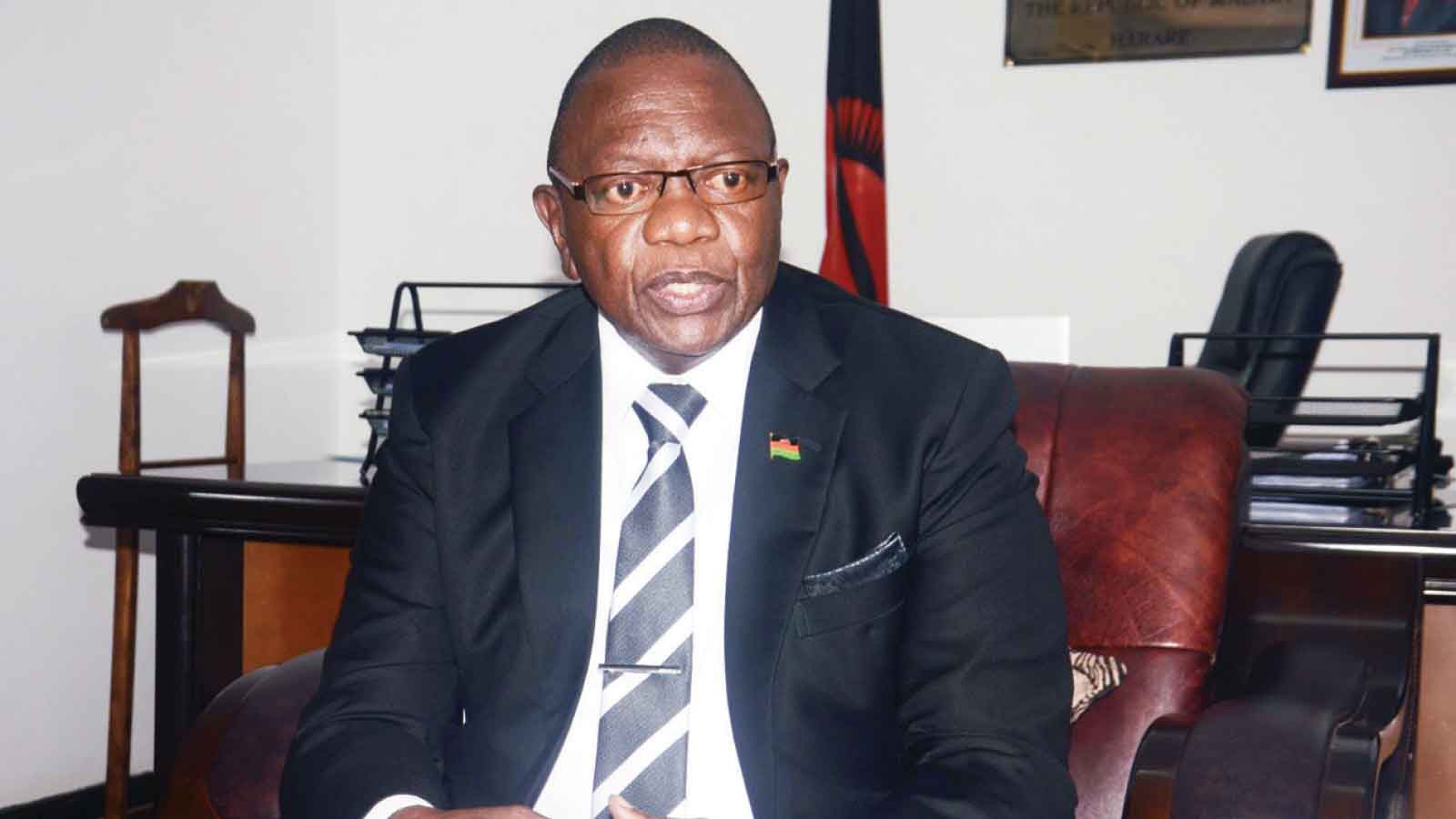
ZIMBABWE-MALAWI relations cannot be explained by any treaty or bilateral cooperation agreements for they are founded on familial ties connecting people from the two countries. Intergenerational family networks that were created before and during times of the Federation of Rhodesia and Nyasaland are of primacy in this relationship. To put this into context, Zimpapers Politics Hub’s Gibson Nyikadzino (GN) interviewed Malawi’s Ambassador to Zimbabwe, General (Rtd) Peter Namathanga (PN), and below are the excerpts:
GN: What do you consider to be the points of convergence that have sustained Zimbabwe-Malawi relations over the years?
PN: The relationship between Malawi and Zimbabwe, if you strip away the former agreements and look what actually sustains the relationship between the two countries, the strongest point of convergence that we see is a practical interdependence rooted in people, geography, and survival economics, not ideology or high-level diplomacy. I will hasten to add how that convergence plays out.
First there are issues of human linkages. The relationship is anchored in people-to-people ties more than anything else. Further to that, there are large numbers of Malawians who historically migrated to Zimbabwe for work, especially during the colonial era.
This created the intergenerational family networks that have spanned times, and today, cross-border movements, formal and informal, continue to sustain trade remittances and social ties. And this human layer is hard to disrupt and acts as a constant stabiliser of our relationship.
GN: Are there any areas of investment, exchanges and trade cooperation that define this historical relationship?
PN: This relationship between Malawi and Zimbabwe is shaped by a mix of historical ties, as regional cooperation and practical economic interdependence. It is not defined by a single treaty or sector, but by several overlapping areas of investment, cooperation and exchanges. A point to add is trade and economics, transport and infrastructure links.
We have energy cooperation, we have agricultural collaboration, and we have migration, labour and management. Apart from that, we also have education and skills exchange. Further to that, we have political and diplomatic cooperation. Lastly, we have the cultural aspect of it, where we have cultural and social exchange.
GN: How are the two countries maximising these networks or interdependence?
PN: I think the two countries are not squeezing the full potential out of the relationship yet. But Zimbabwe and Malawi are steadily leveraging their historical ties in practical people-to-people centred ways, mostly through regional frameworks and the incremental bilateral efforts rather than by big headline deals.
In mind, I have the making of a trade fair easier and strengthening transport corridors. Further to that, we have energy collaboration for stability.
We have agricultural knowledge sharing. We also have supporting migration and diaspora links. Apart from that, there is education skills and development and coordinated responses to shared challenges. These are the two countries.
GN: Are there any Malawian companies that are investing in Zimbabwe or Zimbabwean companies investing in Malawi? And if there are any, how much satisfaction can be derived from these investments?
PN: Are we satisfied? Yes indeed! There are real tangible cross-investments between Malawi and Zimbabwe. And examples of Malawi-grown investments in the financial sector. We have Nico Holdings which operates across multiple African countries, including Zimbabwe. It provides insurance, asset management, and property services.
Probably this is one of the clearest institutional investments of Malawi capital embedded in Zimbabwe’s financial sector. In the agriculture and trade partnerships, we have other Malawian companies trading in Zimbabwe or that have investments in Zimbabwe. A Malawian firm in the agriculture sector entered a multi-million dollar project with a Zimbabwean firm. This is a historical fact.
GN: Zimbabwe, before now, was once part of the Federation of Rhodesia and Nyasaland. How much does this history reflect on Zimbabwe and Malawi’s own values and culture, and also how does this reflect future aspirations?
PN: In terms of the effect of our historical background, the Federation is not a dominant force in shaping our future. But it quietly underpins culture, values, cross-border familiarity, in ways that are easy to overlook. The Federation has a cultural imprint, which is real but indirect.
Again, it accelerated something which is more enduring. Because in itself, the Federation was short-lived, and it was contested politically. It did not create a unified structure, shared structure. But it left some underpinnings, which still exist now.
One of them is the movement of people, Malawian labour, into Zimbabwe. And the spread of foreign languages, like Chichewa. For example, I had a meeting with officials from the University of Zimbabwe and Midlands State University who were telling me that they want to bring Chichewa as one of the subjects to be studied.
So this comes back from the Federation, of course, but indirectly. Again, common values are also shared. And what I would say is that, in essence, the Federation was short-lived. But moving forward, the countries are able to look at their future from a different perspective.
GN: Youth unemployment has been a challenge for the two countries. What role do you think the youth can play in fostering further cooperation, and contribute to economic transformation and growth at a bilateral or maybe continental level, in the context of Africa?
PN: I think there is a lot that the youth can do between Malawi and Zimbabwe. These are the just beneficiaries, actually, of the relationship. But, again, they are the most underused drivers of the relationship. If a relationship is to remain on migration and labour, the next phase can run on youth-led enterprise, skills and digital connectivity.
I think the youth within the two countries can turn the informal trade that is happening into scalable businesses. They can be able to build formal cross-border SMEs by doing agro-trading, logistics and digital distribution. They can go into the use of digital payments and commerce.
They can go into creating cooperatives or start-ups that aggregate small traders into bigger and more competitive businesses. So, the opportunities are there. And the youth also can drive the agro-industry innovation.
They can build their digital service economies. They can also do skills exchange and mobility. And this, I think, can be also very much emphasised in Africa. I think the youth can play a very big part, if given the positive assistance and support from the political side, the economic side and also from the investment side.
Thank you so much for your time.