admin
admin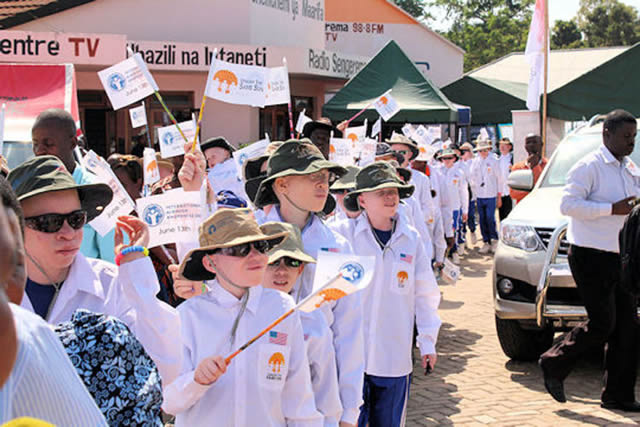
Rufaro Martin Chinyanga
When Takudzwa began Grade Zero, he was so exited about the prospects of meeting new people and wearing a school uniform. He had never once thought of himself as different, but “special’, a word his mother constantly hammered into him from the day he was born. The problem is the world did not see the same special blessing as did his mother. Primary school came and shocked the small innocent boy.Words such as ‘Musope”, “murungudunhu”, “chipoko”, “kamurungu kane man’a” bombarded the innocent boy. Yes he was an Albino, a “white” boy among dark skinned people yet he was very much a part of them but they could not accept him; something was just not right. Everyday he went home confused.
Why are the other kids saying these cruel words? Why do they poke my skin?, Why am I white and my parents black? Why can’t I see well like the other kids? Why am I white yet black?
The young man’s story represents the untold stories of many people living with the condition of albinism. Generation after generation the same story repeats itself for those bold enough to fight for an equal chance in life while the rest live in tortured silence of self pity, skin cancer and poverty for being simply white yet black.
Albinism is an inherited genetic condition that reduces the amount of melanin pigment formed in the skin, hair and/or eyes. Albinism occurs in all racial and ethnic groups throughout the world.
People with albinism have vision problems that are not correctable with eye glasses, and many have low vision. It’s the abnormal development of the retina and abnormal patterns of nerve connections between the eye and the brain that cause vision problems.
The presence of these eye problems defines the diagnosis of albinism. The degree of impairment varies with the different types of albinism.
Although people with albinism may be considered “legally blind” with a corrected visual acuity of 20 /200 or worse, most learn to use their vision in a variety of ways and are able to perform innumerable activities such as reading, riding a bike or fishing.
Some have sufficient vision to drive a car. In Zimbabwe one in ever 1500 people has albinism and one in ever 10 000 people globally having some form of albinism.
In Africa albinism becomes more pronounce due to the fact that a distinction between a few fair coloured and the larger darker coloured people is magnified.
Historically people with albinism have been discriminated in Zimbabwe due to the belief that they were signs of bad omens from the ancestors or a curse had befallen the family.
Thus getting rid of the child was necessary.
The famous ZJC literature set book novel “Takadini” dramatizes this aspect clearly. Albinos began to appear in the historical narrative of Zimbabwe in the 1950s with the Nyamayaro Family in the Chishawasha valley.
The Chishawasha Catholic Mission records the existence of an Albino family who became teachers at the mission. However, may who lived beyond the brutal and cruel act of death at their birth faced another enemy, which is the sun.
Due to lack of sun screen lotion to prevent the rays of the sun many faced skin diseases and eventually died prematurely due to skin cancer.
The famous late Professor John Makumbe in the late 1990s brought up the issue of albinism as a disability worthy to be looked into and assisted.
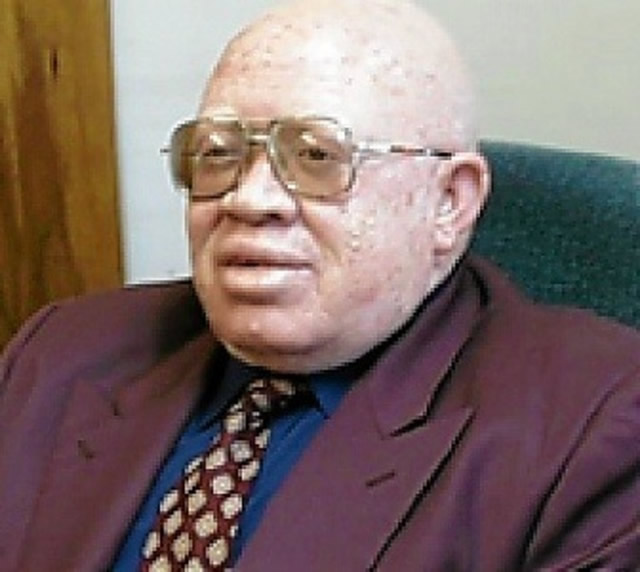
He enlightened Zimbabweans to the social, economic and physical realities of people living with the condition of albinism and their families. Most women were left alone by their husbands and are still being left alone today amidst allegations of infidelity or being cursed.
Thus most Albinos have single parents usually mothers. More than a decade after John Makumbe started the Zimbabwe Albino Assassination, people living with the condition of albinism are relegated to the peripheries of society.
They exist but not worthy to account for as society goes on with life.
In Tanzania and Malawi more than 100 Albinos have been brutally murdered or mutilated for their body parts amidst speculation that their body parts bring good luck and are medicinal. Innocent human beings have been denied the basic right to life because of superstition.
People living with albinism have been labelled by Pope Francis as the “last of the last”.
Their cry is a genuine one for acceptance in society. They need help to be able to access lotions and spectacles at low cost or government funded.
There are only 30 000 people living with albinism among 15 million Zimbabweans.
Other disabled groups have received attention but Albinos have been neglected.
The declaration by the UN of June 13 as World Albinism Awareness day has been received by people living with Albinism as a blessing, now the world can know our story, now we can be saved.
People living with albinism are normal human beings, not cursed people, not money making charms, not sub human beings.
They yearn for companionship, love and affection with little assistance to meet their limitations. They are simply White yet Black.


 Online Reporter