Online Reporter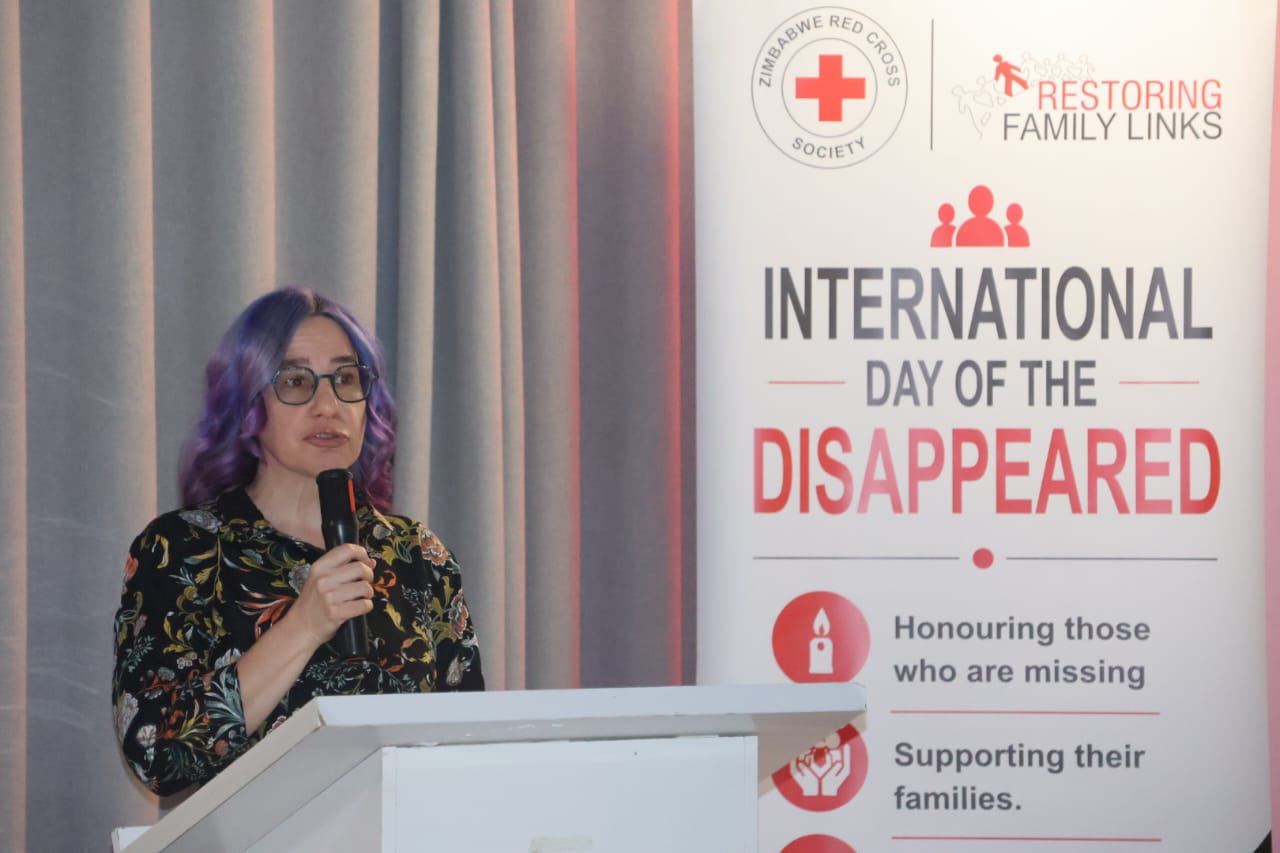
Theseus Mauruki Shambare
THE International Committee of the Red Cross (ICRC) is pushing for stronger forensic capacity and cross-border cooperation to help resolve missing-person cases and give families answers about the fate of their loved ones.
The call comes as the Zimbabwe Red Cross Society strengthens efforts to trace missing people, with 355 cases on its tracing database at the end of 2025.
International Committee of the Red Cross (ICRC) Forensics Specialist Lucinda Evert said humanitarian forensics went beyond technical identification processes to restore the identity and dignity of missing and deceased people.
“Behind every missing person is a family enduring the profound, ongoing pain of not knowing the fate of their loved one,” Ms Evert said.
She said strengthening local forensic capacity, standardising ante-mortem data collection and improving cross-border cooperation were critical to ensuring missing people were not forgotten.
“By strengthening local capacity, standardising ante-mortem data collection, and enhancing cross-border cooperation, we ensure that missing individuals are not forgotten and that their families are supported through every step of this journey,” she said.
The push comes as Zimbabwe continues to deal with missing-person cases involving people who lose contact with relatives locally and across borders.
IFRC Head of the Country Cluster Delegation for Zimbabwe, Zambia and Malawi Kopano Benjamin Masilo said Zimbabwe’s position as a source, transit and host country for migrants increased the need for effective family-tracing mechanisms.
The Zimbabwe Red Cross Society is working with the Zimbabwe Republic Police under the Transnational Approach to the Missing and Deceased programme, which is being implemented in Zaka.
The programme includes collecting ante-mortem information from families to assist authorities in identifying deceased people and determining whether they are among those reported missing.
Red Cross teams have trained police officers at national, provincial and station levels, working with the ZRP’s Interpol, Victim-Friendly Unit, Training and Forensics departments.
In 2025, the Zimbabwe Red Cross received 78 new tracing cases and successfully closed 38 after missing relatives were located.
The organisation also received 1 200 inquiries from people seeking assistance to trace missing relatives during the year.
The Restoring Family Links programme reached 21 634 beneficiaries during the same period, with the organisation facilitating 18 300 calls and 65 705 internet sessions.
Ms Evert said humanitarian forensics should ultimately ensure that families were not left in prolonged uncertainty over the fate of their loved ones.
“Our role in humanitarian forensics goes beyond technical processes; it is about restoring identity, upholding human dignity, and providing families with the answers and closure they deserve,” she said.