admin
admin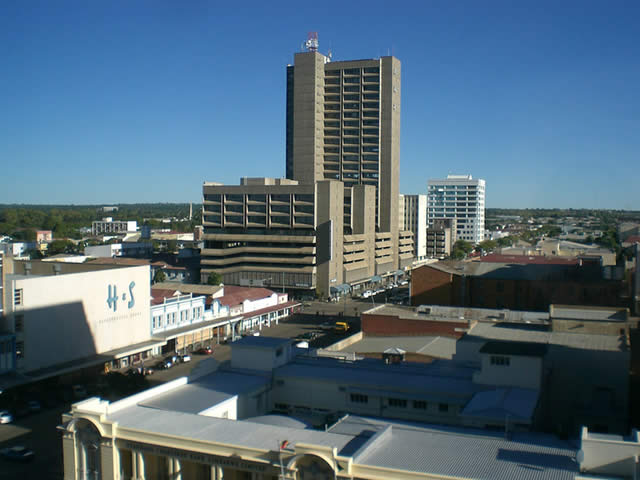
Business Editor
ZIMBABWEAN businesses should take advantage of the prevailing deflationary economy to invest in assets and gear themselves up for the imminent economic boom,when acquiring property will be difficult, an economic analyst has said. Economic deflation refers to the general decrease in the price of goods and services when the inflation rate falls below zero percent.
While resulting in the increase in the real value for money, economists view deflation as a negative economic indicator that results in growth stagnation, increased debt and recession.
Ian Ndlovu, an economics lecturer at the National University of Science and Technology (Nust) in Bulawayo, however, said economies the world over, do not remain stagnant forever and Zimbabwe was no exception.
“Studies have shown that a business cycle doesn’t remain in a depression continuously. There’ll be a time when inflation takes over and prices escalate.
“To do business,one needs space and buildings and this is the time for people to invest in properties,” he told Business Chronicle yesterday.
Ndlovu made reference to the Indian experience in the 1980s, where that country went through depression due to high government expenditure.
He said most businesses there, used that time to invest in real estate and reaped huge profits when the economy began to grow.
Since the adoption of the multiple currency system in 2009, prices for residential and commercial properties, stands and rentals have remained constant although people struggle to buy and pay for them.
In some instances, businesses have vacated office space deemed expensive in the Central Business District of major towns, resulting in an increase of empty buildings.
“In economics, real estate investment is a long term strategy for growth because property is the only asset that, even without putting anything in it, appreciates value with time.
“While there is no cash to facilitate transactions, the prices are depressed and those with money should invest in assets,” Ndlovu added.
He said the prevailing negative economy was a passing phase and urged Zimbabweans to gear themselves for future growth.
“I’m exuberant. I’ve a strong feeling that this economy will rebound. Our growth targets have been reviewed downwards to three percent and perhaps, two percent next year by the World Bank.
“However, after 2016 the economy will grow, and those who invest in assets will reap huge dividends.
“People should be aware that with a boom in economy, most revenue will be directed to rentals and other fixed costs,” said Ndlovu.



 Online Reporter