malvernmugadzikwa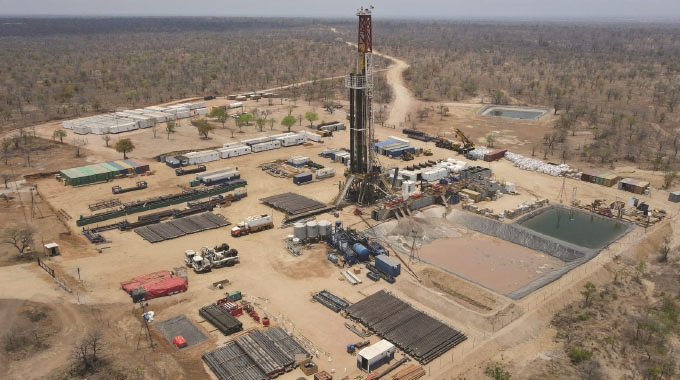
Golden Sibanda
Invictus ENERGY reached a key milestone last week in its search for oil and gas in the north of Zimbabwe, after drilling an exploration well to the targeted depth of 3,7 kilometres, raising bright prospects for potentially transformative commercial discovery.
Oil and gas discovery can become an avenue to attract more foreign investment into the country, drive faster economic growth and development, create direct and indirect employment, provide energy to support economic activities and generate exports.
The Australian firm last week said it had reached the targeted 3,718 kilometres total depth during the exploration drilling at the Mukuyu-2 site in Mbire, Mashonaland Central province, and has since commenced wireline logging (measurement of the size of the oil/gas deposit), by gathering full technical data about the well.
Mukuyu-2 marks the second time Invictus has undertaken exploration well drilling in the north of Zimbabwe, with the earlier exercise at Mukuyu-1 having proved the country was home to a working oil and gas (hydrocarbons) system.
The test-well drilling in September last year, despite the highly encouraging preliminary results, could not be completed after technical glitches that prevented the company from extracting a fluid sample required by Australian regulators to declare a commercial discovery.
“Commercial discovery” means a discovery of petroleum that has been demonstrated to contain petroleum reserves that justify the investment of capital and effort to bring the discovery to production.
Similarly, Invictus managing director Mr Scott McMillan last week said preliminary indications from the evaluation of data gathered during drilling over the last two months strongly supported the possible existence of commercially recoverable gas condensate, which the company is now seeking to evaluate scientifically.
“We have had further encouraging signs from the Mukuyu-2 well since drilling recommenced, with multiple additional zones encountering strong gas shows and fluorescence in the Lower Angwa formation,” Mr McMillan said.
Gas shows relate to gas that rises to the surface, usually detected because it reduces the density of the drilling mud, with associated drilling breaks (reduced drilling mud density) and fluorescence (colour of the drill cuttings under UV light of various wavelengths) in cuttings indicative of the presence of liquid hydrocarbons have been encountered in multiple additional Lower Angwa (geological formation) sandstone reservoirs from 396 metres measured depth to total depth.
“Mukuyu-2 has proved up over a 1 000- metre gross interval of hydrocarbon charge through the Upper and Lower Angwa formations across multiple reservoir zones.
“The planned comprehensive wireline logging programme — including (geological) formation pressure and fluid sampling, sidewall cores and checkshot (measurement of travel time of seismic or vibration) wave from source in the surface to the receiver within a well-bore) surveys — will be run with the aim of confirming the presence of moveable hydrocarbons in multiple zones in the Upper and Lower Angwa (geological) formations to declare a discovery.
“We anticipate completing the wireline logging programme in the next 6 – 8 days depending on logging conditions and number of fluid sampling stations,” Mr McMillan said.
Wireline logging is the measurement of downhole (of the borehole) (geological) formation attributes using special tools or equipment lowered into the hole to determine the size of petroleum deposits underground.
Oil and gas are major sources of energy across the country and would deliver immense economic benefits for Zimbabwe if successfully discovered, including energy security.
Mr Paul Chimbodza, a director of Geo-Associates, which holds a 20 percent stake in Invictus, recently said the project could go a long way in not only making Zimbabwe energy sufficient, but actually being a net exporter of power into the region.
“The biggest economy in the region is South Africa and they have got a huge power deficit.
“Some of the coal-fired power plants are going to be decommissioned so they are going to be in need for power,” he said.
While Zimbabwe continues to make progress in ramping up power production, the output remains significantly lower than the country’s overall requirements while inadequate to cover future demand as the economy grows.
Commercial discovery of oil and gas would enhance Zimbabwe’s security and unlock avenues for massive economic growth and development through the emergence of downstream industries, new job creation, growth in export earnings and Government revenue.
Officiating at an event for the signing of cooperation between the Government and Invictus in the development of the oil and gas project, President Mnangagwa said his administration was excited by the encouraging prospects of the potential discovery of oil and gas in Zimbabwe’s Cabora Bassa basin.
If discovered, the President said, this would make the country energy self-sufficient, create employment, grow the economy, and bring huge downstream benefits.
The President also said Zimbabwe’s oil and gas industry represented huge, unique, and competitive investment opportunities given the significant potential for value chain linkages.


 Online Reporter