Online Reporter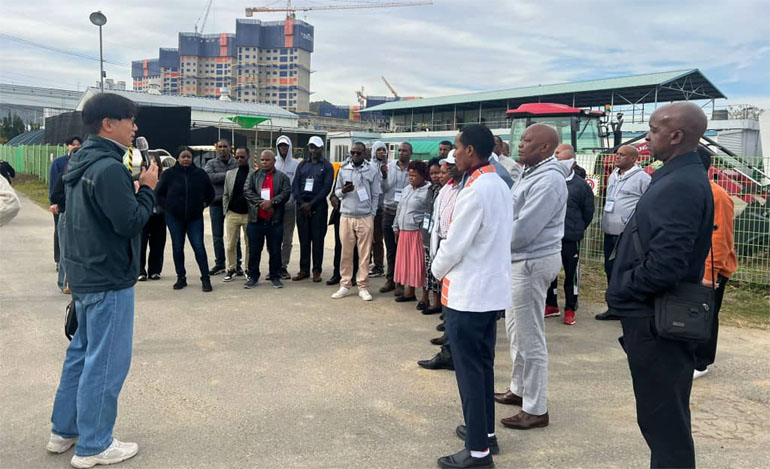
Lovemore Kadzura
Post Reporter
THE Inyati Mine community in Headlands Constituency has been presented with a lifeline opportunity to rescue it from the jaws of poverty following an injection of US$2 million by the South Korean Government, which is expected to transform lives of rural villagers.
The funding, provided under the Saemaul Undong or the New Village Movement, is expected to tremendously transform it into a well-developed village that will be economically active and self-reliant, anchored on key values of self-help, collaboration and diligence.
This is the same concept that was applied by the people of South Korea in the 1970s to develop their country into a world-class economy.
The Inyati Mine community was left exposed by the closure of the giant copper mine in the 1990s, which was the economic epicentre of the area, with villagers benefitting from mining activities, which also provided hundreds with jobs and through its social corporate responsibility initiatives that focused on community needs like water, education, health and good roads.
The mine also used to procure agricultural produce from the community, and upon its closure, left thousands of villagers stranded.
The villagers are now surviving on gold panning, tobacco farming and subsistence farming, with staple maize being the dominant crop.
Due to erratic rainfall and poor agronomic practices, the villagers continue to register poor crop yields, leading them to rely on Government and development partners handouts for survival.
Despite the area being in natural ecological region three, lack of irrigation has made agriculture an unpredictable venture.
However, the era of poverty and economic isolation is coming to an end following the Government’s initiative to partner with the South Korean Government to launch the Saemaul Undong programme in the area, where US$2 million will be invested in various economic, social and infrastructure activities which will be led by the villagers themselves as a means to empower them to take poverty head-on.
Makoni Rural District Council Ward Eight representative, Councillor David Muzarabani, who accompanied five villagers to South Korea last year to get a first-hand appreciation of how the Saemaul Undong concept propelled the Asian nation to where it is today, said they have chosen business ventures like sunflower and tomato processing, setting up a rural hospital, and revamping school infrastructure, among others development that will be adopted as the project proceeds.
“We visited villages in South Korea, and were impressed by what we saw. Their villages are modern, with standard housing and public infrastructure. Their type of farming is advanced, as it is highly mechanised with equipment such as combine harvesters and tractors. We learnt a lot, and we are eager to implement this model here.
“This project has potential to uplift the lives of people in Makoni RDC Ward Eight in terms of infrastructure and income-generating projects which we have planned.
“We have submitted our developmental plans and were approved. We intend to complete the construction of Chiropa Clinic and turn it into a rural hospital admitting patients, with resident doctors. Other clinics will also receive attention. A sunflower processing plant will be constructed in the Era Mine area, which will be supplied by local villagers to press oil. This will help to shift from over-reliance on tobacco as the only cash crop, and also address the issue of deforestation. Most people are into tobacco farming because of limited options and through this project we will create options for us.
“At the same plant there will be food formulation for animal feed. Villagers rear livestock, and we want to improve their condition through supplementary feeding. This will create jobs for the local people. In the Chiropa area, we will set up a tomato processing plant which will be supplied by villagers from their gardens and fields. A number of villagers now have solarised boreholes at their homesteads, which aid in the uptake of horticulture activities. Right now there is low horticulture farming due to lack of a nearby market. All the five villages in Inyati Mine will have irrigation facilities to provide reliable water for agricultural activities to feed the processing plants. We also want to upgrade all the schools in the ward so that they have standard infrastructure, computer labs, internet, and interactive boards, among other developments,” said Councillor Muzarabani.
The project, which is being spearheaded by the Ministry of Women Affairs, Community, Small and Medium Enterprises Development with support from other Government departments and local business community, will prioritise the participation of females in a bid to economically empower and uplift them.
One of the villagers, who was part of the delegation that went on a learning visit to South Korea, Mrs Alice Nyamukachi, said they are eagerly waiting for the project to kick-start and implement what they saw and learnt.
“The visit to South Korea was an eye-opener. We could not believe that we were in a village during our visit. Their projects are village-based where they farm, value-add and sell from there.
“This is different from what we do here, transporting produce to urban centres. As women, this project will improve our lifestyle as we will be involved directly in economic activities, as we will be having processing plants within our vicinities.
“Women will be taking the lead in project implementation and participation. Currently, rural women are economically oppressed as the father controls everything. This project will make us financially independent and actually help us to provide for the family, as opposed to the current situation where financial issues are centred on and controlled by the husband.
“Right now it is the tobacco selling season, it is the father who goes to the market and decides how to use the money, but when agricultural processing plants are established in the village, everything will change,” said Mrs Nyamukachi.