


 Sundaymail Editor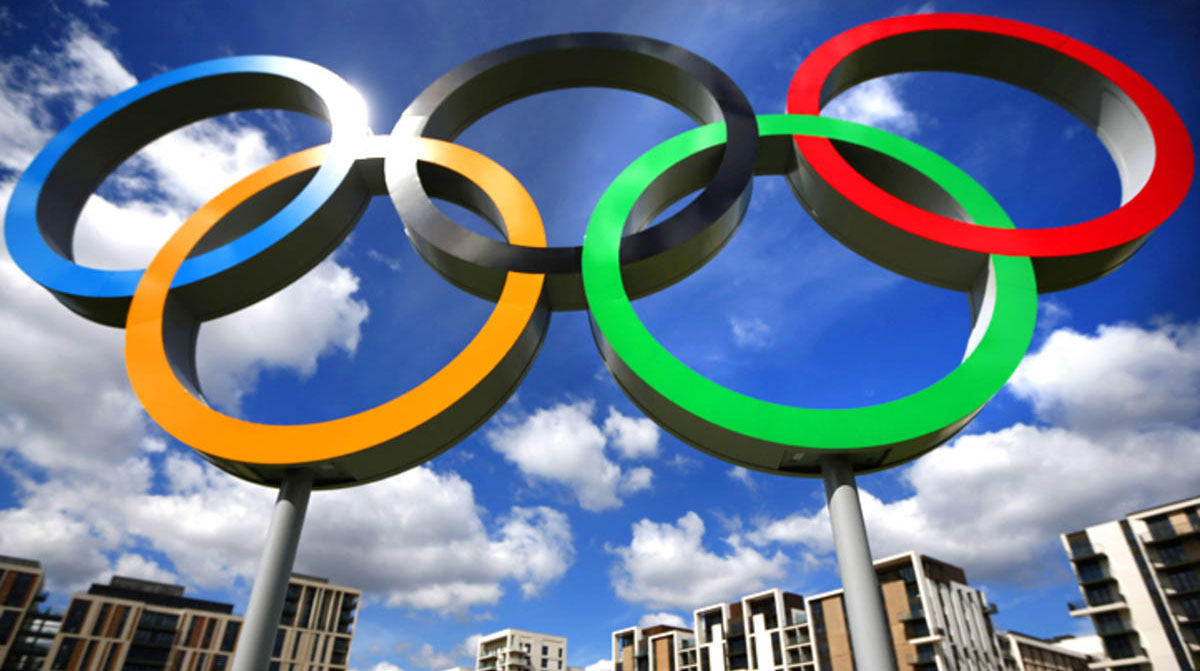
Eddie Chikamhi
Zimpapers Sports Hub
THE International Olympic Committee (IOC) are gearing up for elections on March 20 to select a new president who will steer the organisation for the next eight years.
This vote is of particular interest because the IOC stand as the largest and most influential sports organisation globally, thanks to their vast reach, historical significance, financial power and broad participation appeal.
The IOC’s influence extends over almost every major international federation, new sports and National Olympic Committees in over 200 territories.
They are by far the biggest and richest sports organisation in the world, much larger than FIFA and World Athletics.
Since their inception in 1894, there have been nine presidents, all of whom have been male and predominantly from Europe and one from the United States.
This composition makes the IOC appear as a private club, dominated by a network of older, primarily male individuals wielding significant power and influence.
This dominance potentially leads to a lack of diversity and resistance to change within the Olympic Movement.
The hegemonic tendencies are nauseating and indefensible.
Many have questioned why there is a continued exclusion of other players for positions of influence when one of the concepts behind the movement is about uniting people.
It appears Africa and some parts of the world are only there to add numbers.
They are not equal players.
Or maybe it is a classic case of “all animals are equal, but some are more equal than others”, as George Orwell so eloquently phrased it in his 1945 classic novel “Animal Farm”.
Enter Kirsty Coventry
The upcoming elections present a refreshing change, with Kirsty Coventry from Africa stepping up as a candidate.
Zimbabwe’s Sport, Recreation, Arts and Culture minister is among the seven candidates who have been cleared to contest for one of the most powerful posts in the world of sport.
Coventry is not only the sole woman, but she is also the lone African voice in the race.
Of course, the IOC have made some progress with regard to gender representation.
The organisation only elected their first female members in 1981, close to 100 years after their formation.
However, they have since improved on this, as 43 percent of the current IOC members are women.
But is that enough, though?
If the IOC are truly open for all as they claim, more women and candidates from other continents besides Europe and the US should be seen in positions of influence.
Maybe the inequalities explain why most of the Games have been held in Europe and the US, with Africa never hosting a single edition in over 130 years.
Challenging the status quo
Coventry’s candidacy is a bold challenge to the status quo, as the IOC have never had a female president in their 130 years of existence.
The only woman to ever dare stand as an IOC presidential candidate was Anita DeFrantz, a former Olympic rower from the US.
She was eliminated in the first round of voting in a five-candidate election in 2001, which was won by Jacques Rogge.
Fast forward to 2025, Coventry is reviving the challenge.
At 41, she is not only the youngest among the seven candidates, but also the only woman in the race.
For many years, the IOC have been regarded as the “ultimate old boys club”. It will be refreshing for them to get their first female president, particularly from Africa, a continent that has long been marginalised.
A Coventry victory would send a message that Olympic sport can no longer be a domain where men call all the shots or a private club for the US and Europe.
It may also pave the way for the first Olympic Games on African soil.
Coventry’s illustrious career as a swimmer was inspired by watching the 1992 Barcelona Games at the age of nine.
She went on to win seven Olympic medals, including two golds, becoming Africa’s most-decorated Olympian.
Her extraordinary career took her to five Olympic Games in a period spanning an incredible 16 years — Sydney 2000, Athens 2004, Beijing 2008, London 2012 and Rio 2016 — making her well-acquainted with the joys and challenges of being an athlete.
Coventry is passionate about athletes’ welfare and has proposed expanding the Olympic Solidarity Scholarship programme.
Her manifesto emphasises giving back to the organisation that opened many opportunities for her.
After graduating from Dominican Convent School in Harare, she won a scholarship to the US, where she honed her swimming skills at Auburn University on her way to conquering the world.
Ubuntu, rich manifesto, embracing technology
Titled “UNLEASHING THE TRANSFORMATIVE POWER OF SPORT . . . A Stronger, Sustainable, Relevant Olympic Movement”, Coventry’s manifesto outlines five key priorities.
These are harnessing the power of sport; maximising collaboration and engagement; strengthening partnerships for mutual growth; championing sustainable development; and advancing credibility and trust.
In the same document, Coventry has emphasised leveraging digital platforms and artificial intelligence-powered tools to connect with younger, tech-savvy audiences and expand the Olympic brand’s global
reach.
“My mission to drive empowerment, strengthen engagement and ensure we remain relevant, is guided by the Ubuntu philosophy: ‘I am because we are’.
“This principle highlights the combined strength of the Olympic community and our responsibility to uplift one another,” Coventry wrote in her manifesto.
It is not about gender, as Coventry has demonstrated her leadership within the IOC and various sports bodies.
She has been an IOC member since 2013 and serves on the IOC Executive Board.
She is leading commissions for the Dakar 2026 Youth Olympics and the 2032 Brisbane Olympics.
Coventry has been Zimbabwe’s Minister of Sport, Recreation, Arts and Culture since 2018.
Her candidacy is not based on her gender or place of origin, but it is about her capabilities.
But is IOC ready for Coventry?
Coventry faces stiff competition from six other contestants when the IOC’s 110 members vote at the 144th IOC Session in Greece from March 18 to 21.
The candidates are: Prince Feisal al Hussein (president of the Jordan Olympic Committee), Sebastian Coe (Great Britain, president of World Athletics), Johan Eliasch (Swedish-British national, who is the president of the International Ski and Snowboard Federation), David Lappartient (president of the International Cycling Union and the French National Olympic and Sports Committee), Juan Antonio Samaranch (an IOC vice president from Spain) and Morinari Watanabe (president of the International Gymnastics Federation from Japan).
Coventry is the youngest candidate and may find it hard to convince some members that she has the requisite experience for such a complex and diplomatically challenging role.
She is, nevertheless, viewed by some as the preferred candidate of outgoing IOC president, Thomas Bach.
A time for transformation
The Olympics are a reaffirmation of our shared humanity and contribute to unity in all our diversity.
The 2025 IOC elections present a real opportunity for new ideas and a fresh approach to Olympic business. Coventry holds the keys to that transformative shift. Her candidature deserves all the support.
Kirsty Coventry biography
IOC presidential candidate 2025
OLYMPIAN
5x Olympian: Sydney 2000, Athens 2004, Beijing 2008, London 2012, Rio 2016
7x Olympic medalist: 2 Gold, 4 Silver, 1 Bronze
Multiple world record breaker
WORLD CHAMPION
Long course (50m): 3 Gold, 5 Silver
Short course (25m): 4 Gold, 1 Bronze
INTERNATIONAL OLYMPIC COMMITTEE
IOC member: 2013-present
IOC Executive Board: 2018-2021, 2023-present
Chairperson: Athlete Commission, 2018-2021
Chairperson: Coordination Commission, Brisbane Olympic Games 2032, 2021-present
Chairperson: Coordination Commission, Dakar Youth Olympic Games 2026, 2018-present
Chairperson: Games Optimisation Working Group, 2022-present
Finance Commission, 2023-present
Olympic Solidarity Commission, 2014-present
Public Affairs and Corporate Communications, 2022-present
Athletes Commission, 2013-2021
Coordination Commission for the Games of the XXXII Olympiad Tokyo 2020, 2014-2021
Olympic Channel Commission, 2015-2018
Evaluation Commission for Paris 2024 and LA2028, 2016-2017
Public Affairs and Social Development through Sport Commission, 2016-2018
Member of the Board of Directors of Olympic Channel Services, Switzerland, 2018-2021
NATIONAL OLYMPIC COMMITTEE
Vice President: Zimbabwe Olympic Committee, 2017-2018
Member, 2013-present
INTERNATIONAL FEDERATION
Vice President: International Surfing Federation, 2017-2024
Athlete Commission: World Aquatics, 2017-2021
ANTI-DOPING
WADA: IOC Athlete Representative, 2012-2021
WADA: Athlete Committee, 2014-2021
International Testing Agency, 2018-2021
GOVERNMENT
Minister of Youth, Sport, Art and Recreation, 2018-2023
Minister of Sport, Recreation, Arts and Culture, 2023-present
PERSONAL INITIATIVES
Founder: Kirsty Coventry Academy, 2013-present
Founder of Heroes, 2013-2018


 Online Reporter