admin
admin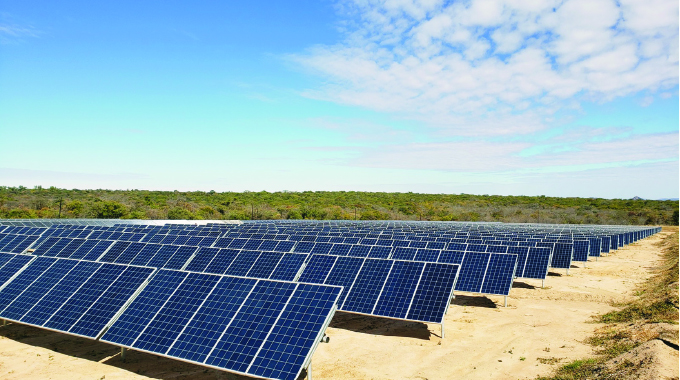
Leonard Ncube in VICTORIA FALLS
SMALL and independent power producers (IPPs) have been challenged to collaborate to be able to meet the target of producing 2 000MW in the country by 2030.
Government mandated IPPs to generate about 2 000MW by 2030, as part of the Second Republic’s grand vision of an upper middle income society where electricity, among other services, should be readily available and accessible to the generality of citizens.
Speaking at the 3rd International Renewable Energy Conference on Thursday here, energy experts said Zimbabwe had to create a conducive environment to attract foreign investors to be able to meet its targets.
Government has licensed scores of IPP projects and a handful have been implemented, and generating a mere less than 50MW per year which is far less than the target.
Mr Ian McKesie, who is managing director of Nyangani Energy which is producing about 35MW in its outside Harare, said more IPPs and investors were needed.
“We need to focus on small IPPs and scale them up step by step because domestic funding cannot do bigger projects. We as a producer have been doing small projects and we would love to roll-out projects every year but in 2020 we stopped because lenders lost confidence in the ability of Zimbabwe system to repay money,” said Mr McKesie.
He said there was need to restore confidence and trust of foreign investors by performing properly as a country.
“This started with introduction of bond notes and emergency of a double exchange rates. Foreign lenders view the RBZ forex auction system as managed and opaque and are therefore discouraged,” said Mr McKesie.
He said accessing foreign currency was a challenge for IPPs and buying it from the parallel market was expensive.
He said IPPs should be paid in foreign currency when they sell electricity to the grid.
Mr MacKesie said IPPs with request by the Parliamentary Portfolio Committee on Energy, formed the Zimbabwe Independent Power Producers Association (ZIPPA), an association of IPPS operating and delivering power to Zesa. Speaking on the same platform, Mr Victor Utedzi, who is director of CetraGrid, another IPP that is producing 25MW of PV solar in Nyabira outside Harare, said IPPs were the backbone of the future developments in the power sector.
He said IPPs have a mandate to meet power demand but are currently below the 2030 target.
“Government has given us a mandate to add at least 2 000MW of new power from hydro plants, PV solar, wind, biogas and others to meet our target. Our overall objective is to have 2 000MW by 2030 so we need to collaborate and everybody to come together to deliver.
“We are now in 2022 and already we are looking at a target of 300MW per year to be able to meet our main objective.
“We are barely doing less than 50MW per year as a country and the more we take time the more it appears impossible to do it, we can’t continue to lose more time.
Typically to finance those projects it’s a combination of domestic financiers, banks, insurance and individuals on stock exchange and foreign investors must partner with local investors,” he said.
He said all licensed IPPs should be implemented, especially as Zimbabwe has perfect conditions for roll-out of solar plants.
“We as a country are not able to attract foreign investors at the moment because they are not confident that they can bring their money and be able to repatriate it safely. These are the things we are working to address to make investors come and earn a good return.
“Until we address those challenges about currency convertibility, foreign currency availability and good market rates without delays, we are unable to attract foreign investors. So it only leaves domestic financiers trying to implement these projects yet they are limited and cannot do this alone,” said Mr Utedzi.
According to energy experts, renewable energy will contribute about 50 percent of energy mix by 2040 in Africa.
The conference ends today and is being held under the theme: “Net Zero Africa.”


 Online Reporter