Online Reporter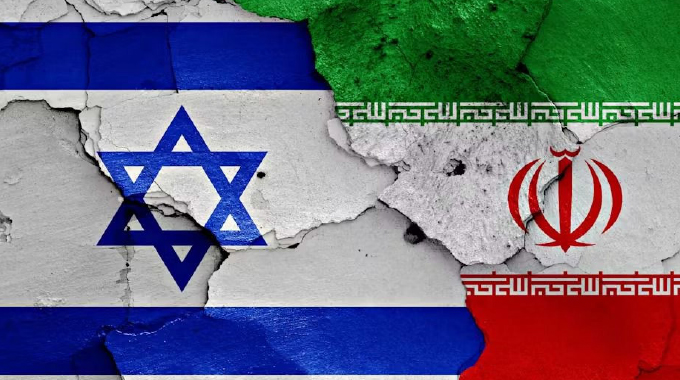
Alexander M Rusero & Ranga Mataire
The world recently woke up to a shocking unprovoked attack of Iran by Israel on the latter’s pretext that Iran had long planned to attack it.
Whatever the logics of the war, students of international relations and global politics as well as enthusiasts of history and current affairs also learnt that the ongoing global reconfigurations punctuated by chaos and disorder have resulted in the unsustainable end of a unipolar world.
In “International Politics: Enduring Concepts & Contemporary Issues,” Robert J Art and Robert Jervis (1992) advance the view that unlike domestic politics, international politics takes place in an arena that has no central governing body.
Although the United Nations acts as “an international body of appeal” for individual states, the truth is no agency exists above the individual states with authority and power to make laws and settle disputes.
States can make commitments and treaties, but no sovereign power ensures compliance and punishes deviations. The absence of a supreme power has created anarchic environment of international politics, something that countries like the United States have exploited over the years.
The unipolar world which emerged at the end of Cold War in the 1990s, resulted in the eventual domination of the US and its allies over the social, political, economic, technological and cultural infrastructure of the world. This unipolar world, underwritten by global capitalism and driven by a neo-liberalist thinking to global geo-political and geo-economic designs was dubbed the rules-based order.
It is for this reason that the US was at liberty calling its ally states and its perceived foes — regimes. A regime change agenda was therefore legitimate in the US’ cosmology of shaping the world to toe the line of its rules-based order. A state was either democratic and therefore a progressive ally or an authoritarian one and thus a threat to the strategic interest of the US and her global north allies.
This is the logic that wreaked-havoc in the Middle East with the coming of the new millennium, resulting in the chaos and storms of the Middle East, notably the fall and barbaric ouster of Libyan leader Muammar Muhammad Abu Minyar al-Gaddafi, Saddam Hussein and several other alternative governments in Africa, Middle East and Asia who were perceived as outposts of tyranny.
As such, whereas Israel, a long-time ally of the United States and in some instances, US’ proxy in Middle East entered the war with a well calculated solid plan to obliterate Iran, it could have made unintended revelations due to its provocation — war unlike a Hollywood movie has no predictable outcome.
Apologists of the US predicted the defeat of Iran within hours, but as the conflict unfolded, the conflict endured into one of several nights, days and weeks triggering the US intervention and calling for an immediate ceasefire.
Those who understand the US military prowess and its several military exploits in the Middle East know very well that the state does not budge, neither does it call for a ceasefire in a military escapade in which it is in total control.
What could have been touted as a ceasefire was indeed a hatchet job by Donald Trump’s last bid in avoiding Israel’s humiliation and possible defeat. Israel proved to all those who care to follow contemporary global discourses that without the backing and support of the United states, it cannot last a day with regards to its several hostilities in the Middle East.
It also further exposed a deep divided United States over issues of foreign policy and strategic national interests, because for the first time the US had an ambivalent approach on how to deal with the crisis which was never of its making the first place.
Whatever the outcome, the US is definitely revising how it deals and also gets involved in Israel’s conflicts going forward, given its damaged diplomatic posture triggered by the offensive attack of Iran by Israel.
So what would be the lessons for Africa?
Africa must learn that global politics punctuate by chaos and disorder is one where it ought to rediscover its ideology. Ideological resolve is desperately required in a continent that is currently veering off from the ethos of the founding fathers of the continent – the total emancipation of Africa from shackles of imperialism and colonialism.
Iran’s resolve to withstand its ground against the mighty US fronted by Israel drew its currency from its ideological standpoint of the Islamic Republic. Islamic Republic was a rallying point of all Iranians and its sympathisers that its retaliation were a just or rather a holy war.
Pan Africanism is currently facing an existential threat. For most of the time Africans are complicit in shunning, dissing and dismissing Africa more than any other inhabitant of this earth. Africa cannot win any ideological war, technological battle and financial wars without a rallying point of its focal ideological standpoint- Pan Africanism.
It is an incontestable fact Africa won its freedom and independence from the conception of Pan-African unity, which was concretised through the founding of the Organisation of African Unity (OAU) now African Union.
Pan-Africanism became more than just a rallying call for unity but the fuel and the inspirational bedrock that inspired generations across the continent to challenge and ultimately defeat colonialism.
Colonial governments had all the petals of power including superior military hardware but all this failed to defeat the resolve of Africans fighting for their own liberty and independence.
Africans need to understand that no one owes them a living. Just as it was during the decolonisation period when Africans were united by a shared history and common goals, the contemporary world is calling for all Africans to rescue Pan-Africanism from Afro-pessimists.
Afro-pessimists would always want to inflate the existing differences within or among blacks as the major hindrances to achieving unity.
This has the effect of demoralising any efforts being undertaken to concretely unite black people. They argue that the international system is rigged in favour of the Western world- the masterminds of slavery and colonialism.
The situation has been worsened by the fact there seems to be no shared idea of who constitutes an African? Even the idea of Africa is not something settled.
This lack of a shared understanding has made all well-intentioned attempts to unite and make Africa speak with a recognisable and distinct voice unstable.
The conversion of the OAU to AU has failed to resolve this dilemma. Who is uniting? What is the unity for? How should the unity proceed?
In his response to Afro-pessimists, Professor Mammo Muchie, a leading global Pan-African voice, argues in “Has the Pan-African Hour Come?” an article published way back in 2015 that:
“The fact that Africans appear in a variety of ways, speak different languages and practice different religions should not in principle be an argument for making them suffer under the regime of specificity by rejecting to construct a consciousness of universality.
“The right to the universal or the African does not have to challenge the right to remain different, speak different languages and worship different deities.
It can complement it and in fact it can enrich it, provided that the dialectic between specificity and universality is resolved in favour of producing the national nucleus for creating a sustainable unification of Africa.”
Prof Muchie cites India and China as examples of countries that have been able to conquer differentiation.
The fact that Indians or Chinese speak many different languages and practice different religions have not prevented them from overcoming their specific attributes and proclaim an Indian or Chinese national identities.
The anarchic nature of international politics compels Africans to realise that there is more to gain from acting as a united entity than acting in isolation of one another.
The Israel-Iran conflict has revealed to the world the fundamental importance of investing in national security including appropriation of modern technology in wadding off potential national security threats.
The manner in which Iran was able to “return fire” blow by blow against Israel showed that the country had enough arsenal up its sleeves.
Similarly, Africa needs to utilise its fraternal relations with countries like China and Russia to develop and boosts its ability to wade off potential threats to its national security.
Beyond investing in military hardware, Africa needs to change its educational and innovation systems that are still too colonial and are in dire need of a technological and digital leap.
Current global trends in education point to a shift towards creativity and innovation. It is only through creating innovative products to sell to the whole world that more wealth can be generated and develop economically.
The whole educational system on the continent needs to be developed into an African-centred one. We need to do away with the “David-Livingstone-discovered- the- Victoria-Falls” type of education.
It is a historical fact steeped in concrete archaeological evidence that Africa is the cradle of civilisation and was behind the creative wonders of antiquity whose creativity and innovation got interrupted by slavery and colonialism.
The evidence of Africa’s greatness is everywhere for everyone to see. In dealing with the contemporary issues affecting the continent, African leaders must emphasise on critical thinking and problem solving.
Apart from giving the current and future generations strong historical foundations, the next step should be on creating stuff, making stuff, selling stuff and solving problems. Innovation requires the seamless cooperation of governments, schools, universities, private sector, research laboratories and financial institutions.
As Africa confronts the realities of the decomposition of the post-colonial state, we have the opportunity to reshape our political futures anew and collectively. We need to move away from the design of an Africa imposed on us by the old colonial powers.
An Africa united is an Africa capable of solving current challenges. A disunited Africa has no chance of advancement. A half-century of the latest African history is enough for us to know this truth.
A continental approach to Africa’s problems should be able to lay the foundation of a self-reliant and selective external intervention approach.
This will drive Africans to put on the agenda their own issues and not the issues, which come with gifts, from donors.
Full story on www.sundaynews.co.zw