Online Reporter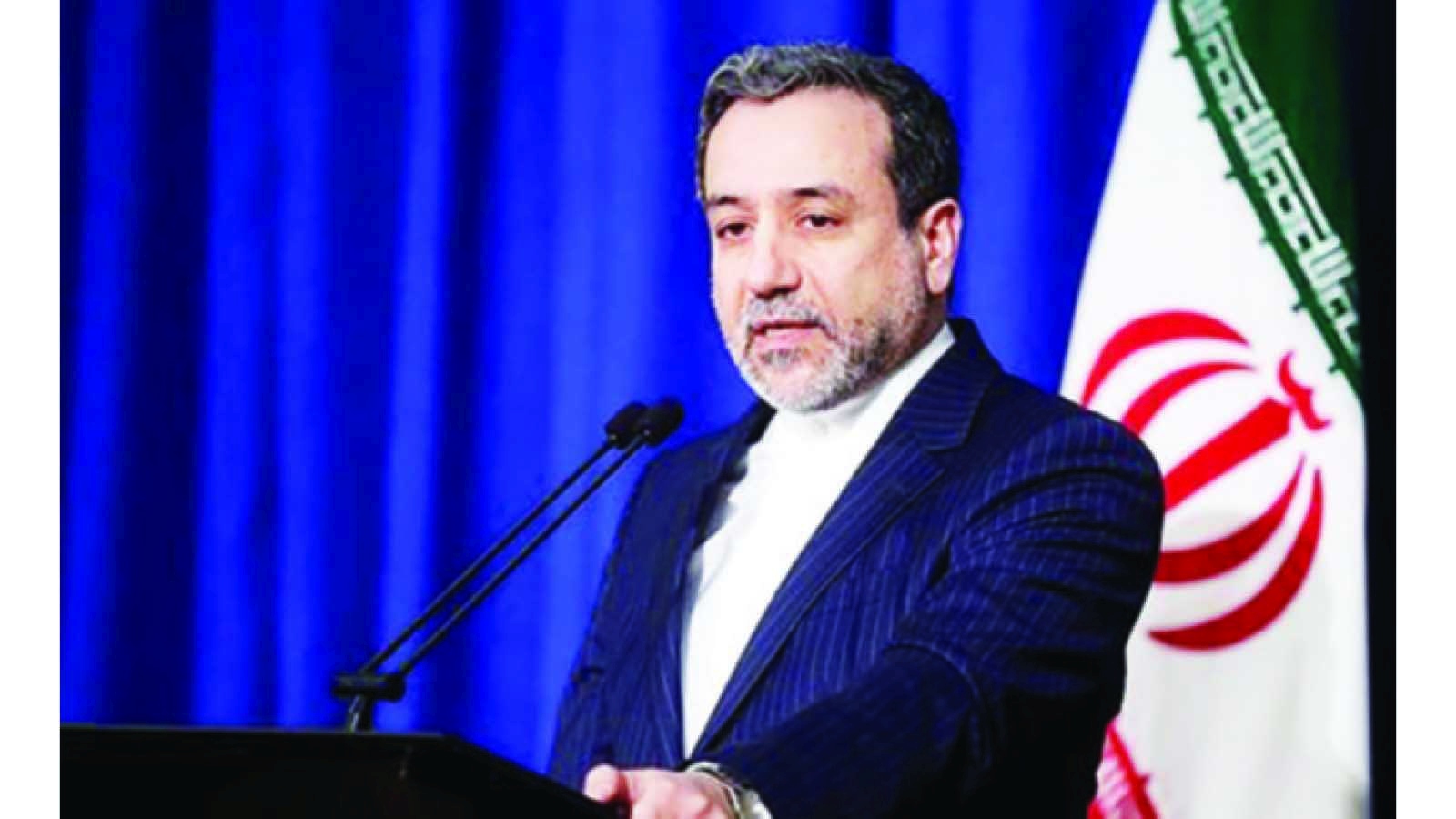
Gibson Nyikadzino
Zimpapers Politics Hub
All wars will finally end with dialogue or on the negotiating table! Iran and the United States are this Friday expected to sign a memorandum of understanding to end hostilities after nearly four months of the latter’s aggression towards the former.
The global economy, once squeezed and pressed hard, now has a sigh of relief. Ahead of the signing ceremony in Switzerland, one thing that stood out and deserves intellectual assessment during the entire war period is how Iran redrew the security architecture in the Middle East towards a new world order anchored on its deterrence capabilities.
Firstly, Iran has shown that the post-war global security and geopolitical architecture is going to be implemented and operationalised in consultation with its allies advocating for a multipolar order, protecting their interests, including those of Palestine and Lebanon. In this regard, Iran’s Foreign Affairs Minister Abbas Araghchi within a week last month visited Pakistan, Russia and China.
These important visits show that Iran had an idea of a new security architecture that needed consulting its major allies. This reflected differently with how the United States approached the issue. President Donald Trump failed to consolidate his strategy or talk to his European or the Asian allies on ways to deal with Iran but just went headlong into this escalation trap. In other instances, he talked down on his European allies after they refused to join him on his aggression towards Iran.
However, Iran’s deterrence capabilities and escalation dominance exhibited since February 28 have proven that the Persian country is able to punish any opponent and humiliate it strategically and tactically on the battlefront. Though Iran was invoking a defensive military doctrine, it achieved its deterrence not through the ability to defend, but through the ability to punish and inflict political, economic and military costs on the United States and Israel.
On June 7, the magnitude of its deterrence capabilities sunk in when for the first time it struck Israel when the latter had bombed another country, southern Lebanon. This means Iran moved battle lines and restored its deterrence, both general and extended. By bombing Israel, this was happening first the first time in decades that a regional power had the means, capacity, and willingness to put hard power against Israeli military manoeuvres or aggression against a third party or Iranian ally.
The United States and Israel said they attacked Iran on February 28 to stop it from having a nuclear weapon. For Iran, its deterrence capability is not because it is nuclear armed, but because it knows how to create new power balances in the Middle East to reflect the new regional security architecture that is not determined by the presence of the United States in the region.
The proliferation of new forms of warfare necessitated by enormous technological developments have also both changed and enhanced its punishing abilities in offensive and defensive strategies. This new operating environment shows that with the proliferation of hybrid wars, the emergence of new domains of competition, and enormous technological development, Iran has managed to write a new script on fighting imperial powers, forever changing the practice of warfare. Through reverse engineering and incremental upgrades, it developed increasingly capable medium and long-range ballistic missiles, an undeniable strategic achievement.
This deterrence also evolved into a multi-layered capability, keeping its most determined enemies at bay for years. Also, by sharing expertise and technology with allied resistance forces across the region, Iran has also effectively extended their collective defensive and offensive perimeter. These partners are nodes in a network of deterrence, ensuring that adversaries face multiple simultaneous threats on various fronts.
Such deterrence strategies have been effective for they multiplied the cost of aggression from the United States. The myth of the United States’ invincibility has also been shattered. Its defence systems proved unable to counter Iran’s onslaught, whether powerful highly advanced ballistic missiles or even older generation missiles.
The most critical fact during this war of aggression by the United States remains, that, every weapon Iran used in its retaliation and defence was domestically produced. A domestically built defence industry can challenge and defeat even the most heralded shields. From this perspective, the notion of Western invincibility proved to be a myth.
In this context, it should be known that despite the changes, traditional deterrence which Iran mastered and efficiently improved, will remain a fundamental instrument for the prevention of future aggression. Also, with technology comes new threats, more is to be expected in preparedness to face this new operating environment and new threats it brings.
A closer look at what Iran’s deterrence has shown highlights how its determination has produced a profound adjustment in political relations between regional states that depended on the United States for security. Countries like Oman, Bahrain and the United Arab Emirates are now reassessing the future of the region’s security architecture without United States’ role. To Iran’s advantage, its deterrence capabilities are now set to repair failed regional relationships and communities. It should be noted that deterrence is not Iran’s first choice but will work more like recourse in the event of infringements.
There is no logic for conditions of war to prescribe that Iran must disarm or stop rebuilding its arsenal while its adversaries continue to arm. Its ability to build new weapons stockpiles is the indispensable guarantor of its national security which is born from the bitter experience of war and decades of threats and sanctions meant to cripple the nation’s right to sovereignty.
Unfortunately, its adversaries have continued to fear monger about the rebuilding of its stockpiles of missiles, but this serves as an ability to maintain the balance of deterrence done by a sovereign nation reinforcing the wall that keeps Western aggression in check. This must, therefore, not be seen as aggression, but is the only logical, legal, and necessary response to encirclement and containment.
Resilience, ingenuity, and strategic independence are now the facts on the ground. The trajectory is clear. True security is forged through indigenous capability, strategic intellect, and unwavering resolve, something the adversaries of Iran have learnt the hard way.
Western media and elites can lie all they want about repression in Iran, but the support Iranians showed to their leadership has defied western media narratives. What is certain is that Iran’s military and deterrence capabilities are pointing to one significant development: the multipolar world is on the horizon.