peter
peter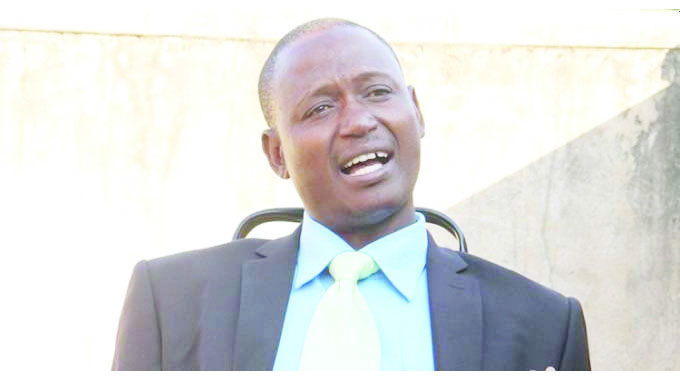
Judith Phiri, Business Reporter
IRRIGATION monitoring and management will now be done using remote sensing and satellite imagery – a move aimed at providing timely information for optimum agricultural production.
This came after the Government recently engaged the Zimbabwe National Geospatial and Space Agency (ZNGSA) to carry out irrigation monitoring.
Deputy Minister of Lands, Agriculture, Fisheries, Water and Rural Development Douglas Karoro said they were working with the ZNGSA to monitor and manage irrigation schemes around the country using remote sensing and satellite imagery.
Irrigation is being implemented in most parts of the country especially in ecological regions that receive erratic rains to boost agricultural activities, a development aimed at complementing Government’s efforts of ensuring food security.
The ZNGSA is an agency that was launched in 2018 and mandated to enhance Zimbabwe’s capability to harness space technologies, while making it possible for the country to manage its natural resources and mitigate the effects of climate change.
“The ministry is working with ZNGSA for irrigation monitoring and management using remote sensing and satellite imagery.
Remote sensing gives information on the moisture quantity of soils. This information is used to determine whether a particular soil is moisture deficient or not and helps in planning the irrigation needs of the soil,” said Deputy Minister Karoro.
He said remote sensing has found significant use in the field of agriculture as much information was being provided from the phenomenon which was being used for optimum management of growing crops.
Deputy Minister Karoro said the method was also being used for soil mapping.
“Soil mapping is one of the most common yet most important uses of remote sensing. Through soil mapping, farmers are able to tell what soils are ideal for which crops and what soils require irrigation and which ones do not. This information helps in precision agriculture.”
He said remote sensing technology could be used to monitor the weather patterns including the drought patterns over a given area and the information used to predict the rainfall patterns of an area and tell the time difference between the current rainfall season and the next which helps to keep track of the drought.
Deputy Minister Karoro said ZNGSA had been carrying out cover and land degradation mapping to map out the land cover of a given area and tell what areas of the land have been degraded and which areas were still intact, assisting in implementing measures to curb land degradation.
He added: “The agency has also been useful for the identification of problematic soils that have a problem in sustaining optimum crop yield throughout a planting season.
“In addition, remote sensing technology has also helped farmers and other agricultural experts to determine the extent of crop nutrients deficiency and come up with remedies that would increase the nutrients level in crops hence increasing the overall crop yield.”
The Deputy Minister said ZNGSA would soon carry out the summer cropping yield estimation before the end of the season to establish the total hectarage cropped and also the yield expectation for the country.
He said information would be provided on crop production forecasting, crop area estimation, farm identification especially the command farmers, wet spells and flood monitoring among other things.
“With the forecast on the expected crop production, yield over a given area and determining how much of the crop will be harvested under specific conditions, researchers can be able to predict the quantity of crop that will be produced in a given farmland over a given period of time.
“Crop yield modelling and estimation also allows farmers and experts to predict the expected crop yield from a given farmland by estimating the quality of the crop and the extent of the farmland.
“This is then used to determine the overall expected yield of the crop,” said Deputy Minister Karoro.


 Online Reporter