admin
admin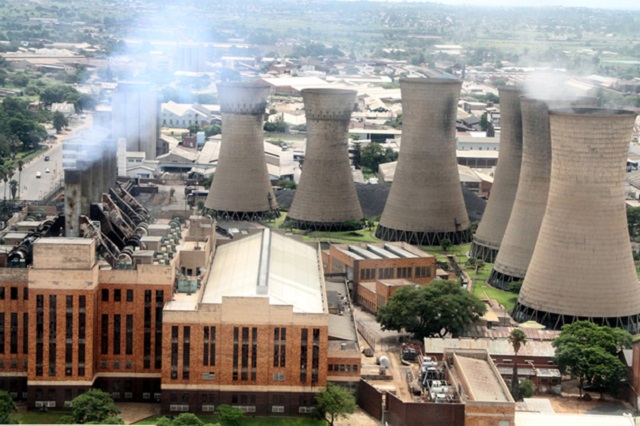
Lenox Lizwi Mhlanga
I participated in an interesting discussion on the clothing industry and the banning of amabhelo (bales of second hand clothes) on Capitalk 100.4 FM on Wednesday afternoon.
Listeners agreed that they should be banned in order to allow our clothing industry to recover. But it all came to Government playing its role in enforcing policies and acting decisively on smuggling and cartels that are benefiting.
If you look at other sectors, it’s the same. Fuel importation has cartels, so does land with its barons. There are so many leakages in the system because of some patronage system. The culprits are known and President-Elect Emmerson Mnangagwa and his new team have their work cut out for them.
The selfish bigwigs who would rather see the collapse of a whole industry just to line their pockets have to be dealt with decisively.
The de-industrialisation of Bulawayo and prospects of recovery has been a topical issue for a long time now. It has become a shrill refrain. We need to realise the fact that the strength of Bulawayo as an industrial hub is derived from the fact that it is the nexus of the railway line from the south going to the north.
The refurbishment and revitalisation of the Zimbabwe Iron and Steel Company (Zisco) will result in an increased demand for coal from Hwange which in turn will lead to growth of a heavy engineering manufacturing sector and downstream industries in the city.
The shutdown of Zisco had a domino effect that swept the National Railways of Zimbabwe, Hwange Colliery and the engineering firms. The element of gross mismanagement should not be left out of course. Other issues that include deliberate relocation by certain entities and the perennial shortage of water also come into play.
We are not implying here that the revival of Zisco by new investors would automatically lead to the reawakening of a dying giant. There are many factors that are at play here and I won’t pretend we don’t know all of them.
The first is that elephant in the room called political will. During the radio programme, it kept coming up. If Zimbabwe is to speak truth to the Open for Business mantra, then it should start walking the talk.
They say that talk is cheap. There can be so much of it and embellished promises that will light up the landscape with false hope. Other argue that Bulawayo and the region have been pawns in a big political game for a long time. Now is the time to break out of the mould. It’s a time for action.
The Confederation of Zimbabwe Industries (CZI) and other sectoral organisations have held countless thematic meetings on the subject of reviving the manufacturing sector and the economy with it. More talk and little action.
In terms of “deliverables” nothing much has been done. Bulawayo’s water woes continue to dog industrial development as well the dearth of capital. Added to this we have liquidity challenges, antiquated equipment and issues around the cost and supply of power.
A multi-million dollar Distressed Industries Marginalised Areas Fund (Dimaf) was once floated and remained an elusive mirage. Only a few benefited without tangible effects. The question is where did the money go?
However, in the absence of positive action to tackle the problems, politicians urge everyone not to politicise the issue. That is what ticks people off. When politicians grope for excuses on why they can’t deliver on their promises, they turn to the politicisation bogey to fob prying eyes off their backs.
What should be done to solve the problem? We know that the whole country is facing an economic crisis yet at least showing signs for the potential for recovery.
The latest promises were made as early as January this year when the Industry and Commerce Minister Mike Bimha said that Government was committed to resuscitate Bulawayo industries and promulgated the Special Economic Zones Act as a vehicle that will spearhead economic recovery.
It’s a promise that we are eager to see come to fruition. The prospect of the whole city of Bulawayo becoming a special economic zone is one that conjures images of the good times rolling once again for the country’s former industrial hub.
Let it not be another paper-tiger, with all the makings of a good document with good intentions, but little in the way of action. As long as the element of political will remains weak, as has happened in the past with the much touted economic blueprints, all its contents, I’m afraid might come to nought.
There are those who proffer the hard reality that trying to revive Bulawayo’s heavy industries will not be the best option in this day and age. The days of smoking chimneys are long past and new technology demands a different kind of approach.
The Small to Medium Enterprises (SMEs) hold new hope for economic revival in an economy which has the highest literacy rates in Africa. Government can best play its role as facilitator to mobilise funds for incubators that will give rise to novel ways of doing business, creating capital and employment.
The creation of innovation hubs that target specific areas such as those of beneficiation and technology transfer can be infused into plans to establish special economic zones. The low hanging fruit are the kinds of industries that require little capital input, but tapping on the high intellectual potential that we boast about.
Areas of focus should be an improvement in the ease of establishing business. The long touted promise to establish a one stop facility to attract investment should be translated into reality. More significantly is clarity in policy particularly with the indigenisation laws.
Other issues that come to mind are the implementation of devolution that would cut red tape and empower local communities in as far as decision making is concerned.
All this should be guided by the principle that the job of Government is not to do business, but to make business work.



 derick.khumalo